
- ■
AMD shares jumped 12% with no company-specific catalyst, riding Intel’s strong quarterly earnings beat
- ■
Intel’s results suggest broader semiconductor demand recovery beyond just AI chips
- ■
The sympathy rally shows investor confidence that chip sector fundamentals are improving across the board
- ■
Wall Street is betting AMD will deliver similar upside when it reports its own results
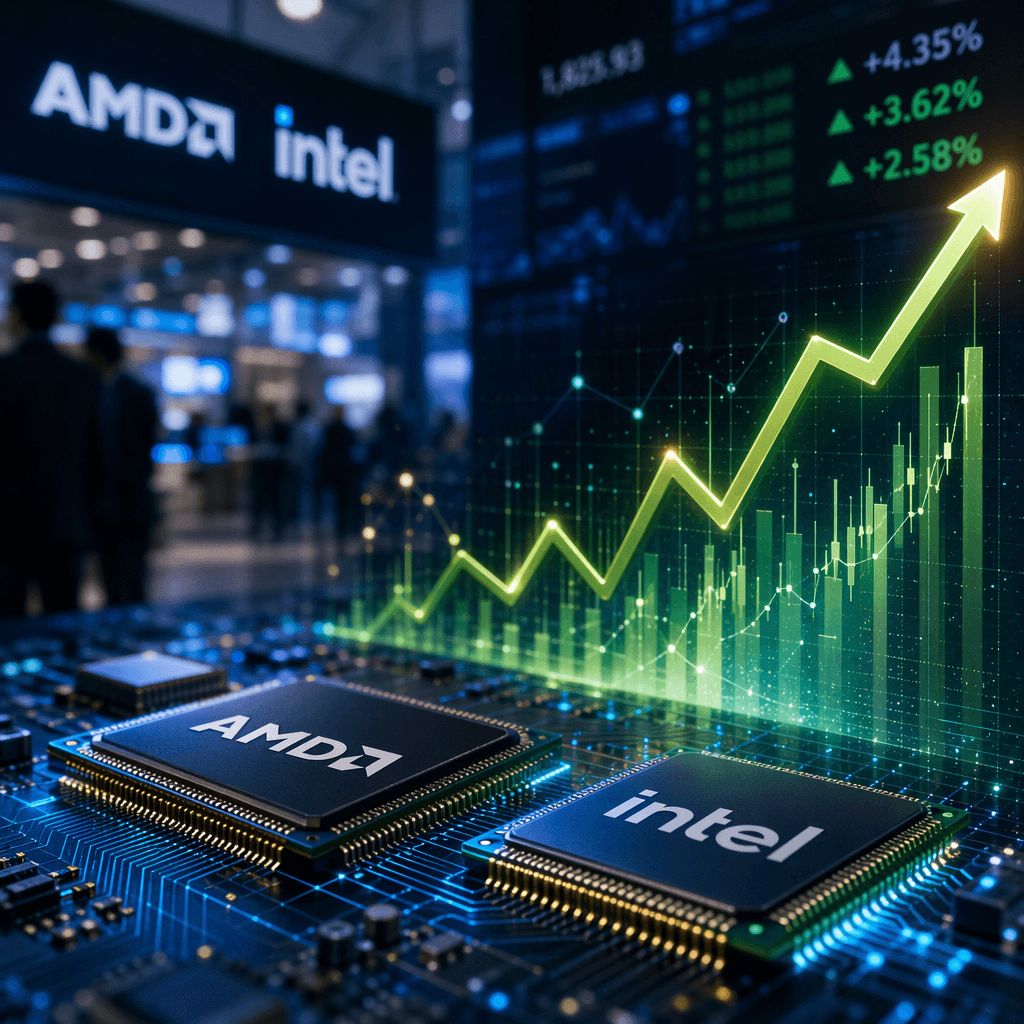
AMD shares rocketed 12% higher today despite the company releasing zero news of its own. The culprit? A surprisingly strong earnings report from rival Intel that’s igniting a broader rally across semiconductor stocks. The sympathy trade signals Wall Street believes the chip sector’s recovery is real, with investors betting that what’s good for Intel must be great for AMD too. It’s a striking reversal for an industry that’s spent months navigating AI hype cycles and inventory corrections.
AMD just handed investors a 12% gain without lifting a finger. The chipmaker’s stock surged Friday afternoon on absolutely no news from the company itself, but plenty from its biggest rival.
Intel reported quarterly results that blew past analyst expectations, sending its own shares up sharply and triggering a wave of buying across the entire semiconductor sector. The rising tide lifted AMD highest of all, with traders clearly betting that whatever’s driving Intel’s recovery will boost AMD even more.
The dynamic reveals how intertwined these chipmakers have become in investors’ minds. When Intel beats, it validates that PC demand is recovering, data center spending is accelerating, and the entire chip cycle is turning positive. AMD, which has been steadily stealing market share from Intel in both PCs and servers, stands to benefit even more from those same tailwinds.
What makes this rally particularly interesting is the context. AMD and Intel have been locked in an increasingly fierce battle for chip supremacy, especially in the data center market where margins are fattest. Nvidia has dominated the AI accelerator conversation, but AMD has been quietly building its own AI chip portfolio while maintaining strong positions in traditional server CPUs.
Intel’s strong results suggest enterprise customers aren’t just spending on AI infrastructure – they’re refreshing their entire data center footprints. That’s exactly the environment where AMD thrives. The company’s EPYC server chips have been winning socket share from Intel for years, and a rising tide of overall server spending should accelerate that trend.
The semiconductor sector has been notoriously volatile over the past year, with stocks whipsawing between AI euphoria and fears of a broader chip downturn. Intel’s results appear to have settled that debate, at least for now. If the traditional PC and server markets are recovering while AI spending remains strong, chipmakers face a goldilocks scenario of multiple growth drivers firing simultaneously.
AMD’s 12% pop also reflects something more subtle – positioning ahead of its own earnings report. Traders who were sitting on the sidelines waiting for proof that chip demand is real just got it from Intel. Rather than wait for AMD’s own results, they’re jumping in now, betting the company will deliver similar or better news.
The sympathy trade highlights how sector rotations work in practice. Intel’s strong quarter didn’t just validate Intel – it validated the entire thesis that chip stocks were oversold and due for a rebound. AMD, with its stronger growth profile and market share gains, becomes the logical way to play that thesis with more upside leverage.
What investors are really betting on is that AMD’s combination of growing CPU share, emerging AI chip traction, and exposure to gaming and embedded markets positions it to outperform in any chip recovery scenario. If Intel can beat with its challenged product lineup, AMD should crush it with its competitive advantages intact.
The rally also underscores how much uncertainty had been priced into chip stocks. A 12% move on someone else’s good news suggests traders were deeply skeptical about the sector and needed any excuse to cover shorts or add long exposure. Intel’s results provided that excuse, and AMD became the vehicle.
For AMD shareholders, the question now becomes whether this enthusiasm holds when the company actually reports its own numbers. The bar just got raised – if Intel’s recovery is real, AMD needs to show it’s participating and then some. Anything less than a strong beat and raised guidance could disappoint investors who just bid shares up on expectations.
AMD’s no-news rally tells you everything about where investor sentiment sits right now on semiconductors. The sector had been written off as overhyped and overvalued, but Intel’s strong quarter just validated that the recovery is broader than just AI chips. AMD, with its market share momentum and diversified exposure, becomes the highest-conviction way to play that thesis. The real test comes when AMD reports its own results – today’s 12% jump just raised the stakes for what the company needs to deliver.











Leave a Reply