
- ■
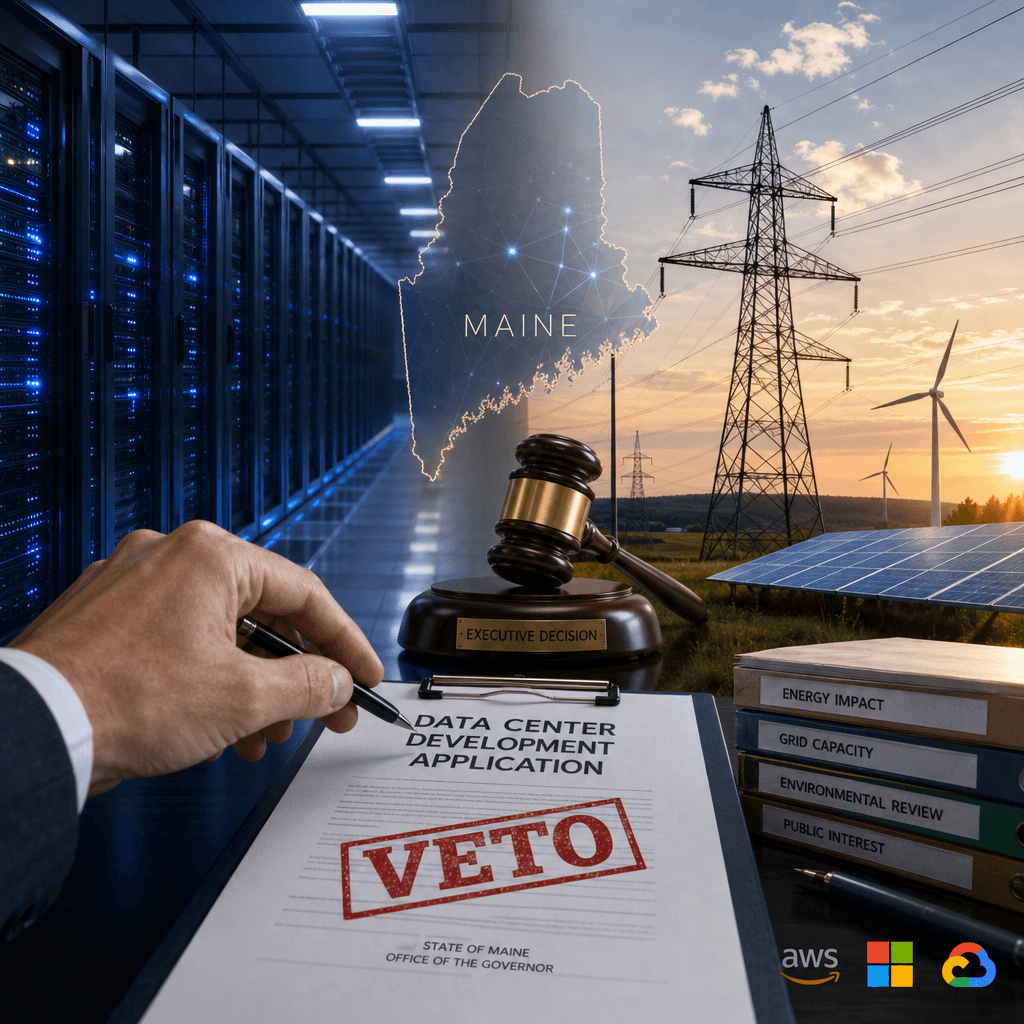
Maine’s governor vetoed L.D. 307, which would have imposed the country’s first statewide data center moratorium through November 2027
- ■
The veto preserves Maine as a viable expansion zone for tech companies building out AI and cloud infrastructure
- ■
The moratorium push reflected growing tensions between AI’s massive energy demands and state-level sustainability goals
- ■
Similar regulatory battles are brewing in other states as data center construction accelerates nationwide
Maine’s governor just vetoed what would’ve been America’s first statewide data center moratorium, sinking a controversial bill that aimed to pause new facilities until late 2027. The decision keeps the door open for tech giants racing to build AI infrastructure across the state, even as energy concerns and local opposition mount. It’s a critical win for cloud providers and AI companies scrambling to secure power-hungry data center sites anywhere they can find them.
Maine’s governor delivered a decisive blow to critics of data center expansion, vetoing legislation that would have made the state the first in the nation to impose a blanket moratorium on new facilities. L.D. 307, as the bill was known, would have frozen data center construction until November 1, 2027, creating an 18-month pause that supporters argued was necessary to assess environmental and grid impacts.
The veto lands at a critical moment for the tech industry. Companies like Amazon, Microsoft, and Google are in a frantic sprint to secure data center locations to power their AI ambitions. Training large language models and running inference at scale demands massive computing resources, and that translates directly into data centers consuming jaw-dropping amounts of electricity. Maine’s relatively cool climate and access to renewable energy had made it an increasingly attractive target for expansion.
But that same appeal sparked fierce local resistance. Environmental groups and community advocates pushed L.D. 307 through the state legislature, arguing that Maine’s electrical grid wasn’t ready to handle the load. They pointed to energy consumption projections showing data centers could strain resources and drive up costs for residents. The moratorium, they said, would buy time to develop guardrails before approving projects that could lock in decades of infrastructure decisions.
The governor’s veto changes that calculus entirely. Without the pause, developers can continue pursuing projects, and tech companies can keep Maine on their site selection maps. For Meta, Nvidia, and others building out AI compute capacity, every potential location matters. Data center construction timelines already stretch 18 to 24 months, and regulatory uncertainty only adds delays that companies can’t afford as they compete to scale their AI offerings.
Maine isn’t alone in grappling with these tensions. Similar debates are erupting across the country as communities wake up to the reality of AI infrastructure in their backyards. Virginia’s Loudoun County, already the world’s largest data center market, has faced growing pushback over land use and energy consumption. States like Oregon and Washington are fielding proposals for new tax structures targeting data center energy use.
The veto also underscores a broader clash between state-level priorities and the tech industry’s expansion needs. While companies frame data centers as economic development – bringing construction jobs, property taxes, and high-tech employment – critics argue the benefits don’t outweigh the environmental costs. Data centers require relatively few permanent workers once operational, and their energy appetite can overwhelm local grids built for different purposes.
For Maine, the decision keeps economic development arguments in play. Supporters of data center construction point to tax revenue and infrastructure investment, even as opponents question whether those gains justify the environmental tradeoffs. The governor’s veto suggests the economic case won out, at least for now.
What happens next will set precedents beyond Maine’s borders. If the state successfully attracts major data center projects without grid failures or runaway energy costs, it’ll undermine moratorium advocates’ warnings. But if problems emerge – blackouts, spiking electricity rates, or environmental damage – it’ll fuel efforts to impose similar restrictions elsewhere. Tech companies watching this closely know that Maine’s experience could either open doors or slam them shut across other states eyeing moratoriums.
The veto also arrives as the federal government weighs in on data center regulation. The Department of Energy has launched initiatives to study grid impacts, while some members of Congress have floated legislation requiring environmental reviews for large facilities. Maine’s decision to reject a state-level pause might shift momentum toward federal action instead.
For AI companies, the immediate takeaway is clear: Maine remains in play. That matters because suitable data center locations are getting harder to find. Sites need reliable power, network connectivity, cooling infrastructure, and community acceptance – a combination that’s increasingly rare. Losing an entire state for 18 months would have been a significant setback.
Maine’s veto is more than a local policy decision – it’s a signal about how states will balance AI infrastructure needs against environmental concerns. For tech companies, it’s a green light to keep pursuing expansion in a competitive market where every viable location counts. But the fight isn’t over. Expect legislators to regroup, possibly with modified proposals that address specific concerns rather than blanket moratoriums. Meanwhile, other states are watching closely, trying to figure out whether to welcome data centers with open arms or slam on the brakes before the AI boom reshapes their energy landscapes permanently.










Leave a Reply