
- ■
Jury selection starts Monday in Musk v. Altman trial, marking the culmination of a bitter dispute over OpenAI’s direction
- ■
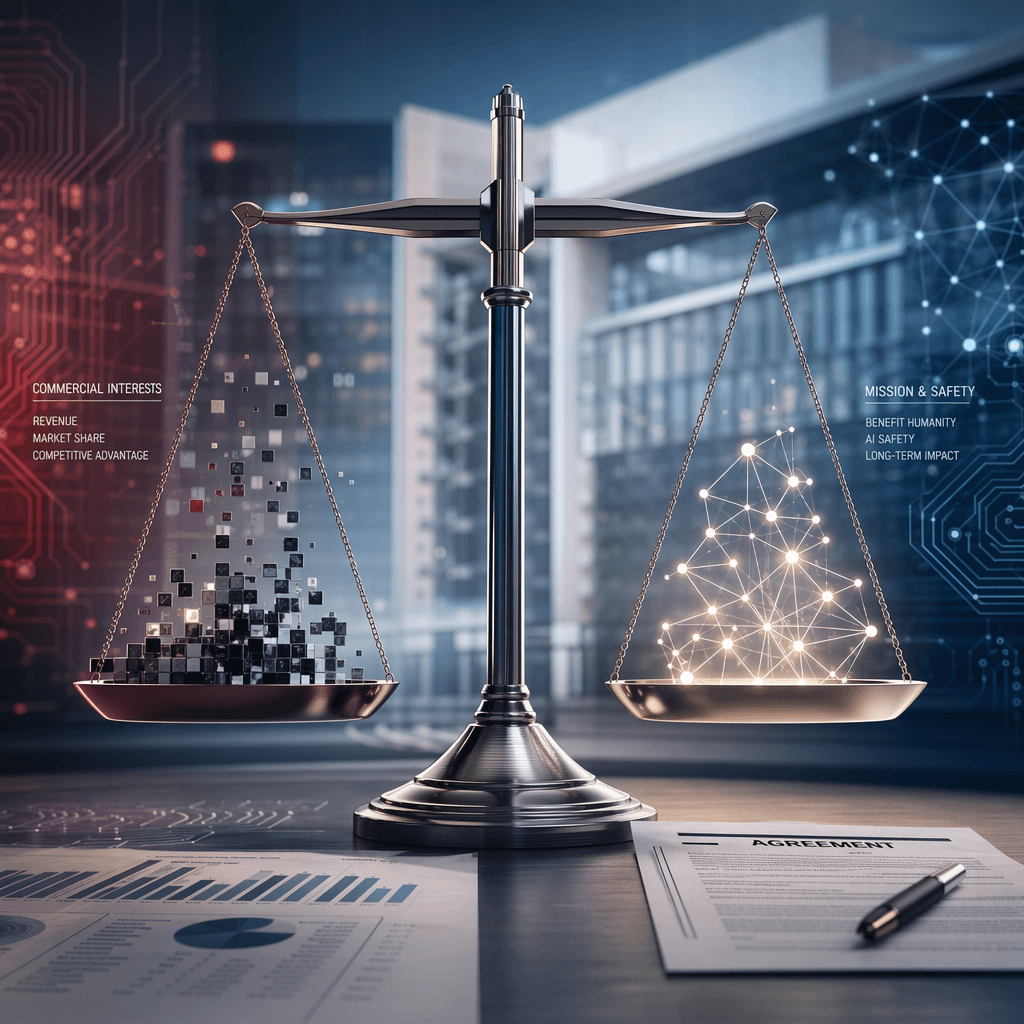
Musk alleges OpenAI violated its founding principles by partnering with Microsoft and pursuing profits over safety
- ■
The case could reshape AI governance and set precedents for how nonprofit research organizations transition to commercial models
- ■
Both Musk’s xAI and Altman’s OpenAI are valued in the tens of billions, making this a battle between AI’s biggest players
The AI industry’s most anticipated legal showdown kicks off Monday as Elon Musk and Sam Altman head to court. Jury selection begins in what’s shaping up to be a defining moment for artificial intelligence governance, with Musk’s claims that OpenAI abandoned its nonprofit mission now facing judicial scrutiny. The trial arrives as both men race to dominate the generative AI market through competing ventures.
Silicon Valley’s most contentious relationship is about to play out in a San Francisco courtroom. Elon Musk and Sam Altman face off starting Monday in a trial that’s been years in the making, according to CNBC. Jury selection begins what legal experts are calling the most significant AI-related lawsuit to date.
The lawsuit traces back to Musk’s explosive allegations that OpenAI betrayed its founding mission. Musk co-founded the AI research lab in 2015 alongside Altman and others, pledging to develop artificial general intelligence for the benefit of humanity. But Musk claims the organization’s 2019 transformation into a capped-profit entity, followed by its multibillion-dollar partnership with Microsoft, represents a fundamental breach of that agreement.
Musk departed OpenAI’s board in 2018, citing potential conflicts with Tesla’s AI work. The relationship soured completely after OpenAI released ChatGPT in late 2022, triggering an AI arms race that’s reshaped the entire tech industry. By 2023, Musk launched his own competing AI venture, xAI, which recently achieved a reported valuation of $50 billion.
The legal filing paints a dramatic picture of broken promises and corporate maneuvering. Musk’s attorneys argue that OpenAI’s pursuit of commercial success through its partnership with Microsoft directly contradicts the organization’s founding charter. OpenAI’s structure as a nonprofit with a for-profit subsidiary has drawn scrutiny from lawmakers and industry observers who question whether such arrangements can truly prioritize safety over shareholder returns.
Altman and OpenAI have pushed back hard against these claims. The company maintains its structure allows it to raise the massive capital necessary for AI development while keeping the nonprofit board in control of key decisions. OpenAI’s legal team has characterized Musk’s lawsuit as sour grapes from a former co-founder who left the organization and now competes directly against it.
The stakes extend far beyond personal grievances. The trial could establish crucial precedents about how AI research organizations balance open science with commercial imperatives. OpenAI’s transition from fully nonprofit to hybrid model has inspired imitators, but it’s also raised questions about accountability and mission drift in an industry racing toward transformative technology.
Both men bring enormous credibility and resources to the fight. Musk’s xAI has attracted top talent and secured billions in funding to develop Grok, its answer to ChatGPT. Meanwhile, OpenAI continues to lead the generative AI market, with ChatGPT now used by hundreds of millions globally and enterprise products generating significant revenue through the Microsoft partnership.
The courtroom battle arrives at a pivotal moment for AI regulation. Lawmakers in Washington and Brussels are crafting rules for the industry, looking to cases like this one for insight into how AI companies should be governed. The trial’s outcome could influence everything from nonprofit governance standards to disclosure requirements for AI safety research.
Legal observers expect a lengthy trial with both sides calling expert witnesses on AI development, corporate governance, and the technical details of OpenAI’s evolution. The jury will need to untangle complex questions about fiduciary duty, contractual obligations, and whether OpenAI’s actions constitute a breach of its founding agreements with early supporters like Musk.
Monday’s jury selection marks the beginning of what could be a months-long legal battle with implications reaching far beyond two feuding tech billionaires. The trial will test fundamental questions about AI governance at exactly the moment when those questions matter most. As generative AI reshapes everything from education to healthcare, the Musk-Altman case offers a rare public examination of the tension between idealistic research missions and the commercial realities of building transformative technology. Whatever the verdict, the proceedings will likely influence how the next generation of AI companies structure themselves and what obligations they owe to their founding principles.




Leave a Reply