
- ■
Ascend Elements files for Chapter 11 bankruptcy after losing a crucial government grant and facing brutal market conditions for recycled battery materials
- ■
The battery recycling startup had raised over $500 million and counted Honda and SK On as strategic investors before market dynamics shifted
- ■
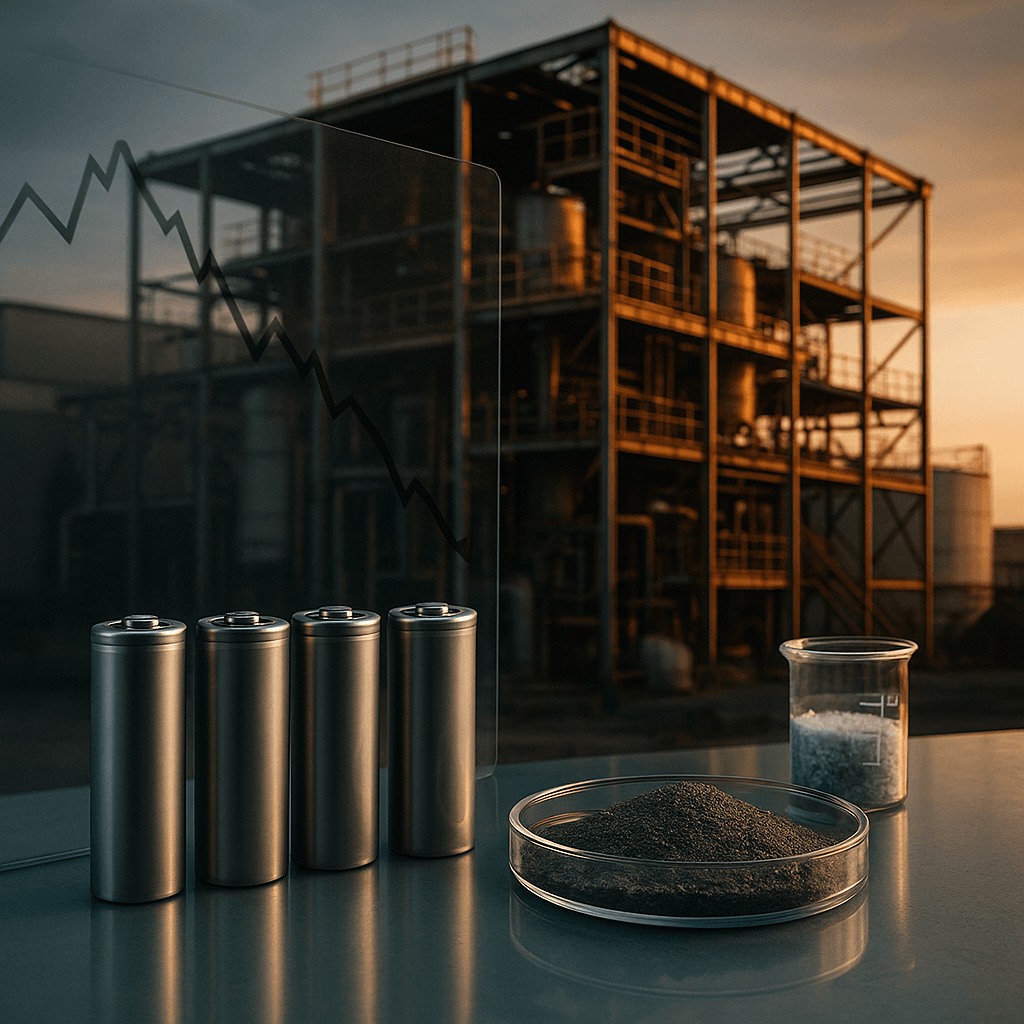
Lithium-ion battery material prices have crashed 60% since 2022, making recycled cathode materials economically unviable against virgin imports
- ■
The bankruptcy signals broader challenges for domestic battery supply chain startups dependent on government subsidies and favorable commodity pricing
Ascend Elements, once a high-flying battery recycling startup backed by major automakers and government support, is filing for Chapter 11 bankruptcy protection. The collapse comes after a critical federal grant was canceled and lithium-ion battery prices plummeted, leaving the Massachusetts-based company unable to compete with cheaper imported materials. The filing marks one of the most prominent casualties in the climate tech sector’s recent shakeout.
Ascend Elements just became the latest cautionary tale in climate tech’s reality check. The battery recycling company announced it’s filing for Chapter 11 bankruptcy, a stunning reversal for a startup that had raised more than $500 million and positioned itself as critical infrastructure for America’s electric vehicle future.
The immediate trigger was the cancellation of a Department of Energy grant that Ascend had been counting on to fund its commercial-scale operations. According to TechCrunch, the company cited both the lost federal support and “a challenging market for lithium-ion batteries” as reasons for the filing. But the real story is more complicated, revealing deep structural problems in the battery recycling economics.
Battery material prices have absolutely cratered over the past two years. Lithium carbonate, which peaked above $80,000 per ton in late 2022, now trades around $12,000. Nickel and cobalt have followed similar trajectories. That price collapse makes Ascend’s entire business model – recycling old batteries to recover valuable materials – brutally difficult. Why would battery manufacturers pay premium prices for recycled cathode materials when virgin materials from China cost a fraction?
Ascend wasn’t some scrappy garage operation either. The Westborough, Massachusetts company had attracted serious automotive firepower. Honda and South Korean battery giant SK On were both strategic investors, betting that Ascend’s proprietary “Hydro-to-Cathode” recycling process could give them a domestic source of critical battery materials. The company had started construction on what was supposed to be the largest battery recycling facility in North America, a massive plant in Hopkinsville, Kentucky.
That Kentucky facility is now in limbo. Construction had already begun on the 140-acre site, which was projected to process enough batteries annually to recover materials for 250,000 electric vehicles. The project was supposed to create 400 jobs in a region hungry for advanced manufacturing opportunities. Local officials had celebrated Ascend’s arrival as exactly the kind of clean energy investment that would anchor their economic future.
The DOE grant cancellation particularly stings because it represents a broader pullback in federal support for battery supply chain projects. While the Inflation Reduction Act provided billions for domestic battery manufacturing, the actual deployment of those funds has been slower and more selective than many startups anticipated. Companies that bet their runway on government grants materializing on schedule are now scrambling.
Ascend’s technology itself wasn’t the problem. The company’s process could recover up to 98% of critical materials from spent lithium-ion batteries, producing recycled cathode material that performed identically to virgin material in testing. In a different market environment – one with higher commodity prices, stricter import restrictions, or faster EV adoption creating more end-of-life batteries – Ascend might have thrived.
But timing in startups is everything, and Ascend’s timing couldn’t have been worse. The company scaled up just as the bottom fell out of battery material markets. Global EV sales growth has slowed from the breakneck pace of 2020-2022. Meanwhile, China has flooded markets with cheap battery materials, leveraging its control of processing capacity to undercut Western competitors. Recycling operations with high labor and regulatory costs simply can’t compete on price.
The bankruptcy filing will likely involve a sale process, where Ascend’s technology and partial facilities could be acquired by a larger player with deeper pockets. Battery giants like CATL or LG Energy Solution might see value in picking up the assets at bankruptcy prices, even if the standalone business model didn’t work.
What makes this particularly significant is what it says about the broader climate tech investment landscape. Ascend checked all the boxes that VCs and policy makers said mattered – domestic manufacturing, critical supply chain security, circular economy principles, strategic partnerships with major corporations. Yet it still failed because commodity market dynamics and policy execution didn’t align with the business plan.
Other battery recycling startups like Redwood Materials and Li-Cycle are watching nervously. Redwood, founded by former Tesla CTO JB Straubel, has raised over $2 billion and seems better capitalized to weather the downturn. Li-Cycle had its own brush with disaster in 2023 when it had to dramatically scale back expansion plans. The sector is clearly overcrowded relative to current demand for recycled materials.
The Chapter 11 filing will give Ascend breathing room to restructure debt and potentially find new investors or acquirers. But the company’s trajectory from climate tech darling to bankruptcy in just a few years will resonate across the entire cleantech ecosystem. Investors are already pulling back from capital-intensive hardware plays in favor of software and AI. Ascend’s collapse will only accelerate that trend.
Ascend Elements’ bankruptcy filing is more than just another startup failure – it’s a stress test for the entire thesis behind domestic battery supply chain independence. The company had the technology, the partnerships, and initially the government support. What it didn’t have was protection against a commodity price collapse and the harsh reality that recycling only makes economic sense when virgin materials are expensive or scarce. For the dozens of climate tech startups banking on continued government largesse and favorable market conditions, Ascend’s fate is a sobering reminder that good intentions and solid technology aren’t enough without viable unit economics. The survivors in battery recycling will be those who can either achieve dramatically lower costs or who have diversified revenue streams that don’t depend entirely on selling recycled materials into a glutted market.








Leave a Reply