
- ■
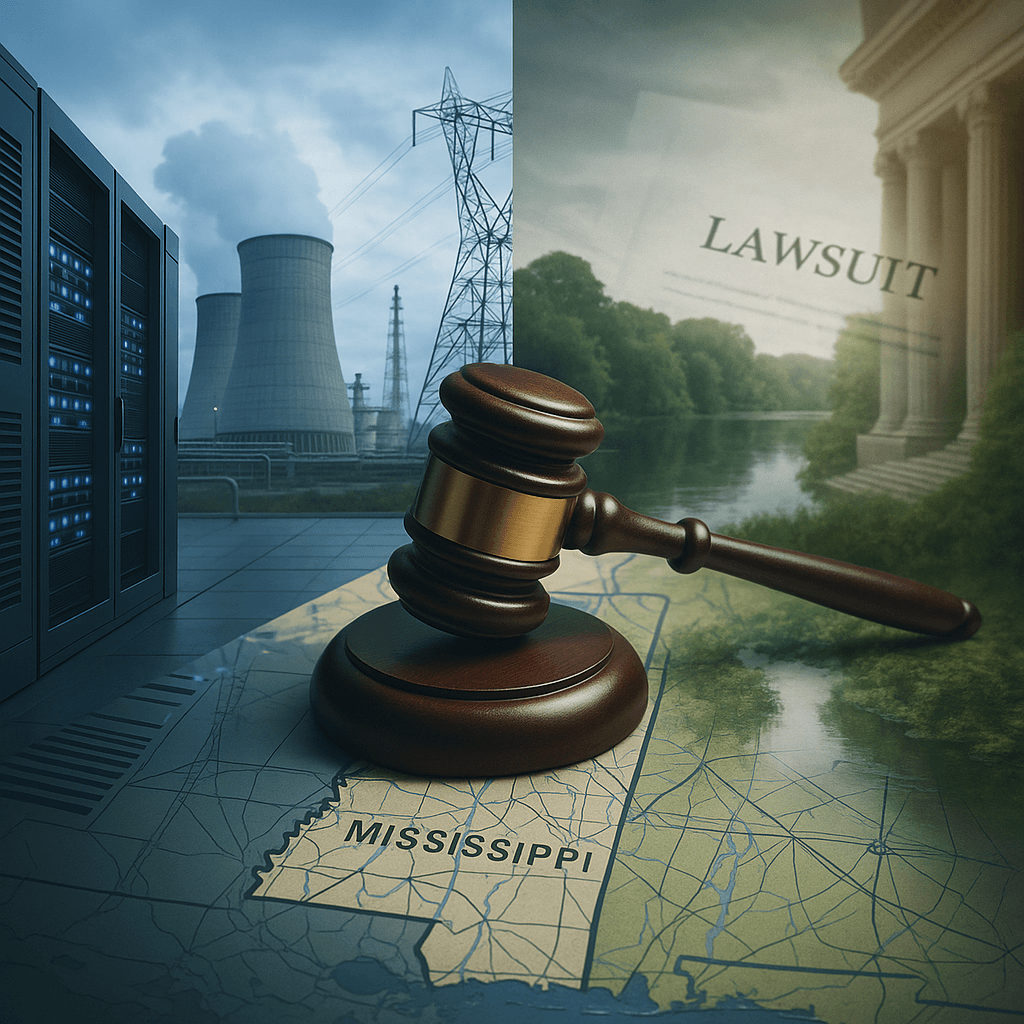
Environmental groups file legal challenge against xAI’s Mississippi power plant permit, according to CNBC
- ■
xAI, now under SpaceX ownership, needs massive energy capacity to train large language models and compete with AI rivals
- ■
The opposition highlights growing tension between AI infrastructure buildout and environmental regulations
- ■
Legal battle could delay xAI’s expansion plans as competition intensifies in the AI sector
Elon Musk’s xAI just hit a major roadblock in its race to power the next generation of AI. Environmental groups have launched a legal challenge against the company’s newly approved permit for a massive power plant in Mississippi, raising questions about the environmental cost of AI’s insatiable appetite for energy. The lawsuit comes as xAI, now owned by SpaceX, pushes to scale its infrastructure to compete with OpenAI and Google in the AI arms race.
xAI, Elon Musk’s artificial intelligence venture, is facing fresh legal opposition after securing a permit for a major power plant in Mississippi. Environmental groups have mounted a challenge that could complicate the company’s ambitious infrastructure plans, according to CNBC.
The legal action comes at a critical moment for xAI, which recently became part of the SpaceX empire. The company needs massive amounts of electricity to power the data centers that train and run its AI models, putting it in direct competition with deep-pocketed rivals like OpenAI, Google, and Microsoft.
The Mississippi facility represents a significant bet on xAI’s ability to scale its operations. Training large language models requires enormous computational resources, and the energy demands have become a major bottleneck for AI companies racing to build more capable systems. While tech giants have turned to everything from nuclear power to renewable energy deals, xAI’s approach with a dedicated power plant signals just how serious the infrastructure challenge has become.
Environmental groups opposing the permit are raising concerns about the project’s impact on local ecosystems and carbon emissions. The lawsuit adds xAI to a growing list of tech companies facing pushback over the environmental footprint of AI development. Meta recently scrapped plans for a nuclear-powered data center after regulatory hurdles, while Amazon has faced similar challenges with its AWS expansion.
The SpaceX acquisition of xAI, while not officially detailed in terms of structure or valuation, suggests Musk is consolidating his various tech ventures. This integration could provide xAI with additional resources and engineering expertise, but it also means the legal challenge could have broader implications across Musk’s business empire.
For xAI, the timing is particularly sensitive. The company has been working to catch up with OpenAI’s ChatGPT and Google’s Gemini, and any delays in infrastructure buildout could widen the competitive gap. The AI industry is moving at breakneck speed, with new model releases happening every few months. Companies that can’t secure the computing power to train cutting-edge models risk falling behind permanently.
The Mississippi power plant opposition also reflects a broader reckoning in the tech industry about the sustainability of AI growth. Data centers already account for roughly 1-2% of global electricity consumption, and that figure is projected to surge as AI adoption accelerates. Regulators and environmental advocates are increasingly scrutinizing whether the benefits of AI justify the environmental costs.
What happens next in Mississippi could set precedents for other AI infrastructure projects across the country. If environmental groups succeed in blocking or significantly delaying the power plant, other AI companies may face similar challenges when trying to expand their own facilities. Conversely, if xAI prevails, it could smooth the path for more aggressive buildouts industry-wide.
The legal battle is just beginning, and court proceedings could drag on for months or even years. In the fast-moving AI sector, that kind of uncertainty represents a significant risk for xAI’s strategic plans.
The legal challenge to xAI’s Mississippi power plant captures the collision between AI’s explosive growth and environmental accountability. As Musk’s latest venture pushes to compete with established AI leaders, it’s discovering that securing computing power is just as much a regulatory and political battle as a technical one. How this lawsuit plays out will send signals to the entire industry about what level of environmental scrutiny AI companies should expect as they race to build the infrastructure for tomorrow’s technology. For now, xAI’s expansion plans are on shakier ground than the company would like.










Leave a Reply