
- ■
TSMC reports 35% year-over-year revenue surge in Q1 2026, reaching a new quarterly record according to CNBC
- ■
Growth driven primarily by AI chip orders from Nvidia and advanced processors for Apple’s latest devices
- ■
Results cement TSMC’s position as the critical infrastructure layer enabling the AI boom, with no competitor matching its 3nm manufacturing capabilities
- ■
Watch for TSMC’s full earnings breakdown later this month to reveal profit margins and capacity expansion plans
Taiwan Semiconductor Manufacturing Company just posted a jaw-dropping 35% revenue jump for Q1 2026, marking a new record high as the world’s largest contract chipmaker rides an unprecedented wave of AI chip orders. The results underscore how Nvidia’s insatiable appetite for advanced AI processors and Apple’s next-generation device chips are reshaping the global semiconductor landscape, turning TSMC into the quiet powerhouse behind the AI revolution.
TSMC just delivered the numbers that confirm what industry insiders have been whispering for months – the AI chip gold rush shows no signs of slowing down. The Taiwanese semiconductor giant posted a 35% revenue increase for Q1 2026 compared to the same period last year, according to preliminary figures reported by CNBC, marking yet another record quarter for the company that manufactures chips for virtually every major tech player.
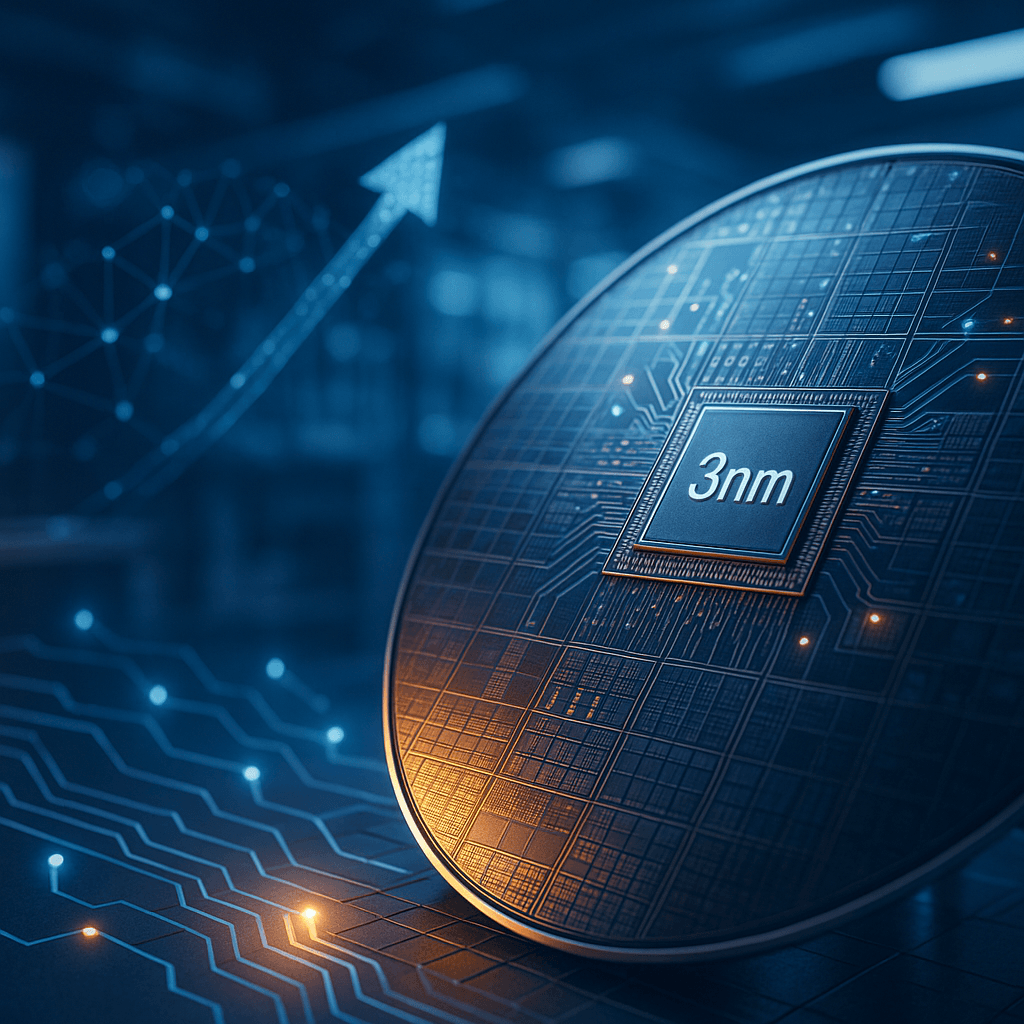
The surge reflects a fundamental shift in the semiconductor industry’s center of gravity. While TSMC has always been a critical player, its role as the sole manufacturer capable of producing the most advanced 3-nanometer chips at scale has transformed it from supplier to kingmaker. Nvidia, whose AI accelerators power everything from ChatGPT to autonomous vehicles, depends almost entirely on TSMC’s cutting-edge fabrication plants to meet demand that CEO Jensen Huang has repeatedly called “insane.”
But it’s not just AI driving TSMC’s boom. Apple continues to lean heavily on the chipmaker for its custom silicon, including the latest iterations of the M-series chips powering MacBooks and the A-series processors in iPhones. The Cupertino giant’s multi-year transition away from Intel processors has made it one of TSMC’s largest customers, creating a symbiotic relationship where Apple gets exclusive access to cutting-edge manufacturing and TSMC gets guaranteed volume orders worth billions.
The competitive landscape tells the rest of the story. While Intel has promised to catch up with its Intel 18A process node and Samsung struggles to match TSMC’s yields on advanced nodes, neither can currently manufacture chips at the 3nm level with TSMC’s consistency. That technological moat has created what amounts to a temporary monopoly on the most sophisticated chip production in the world, and customers are paying premium prices for guaranteed capacity.
Industry analysts have been raising their TSMC price targets for months, but the company’s capital expenditure requirements remain staggering. Building and operating advanced semiconductor fabs requires tens of billions in investment, with each new facility in Arizona, Japan, and Taiwan costing upward of $20 billion. TSMC’s ability to generate record revenue while simultaneously funding this massive expansion speaks to the extraordinary margins available in cutting-edge chip manufacturing.
The geopolitical dimension adds another layer of complexity. TSMC’s dominance has made it a strategic asset that both the U.S. and China view as critical to national security. The company’s new Arizona facilities, supported by CHIPS Act funding, represent an attempt to diversify production away from Taiwan, though the island nation will remain TSMC’s manufacturing heartland for the foreseeable future. Every earnings report becomes a data point in the broader conversation about semiconductor supply chain resilience.
What makes this quarter particularly notable is the timing. Despite broader economic uncertainty and cooling consumer electronics demand in some segments, AI infrastructure spending continues to accelerate. Meta, Microsoft, Google, and Amazon are all racing to build out data center capacity powered by Nvidia chips that TSMC manufactures. The enterprise AI buildout is offsetting weakness elsewhere, creating a two-tier semiconductor market where advanced AI chips command premium pricing while commodity chips face margin pressure.
TSMC’s full quarterly earnings report, expected later this month, will reveal the profit margins behind this revenue surge and provide guidance on capacity utilization rates. Investors will be watching closely to see whether the company raises its full-year outlook and provides details on when its next-generation 2nm process will enter mass production. That technology node, expected to debut in 2026, represents the next frontier in chip manufacturing and will likely extend TSMC’s technological lead for another two to three years.
The numbers also raise questions about sustainability. Can AI chip demand maintain this pace, or are we seeing a temporary infrastructure buildout that will normalize once companies have sufficient compute capacity? TSMC’s executives have consistently argued that AI represents a multi-year secular trend rather than a cyclical spike, but semiconductor history is littered with boom-bust cycles that caught even savvy players off guard.
TSMC’s record-breaking quarter is more than just impressive financials – it’s a real-time indicator of where the tech industry is placing its biggest bets. As long as AI remains the dominant investment theme and companies like Nvidia and Apple continue pushing the boundaries of chip performance, TSMC’s position as the world’s most advanced chipmaker translates directly into pricing power and revenue growth that few companies can match. The question isn’t whether this quarter was strong, but whether the industry can sustain this level of demand as the AI infrastructure buildout matures. For now, TSMC is riding the wave, and there’s no clear end in sight.









Leave a Reply