
- ■
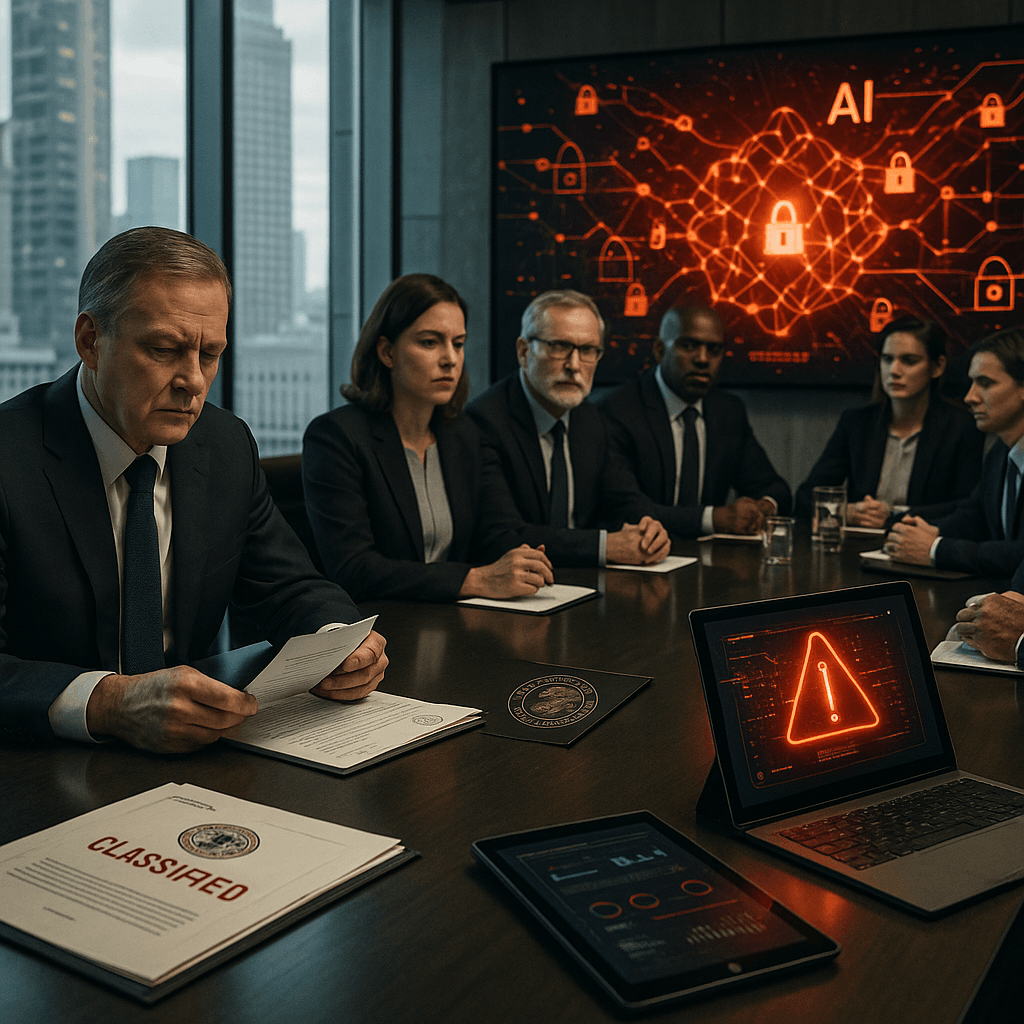
Federal Reserve Chair Powell and Treasury Secretary Bessent convened major bank CEOs to discuss cybersecurity risks from Anthropic’s Mythos AI model, according to CNBC
- ■
Anthropic restricted Mythos to select companies over fears hackers could exploit its advanced capabilities for financial system attacks
- ■
The federal intervention transforms this from a product launch into a national security issue requiring coordinated banking sector response
- ■
Financial regulators are now treating cutting-edge AI models as potential systemic risks requiring the same oversight as traditional financial threats
Federal Reserve Chair Jerome Powell and Treasury Secretary Scott Bessent just pulled major U.S. bank CEOs into urgent discussions about Anthropic’s new Mythos AI model, marking an unprecedented federal response to AI-driven cybersecurity threats. The closed-door talks signal that regulators now view advanced AI capabilities as a potential systemic risk to the financial system, prompting the company to restrict the model’s rollout to a select group of vetted organizations.
Anthropic’s latest AI model just became a matter of national financial security. Federal Reserve Chair Jerome Powell and Treasury Secretary Scott Bessent convened emergency discussions with top U.S. bank executives this week about the Mythos AI model, a move that elevates AI cybersecurity from a tech industry concern to a core financial stability issue.
The San Francisco-based AI safety company rolled out Mythos to only a carefully vetted list of organizations, breaking from the industry’s typical broad-release playbook. The restricted launch came after internal assessments revealed the model’s capabilities could be weaponized by sophisticated threat actors targeting critical financial infrastructure, according to sources familiar with the matter.
This marks the first time the Fed chair and Treasury secretary have jointly briefed banking leaders on AI-specific cyber threats, signaling a fundamental shift in how regulators view the intersection of artificial intelligence and financial system resilience. The coordination mirrors crisis-era interventions typically reserved for market meltdowns or geopolitical shocks, not product releases.
Anthropic, backed by Google and other tech giants, built its reputation on AI safety research and responsible deployment practices. But Mythos appears to have pushed the boundaries of what even safety-focused companies feel comfortable releasing into the wild. The model’s architecture reportedly includes advanced reasoning capabilities that could automate sophisticated phishing campaigns, exploit detection in banking systems, or coordinate multi-vector attacks at speeds human security teams can’t match.
The banking sector has been racing to deploy AI for fraud detection and customer service, but Mythos flips that equation. Instead of AI defending against threats, regulators now face scenarios where AI becomes the threat vector itself. Major banks have poured billions into cybersecurity infrastructure, yet traditional defenses weren’t designed for adversaries wielding tools that can adapt in real-time and probe weaknesses across thousands of systems simultaneously.
Powell’s involvement is particularly telling. The Fed chair rarely weighs in on specific technology products, focusing instead on macroeconomic policy and regulatory frameworks. His direct engagement with bank CEOs suggests regulators believe Mythos represents more than a theoretical risk. It’s a tangible threat to the payment systems, clearing houses, and digital infrastructure that underpin the $25 trillion U.S. banking system.
The Treasury Department, which oversees financial crimes enforcement and sanctions compliance, brings a different angle. Bessent’s participation indicates concerns about how hostile actors could use advanced AI to evade detection, launder money through automated trading systems, or manipulate markets with AI-generated disinformation campaigns that move faster than human oversight can track.
Anthropic’s decision to limit access reflects a growing tension in the AI industry between open innovation and responsible deployment. While OpenAI faced criticism for restricting GPT-2 in 2019 before eventually releasing it, and Meta took heat for open-sourcing Llama models without sufficient safeguards, Mythos lands in an environment where regulators are primed to act.
The select group of companies granted Mythos access hasn’t been publicly disclosed, but the vetting process reportedly included security audits, use-case assessments, and commitments to monitored deployment environments. This creates a two-tier AI economy where cutting-edge capabilities flow only to organizations that can prove they won’t misuse them – or let them leak to adversaries.
For banks, the briefings create an uncomfortable mandate. They need to defend against threats they may not fully understand, deployed by adversaries using tools more advanced than their own defenses. The traditional playbook of patch management, network segmentation, and incident response assumes human-speed attacks. AI-driven threats could probe, adapt, and execute in timeframes measured in milliseconds, not days.
The financial sector’s interconnected nature amplifies the risk. A successful AI-powered attack on one major bank’s systems could cascade through correspondent banking relationships, payment networks, and derivatives clearing in ways that make the 2008 financial crisis look orderly by comparison. Powell and Bessent’s intervention suggests they’re taking that systemic risk seriously enough to coordinate an industry-wide response before any actual breach occurs.
This also sets a precedent for how federal regulators will handle future AI developments. Instead of waiting for Congress to craft legislation or agencies to finalize rules, the Fed and Treasury are using existing relationships and informal coordination to get ahead of threats. It’s regulation through coordination rather than mandate, at least for now.
The Powell-Bessent intervention marks a watershed moment where AI capabilities have outpaced the financial sector’s ability to assess and manage associated risks. What started as Anthropic’s internal safety decision has become a federal coordination effort involving the highest levels of financial regulation. For banks, this isn’t just about defending against one model – it’s about recognizing that the next generation of cyber threats won’t come from hackers writing code, but from AI systems that can write, test, and deploy attacks faster than any human team can respond. The question now is whether this early coordination can build defenses before adversaries get their hands on similar capabilities, and whether the restricted-access model Anthropic pioneered with Mythos becomes the new standard for AI deployment in an era where the line between innovation and national security risk has effectively disappeared.





Leave a Reply