
- ■
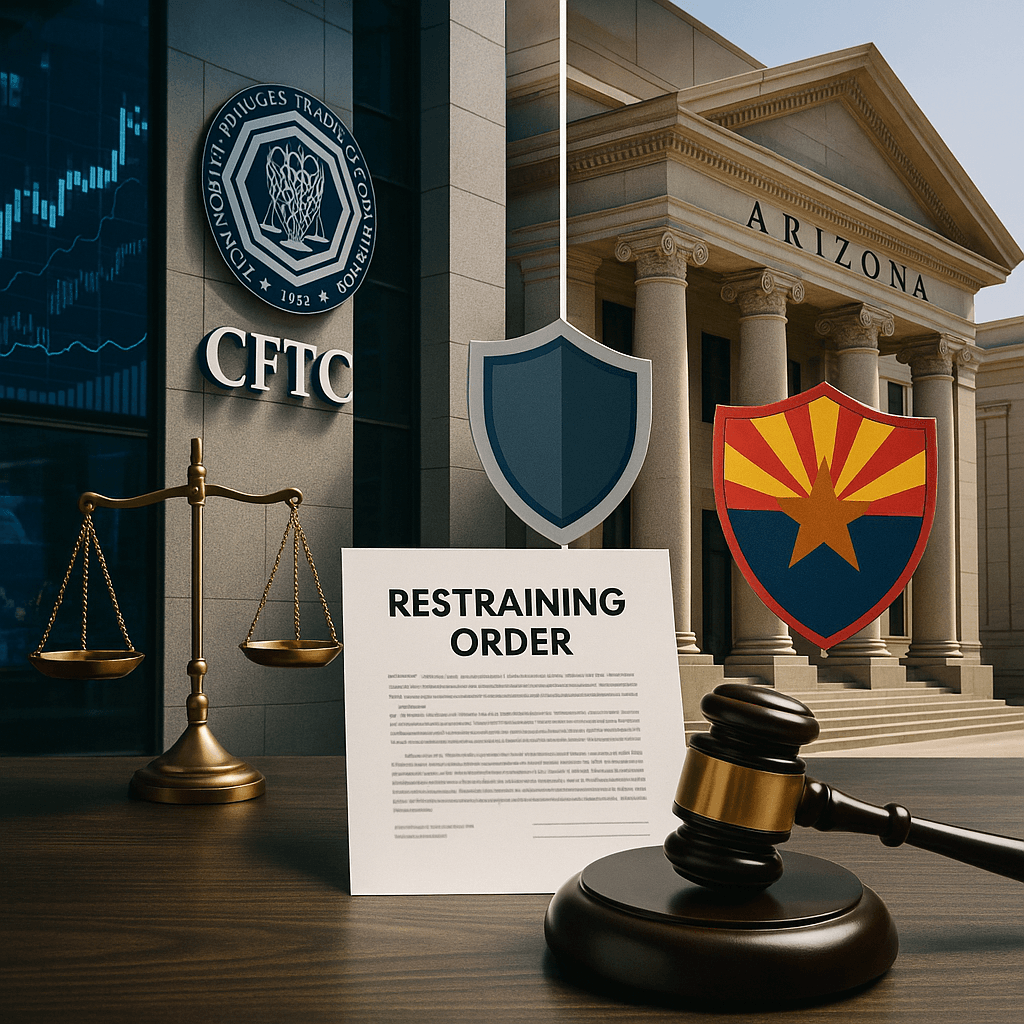
The CFTC won a temporary restraining order Friday preventing Arizona from pursuing its criminal case against Kalshi, according to TechCrunch
- ■
The federal intervention sets up a jurisdictional battle between state gambling enforcement and federal commodity market regulation
- ■
Kalshi operates CFTC-regulated prediction markets, but faces state-level scrutiny over whether its contracts constitute illegal gambling
- ■
The case could determine whether federally-approved prediction markets can operate nationwide or face state-by-state criminal prosecution
The Commodity Futures Trading Commission just threw a federal shield around Kalshi, winning a temporary restraining order that blocks Arizona from pursuing criminal charges against the prediction markets startup. The Friday court victory marks an escalating clash between state gambling enforcers and federal regulators over who controls the booming prediction market industry – and whether platforms like Kalshi are running legitimate financial exchanges or illegal betting operations.
Kalshi just got a lifeline from its federal regulator. The Commodity Futures Trading Commission announced Friday that it secured a temporary restraining order blocking Arizona from moving forward with criminal charges against the prediction market platform, setting up what could become a landmark battle over regulatory jurisdiction in the fintech world.
The restraining order temporarily freezes Arizona’s prosecution while federal courts sort out whether states can criminally charge platforms that already operate under CFTC approval. For Kalshi, which lets users trade contracts on real-world events from election outcomes to economic indicators, the stakes couldn’t be higher. A criminal conviction could unravel its entire business model and send shockwaves through the prediction market industry.
Kalshi became the first CFTC-regulated prediction market exchange in the United States back in 2020, positioning itself as a legitimate financial platform rather than a gambling site. But that federal blessing hasn’t stopped state authorities from taking a harder look. Arizona prosecutors apparently see something different when they look at Kalshi’s event contracts – namely, illegal gambling dressed up in regulatory approval.
The CFTC’s aggressive move to shield Kalshi reveals how seriously federal regulators take the jurisdictional question. By seeking a restraining order rather than just filing a brief, the commission is essentially arguing that Arizona’s prosecution threatens to undermine federal commodity market oversight. It’s the regulatory equivalent of stepping in front of a moving train.
This isn’t happening in a vacuum. Prediction markets have exploded in popularity over the past few years, with platforms like Polymarket processing billions in trading volume on everything from political races to pop culture events. But the legal landscape remains murky. While the CFTC has approved certain contracts, state gambling laws create a patchwork of potential criminal liability that varies wildly depending on where users or companies operate.
The temporary restraining order gives Kalshi breathing room, but it’s just that – temporary. Federal judges will need to decide whether the CFTC’s regulatory authority preempts state criminal gambling statutes, a question that could reshape how prediction markets operate across the country. If states can prosecute federally-approved platforms, every prediction market becomes a potential criminal defendant in 50 different jurisdictions.
For the broader fintech ecosystem, the case represents a familiar tension. Federal regulators often move faster than state legislatures in approving innovative financial products, creating a gap where state authorities can step in with century-old gambling laws. The same dynamic has played out with cryptocurrency exchanges, sports betting apps, and now prediction markets.
Kalshi’s founders have consistently maintained that their platform offers legitimate risk management tools and price discovery mechanisms, not gambling. Users trade contracts that derive value from real-world outcomes, similar to how commodity futures work. But critics argue that distinction is semantic – if it looks like betting on events and feels like betting on events, state gambling laws should apply regardless of federal regulatory approval.
The CFTC’s intervention also signals how much political and regulatory capital is now tied up in prediction markets. These platforms have become go-to sources for gauging public sentiment on major events, often proving more accurate than traditional polling. Shutting them down through state criminal prosecution could eliminate a valuable information tool, even if those same platforms raise legitimate questions about gambling regulation.
What happens next depends on how quickly federal courts move and whether Arizona decides to fight the restraining order or negotiate. The state could argue that its criminal statutes protect residents from predatory gambling operations, regardless of federal commodity market rules. Meanwhile, Kalshi and the CFTC will likely argue that allowing state-by-state criminal prosecution of federally-approved exchanges creates chaos in national markets.
The temporary restraining order buys Kalshi time, but the fundamental question remains unresolved: can states criminally prosecute platforms that federal regulators have already approved? The answer will determine whether prediction markets can operate as national financial exchanges or face a gauntlet of state-level criminal exposure. For now, the CFTC has made clear it won’t let one of its regulated platforms go down without a federal fight. Watch for Arizona’s response and whether other states with pending investigations follow suit or back off.











Leave a Reply