
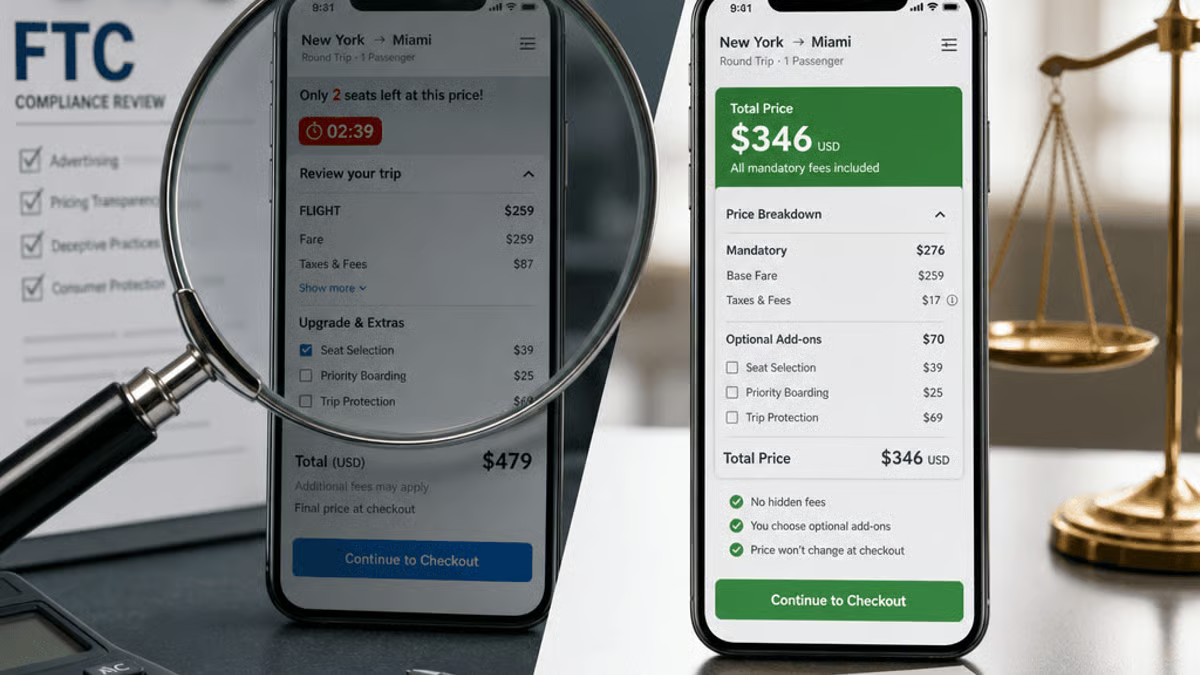
Travel booking app Hopper is writing a $35 million check to settle Federal Trade Commission allegations that it deployed deceptive dark patterns to hide fees and mislead travelers. The settlement marks one of the FTC’s most aggressive enforcement actions targeting consumer-facing travel tech, coming as regulators crack down on junk fees across digital platforms. For millions of users who thought they were getting transparent pricing, the complaint reveals a systematic pattern of UI manipulation designed to obscure true costs.
Hopper, the Montreal-based travel booking app that’s raised over $700 million in venture funding, just became the poster child for what regulators won’t tolerate in digital pricing. The Federal Trade Commission hit the company with a $35 million settlement over allegations it systematically misled consumers through dark patterns – those intentionally confusing interface designs that trick users into spending more than they intended.
The complaint centers on how Hopper presented pricing to its millions of users. According to FTC allegations, the app buried mandatory fees in checkout flows, used urgency messaging to pressure purchases, and misrepresented the actual benefits of add-on services. It’s the kind of friction that travelers encounter constantly but rarely leads to enforcement action of this scale.
What makes this settlement significant isn’t just the dollar amount – it’s the FTC’s willingness to call out specific UI patterns as unfair and deceptive. The agency has been telegraphing this approach for months, but Hopper represents one of the clearest examples of enforcement against what the FTC terms “dark patterns.” That term covers everything from hidden checkboxes to manipulative countdown timers that create false urgency.
Hopper built its reputation on price prediction algorithms that supposedly helped travelers book at optimal times. The company’s valuation hit $5 billion in 2021 as pandemic-era travel rebounded. But the FTC’s complaint suggests the app’s revenue model relied heavily on those controversial add-on fees and upsells that users didn’t fully understand they were purchasing.
The settlement comes as the Biden administration pushes a broader “junk fees” initiative targeting hidden charges across industries. Airlines, hotels, ticket vendors, and now booking apps are all in regulators’ crosshairs. The Department of Transportation recently finalized rules requiring upfront pricing transparency for airfare, and the FTC has signaled similar expectations for third-party booking platforms.
For Hopper, $35 million represents a material hit but probably not an existential threat. The company processes billions in travel bookings annually and has deep-pocketed backers including Capital One and Goldman Sachs. What’s more concerning is the precedent this sets for how the app – and competitors like Expedia, Booking.com, and Kayak – structure pricing disclosure going forward.
The FTC didn’t just collect a check and move on. Settlement terms reportedly include monitoring provisions and requirements that Hopper overhaul how it presents optional services versus mandatory fees. That means engineering resources dedicated to compliance rather than growth features. It also means competitors are watching closely to see which specific patterns triggered enforcement.
Consumer advocates have been pushing for exactly this type of action. The complaint validates long-standing criticisms that booking apps deliberately obscure total costs until users are deep into checkout flows, using psychological tactics to drive attachment rates on insurance, seat selection, and other ancillary revenue streams. According to consumer protection groups, these tactics disproportionately impact price-sensitive travelers who can least afford surprise charges.
Hopper’s case also highlights tension in the travel tech ecosystem between transparent pricing and revenue optimization. Investors expect these platforms to extract maximum value per booking through ancillary services. But if those services require dark patterns to achieve attachment rates, regulators are making clear that’s not a sustainable model.
The settlement lands as travel booking behavior continues shifting mobile-first, with apps like Hopper competing against both legacy online travel agencies and direct airline booking. Mobile interfaces create more opportunities for subtle manipulation – smaller screens, thumb-based navigation, notification pressure – but also more regulatory scrutiny of user experience patterns.
What happens next likely depends on whether the FTC views this as a one-off enforcement action or the opening salvo in broader travel tech oversight. If it’s the latter, expect every booking platform to audit checkout flows and fee disclosure practices. The $35 million price tag just became the cost of non-compliance that every competitor is calculating against their own revenue models.
The Hopper settlement isn’t just about one travel app paying a fine – it’s the FTC drawing a line on dark patterns that have become standard practice across consumer tech. With $35 million on the table and compliance monitoring ahead, every booking platform is now recalculating the cost-benefit of aggressive pricing tactics versus regulatory risk. For travelers, this could mark the beginning of genuinely transparent pricing in an industry that’s built opacity into its revenue model. For Hopper’s competitors, it’s a clear signal that the era of consequence-free UI manipulation is ending. The question now is whether enforcement spreads beyond travel tech to the countless other apps using similar patterns to drive conversions.











Leave a Reply