
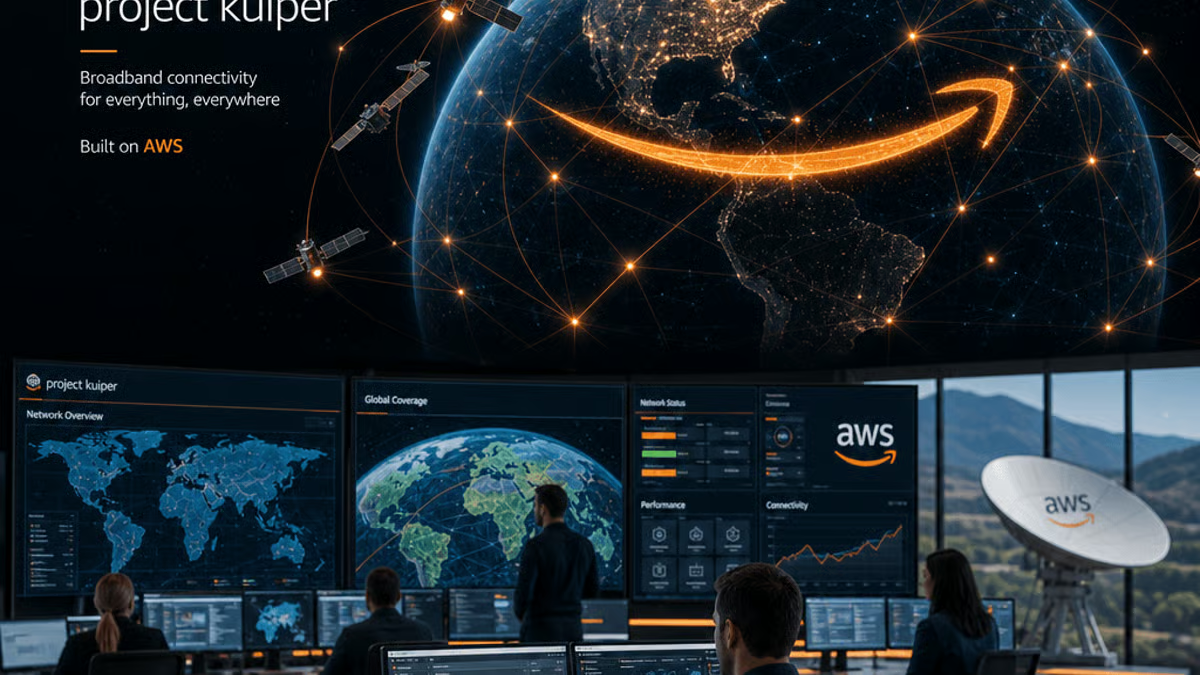
Amazon just crossed the finish line in its years-long race to compete with SpaceX’s Starlink. The tech giant has deployed enough satellites to launch its Leo broadband service later this year, marking a critical milestone in what’s shaping into the most significant battle for global internet connectivity. After years of playing catch-up, Amazon’s pushing forward despite Starlink holding a four-year head start and commanding over 10,000 satellites already in orbit.
Amazon just hit a major milestone that’ll reshape the satellite internet landscape. The company’s deployed enough satellites to launch its Leo broadband service later this year, finally transforming years of investment and planning into an operational competitor to SpaceX’s Starlink.
The timing couldn’t be more critical. While Starlink has been beaming internet to customers since 2020 and now operates more than 10,000 satellites, Amazon’s been methodically building its constellation through Project Kuiper. That four-year gap gave SpaceX’s service time to dominate early adopters, from rural homeowners to maritime operators, but Amazon’s bringing something Starlink can’t easily replicate – deep integration with AWS and enterprise relationships spanning decades.
Amazon’s approach differs fundamentally from SpaceX’s consumer-first strategy. The company’s positioning Leo as enterprise infrastructure, targeting businesses that need reliable connectivity for remote operations, IoT deployments, and backup systems. It’s the same playbook that made AWS the cloud computing leader – go after businesses first, then let consumer adoption follow.
The satellite deployment itself represents a logistics triumph. Amazon’s been launching batches aboard various rockets, including United Launch Alliance’s Atlas V and even SpaceX’s own Falcon 9 rockets. The irony of using your competitor’s launch vehicles to challenge their market dominance isn’t lost on industry observers. But it showcases how the space economy’s maturing into specialized layers – launch providers, satellite operators, and service providers don’t always compete directly.
What’s particularly interesting is Amazon’s manufacturing scale. The company built a massive satellite production facility capable of churning out multiple satellites daily. While Starlink’s already launched over 10,000 satellites, Amazon’s production capacity means it can rapidly close the gap once it starts operating at full throttle. The question isn’t whether Amazon can deploy enough satellites – it’s whether customers will switch from an established service.
For businesses, Leo represents a potential game-changer in negotiating leverage. Right now, Starlink essentially owns the low-Earth-orbit broadband market for enterprise customers who need better than traditional satellite internet. Amazon’s entry creates competition, which typically means better pricing and service terms. Companies operating in remote locations – mining operations, oil rigs, research stations – suddenly have options.
The regulatory framework’s also playing into Amazon’s favor. The FCC granted Amazon approval to deploy 3,236 satellites back in 2020, with requirements to launch half by 2026. The company’s cutting it close on that timeline, but meeting regulatory milestones matters enormously in the satellite business where spectrum allocation and orbital slots are precious commodities governed by international agreements.
But Amazon’s facing challenges beyond just matching Starlink’s satellite count. The user terminal – the dish customers install – needs to be cost-effective and easy to deploy. Starlink’s gone through multiple iterations, driving down costs and improving performance. Amazon’s starting from scratch on that learning curve, though the company’s supply chain expertise and manufacturing relationships could accelerate development.
The broader implication extends to Amazon’s cloud strategy. Imagine AWS customers seamlessly extending their cloud infrastructure to remote locations via Leo connectivity. That’s the vision – AWS Outposts, IoT services, and edge computing all supported by Amazon-controlled satellite internet. It creates a closed ecosystem that enterprises might find compelling, especially those already committed to AWS infrastructure.
Market dynamics are shifting too. Traditional satellite internet providers like Viasat and Hughes are already feeling pressure from Starlink’s low-latency service. Amazon’s entry intensifies that pressure while potentially opening new market segments. The company could bundle Leo access with Prime memberships in remote areas, use it for Amazon logistics and delivery networks, or offer it as a perk for AWS enterprise customers.
Amazon’s Leo launch marks the beginning of genuine competition in satellite internet, a market that’s been Starlink’s to lose. For enterprises and consumers alike, that competition means better options, potentially lower prices, and innovation driven by two tech giants battling for orbital supremacy. The real winners are remote businesses and underserved communities who’ll finally have leverage in choosing their internet provider. What happens next depends on whether Amazon can translate its massive operational advantages – cloud integration, enterprise relationships, logistics expertise – into a service that matches or exceeds what Starlink’s spent four years perfecting.









Leave a Reply