
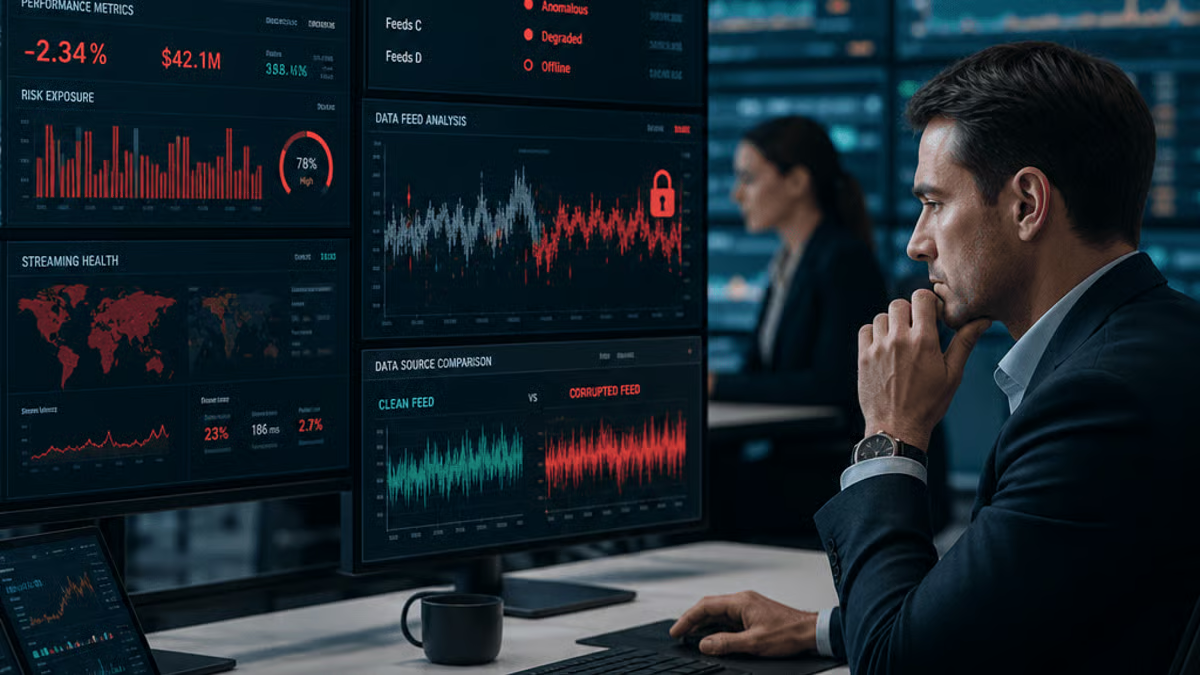
Spotify just confirmed what prediction market traders suspected all along – its streaming numbers have been compromised by fraud. The admission came after one of Kalshi’s most prominent traders told WIRED he’s abandoning all Spotify-related markets until the platform addresses systematic manipulation. The revelation threatens to upend the emerging prediction market economy built around streaming data, raising questions about whether any platform metrics can be trusted as the basis for financial contracts.
Spotify just handed prediction markets their first major data integrity crisis. The streaming giant confirmed fraudulent activity on its platform after a prominent Kalshi trader raised red flags about suspicious patterns in Spotify-related betting markets, according to an exclusive WIRED report.
The trader, who WIRED described as one of Kalshi’s most active participants, told the publication he’s swearing off all Spotify markets until the company resolves the manipulation issue. It’s a significant escalation in the ongoing debate about whether consumer platform data is robust enough to serve as the foundation for regulated financial instruments.
Kalshi operates as a CFTC-regulated prediction market where users can bet real money on outcomes ranging from Federal Reserve decisions to pop culture events. Spotify streaming performance has become one of the platform’s more popular categories, with traders wagering on everything from chart positions to playlist placements. But if the underlying data is compromised, the entire market structure collapses.
The streaming fraud revelation comes at a delicate moment for prediction markets broadly. Polymarket and Kalshi have been racing to establish legitimacy in mainstream finance, arguing that crowdsourced predictions often outperform traditional forecasting. Polymarket, which operates on blockchain, has faced its own controversies around market manipulation and wash trading.
Streaming fraud isn’t new to Spotify – the company has battled bot farms and artificial stream inflation for years. What’s different now is the financial infrastructure being built on top of that data. When traders are putting actual capital at risk based on streaming numbers, the stakes for accurate reporting increase exponentially.
The problem extends beyond just Spotify. Prediction markets have experimented with contracts based on Netflix viewership, YouTube trending metrics, and social media engagement numbers. All of these platforms grapple with varying degrees of manipulation and artificial inflation. The question facing Kalshi and its competitors is whether any consumer platform data is clean enough to support serious financial markets.
Spotify’s confirmation marks a rare admission from a major tech platform. Most companies prefer to handle fraud quietly, scrubbing bad actors without public acknowledgment. That Spotify felt compelled to go on record suggests the scale of the problem – or the pressure from prediction market platforms – reached a tipping point.
For Kalshi, the incident threatens credibility at a crucial growth phase. The company only received CFTC approval for certain political and economic markets in recent years and has been aggressively expanding into entertainment and cultural prediction categories. Spotify markets represented a test case for whether pop culture phenomena could generate the same trader interest as traditional financial instruments.
The trader boycott adds another dimension. Unlike traditional markets where participants might grumble privately, prediction platforms depend on vocal, engaged communities. When prominent traders publicly withdraw, it signals to others that the game might be rigged. That’s particularly damaging for platforms trying to attract mainstream participation beyond crypto-native users.
Spotify hasn’t detailed what specific fraud it discovered or how widespread the manipulation was. The company’s reluctance to elaborate leaves traders guessing about whether past market outcomes were compromised and whether positions should be unwound. It’s exactly the kind of uncertainty that can crater liquidity fast.
The broader implications stretch into how we value attention in the creator economy. Streaming numbers drive artist compensation, playlist placement, and label deals. If those metrics are systematically manipulated, it’s not just prediction market traders getting bad data – it’s an entire industry making decisions based on corrupted information.
The Spotify fraud confirmation forces prediction markets to confront an uncomfortable truth – the data infrastructure underpinning consumer tech platforms wasn’t built for financial derivatives. As Kalshi and Polymarket push deeper into entertainment and culture betting, they’ll need either stronger verification mechanisms or to accept that some markets are simply too manipulable to support serious trading. For now, at least one prominent trader has made his choice, and his boycott might just be the start of a broader reckoning about what data sources can actually be trusted when real money is on the line.










Leave a Reply