
- ■
Samsung won two gold and two silver awards at the Edison Awards 2026 for AI-powered consumer products
- ■
Gold winners include Smart Modular House with AI-based architecture and Vision AI Companion that uses generative AI for TV interaction
- ■
The awards highlight Samsung’s strategy to integrate AI across home appliances, entertainment, and commercial displays
- ■
Recognition comes as consumer tech giants race to demonstrate practical AI applications beyond chatbots and enterprise software
Samsung just walked away with four Edison Awards for a sweeping vision of AI-integrated living. The company snagged two gold and two silver trophies at the prestigious innovation competition held April 15-16 in Fort Myers, Florida, showcasing products that span from AI-powered modular homes to generative AI TV companions. The wins signal Samsung’s aggressive push to embed artificial intelligence across its entire consumer portfolio, from laundry rooms to living rooms.
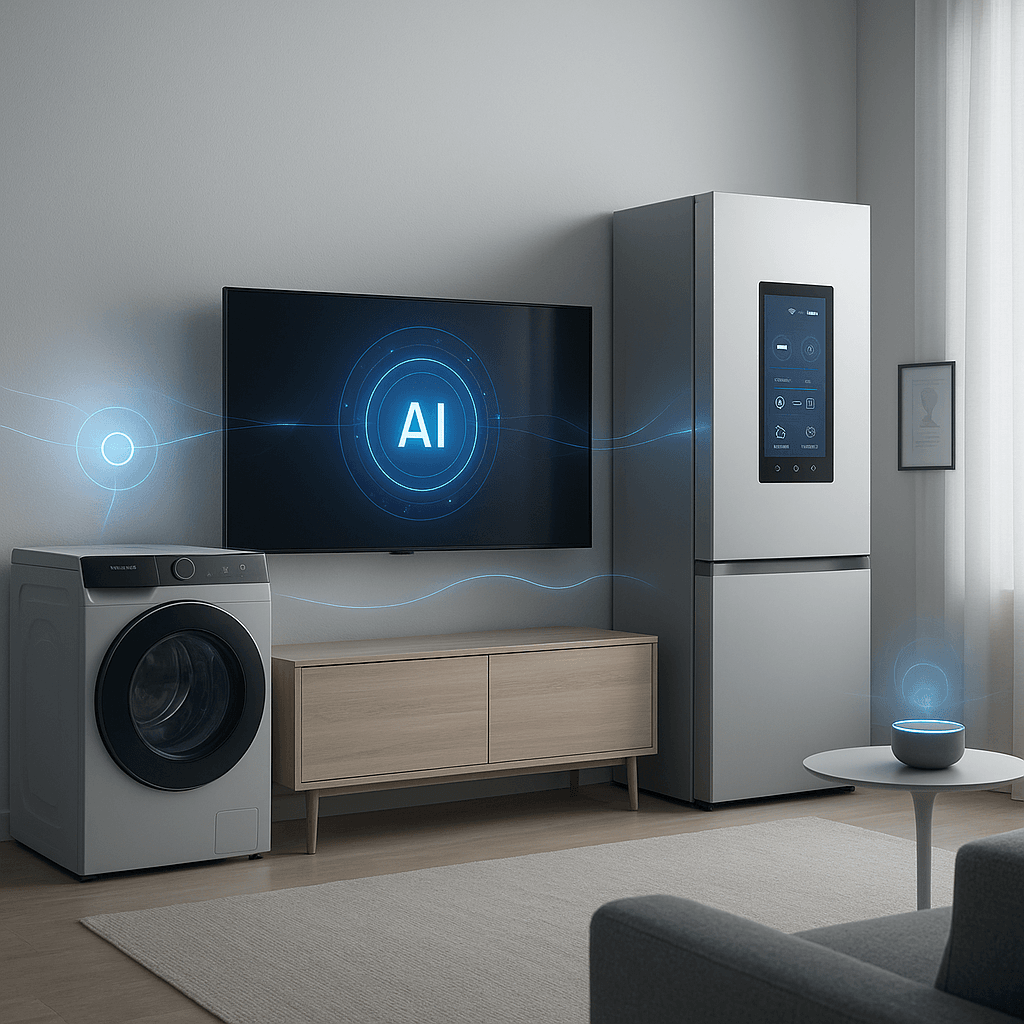
Samsung Electronics is making its case that AI belongs everywhere in your home, not just on your phone. The company’s four wins at the Edison Awards 2026 reveal a coordinated strategy to weave artificial intelligence into products you’d never expect – from the walls of your house to your washing machine.
The Smart Modular House took gold with an AI-powered approach to residential architecture. Instead of static floor plans, Samsung’s system connects your environment, appliances, and personal habits into a responsive ecosystem. The AI manages everything from indoor climate to energy consumption, adapting the physical space to how you actually live. It’s an ambitious play that positions Samsung not just as an appliance maker but as a home infrastructure company.
“Design sits at the intersection of business, technology and humanity,” Mauro Porcini, Chief Design Officer and President of the Device eXperience Division at Samsung, said in the company’s announcement. “Our role is to understand people deeply and translate their needs, dreams and emotions into meaningful experiences.”
The second gold award went to Vision AI Companion, which reimagines TV interaction through generative AI. Rather than fumbling through menus, users can ask questions about plot points, search for related content, or control playback with natural voice commands. The system eliminates the traditional remote-and-menu paradigm that’s frustrated viewers for decades. It’s Samsung’s answer to how AI can make entertainment more intuitive – and it arrives as every TV manufacturer scrambles to justify why their displays need machine learning.
On the silver side, Samsung’s Spatial Signage demonstrates where the company sees commercial AI applications heading. The glasses-free 3D display uses Samsung’s patented 3D Plate technology packed into a slim 52mm profile for the 85-inch model. Targeted at retail stores, exhibitions, and entertainment venues, it’s designed to catch attention in crowded commercial environments. The technology suggests Samsung’s betting that immersive displays will become the next battlefield for AI-enhanced customer experiences.
The Bespoke AI Laundry Combo rounds out the awards with a more practical AI application. The all-in-one washer-dryer uses AI to detect load size, fabric types, and soil levels, then adjusts its wash and dry cycles automatically. A 7-inch Smart Screen touchscreen replaces the traditional dial interface. It’s the kind of mundane AI integration that might actually change daily routines – no PhD required to operate your laundry.
The Edison Awards, founded in 1987 by the American Marketing Association, judge entries across 14 categories based on innovation criteria evaluated by industry experts, scientists, and academics. This year’s ceremony recognized gold, silver, and bronze tiers across product development, marketing, and human-centered design.
Samsung’s sweep comes as the company faces intense pressure to demonstrate AI leadership beyond smartphones. While competitors like Apple integrate AI into personal devices and Google dominates cloud AI services, Samsung’s strategy targets the physical spaces where people live and work. The Edison wins validate an approach that embeds intelligence into furniture, appliances, and architecture rather than concentrating it in pocket-sized screens.
But awards don’t guarantee market success. Samsung’s challenge is convincing consumers that AI-powered homes justify premium prices when basic appliances work fine. The Smart Modular House concept requires homeowners to buy into Samsung’s entire ecosystem – a tough sell when most people mix brands freely. Vision AI Companion needs content partnerships and natural language processing that works reliably, not just in demos. And Spatial Signage competes in commercial markets where procurement cycles move slowly and ROI calculations matter more than innovation trophies.
What’s notable is the breadth of Samsung’s AI ambitions on display. These aren’t incremental improvements to existing products – they’re reimagined categories that assume AI should be invisible infrastructure rather than flashy features. The company’s betting that the next phase of artificial intelligence won’t be about chatbots and large language models, but about systems that quietly manage the physical world around us.
The timing matters too. As AI hype cycles through enterprise software and productivity tools, consumer applications remain fuzzy for most people. Samsung’s products attempt to answer the “so what?” question with concrete use cases: homes that adjust to your schedule, TVs that understand context, displays that don’t need special glasses, laundry that handles itself. Whether consumers will pay for those conveniences remains the billion-dollar question.
Samsung’s Edison Awards sweep reveals a company trying to redefine where AI lives in our daily routines – not as smartphone assistants or cloud services, but as invisible intelligence woven into walls, screens, and appliances. The strategy is bold and the technology is impressive, but the real test comes when consumers decide whether AI-powered homes are worth the ecosystem lock-in and premium prices. For now, Samsung’s shown it can win innovation awards. Converting those trophies into market dominance is the next chapter.







Leave a Reply