
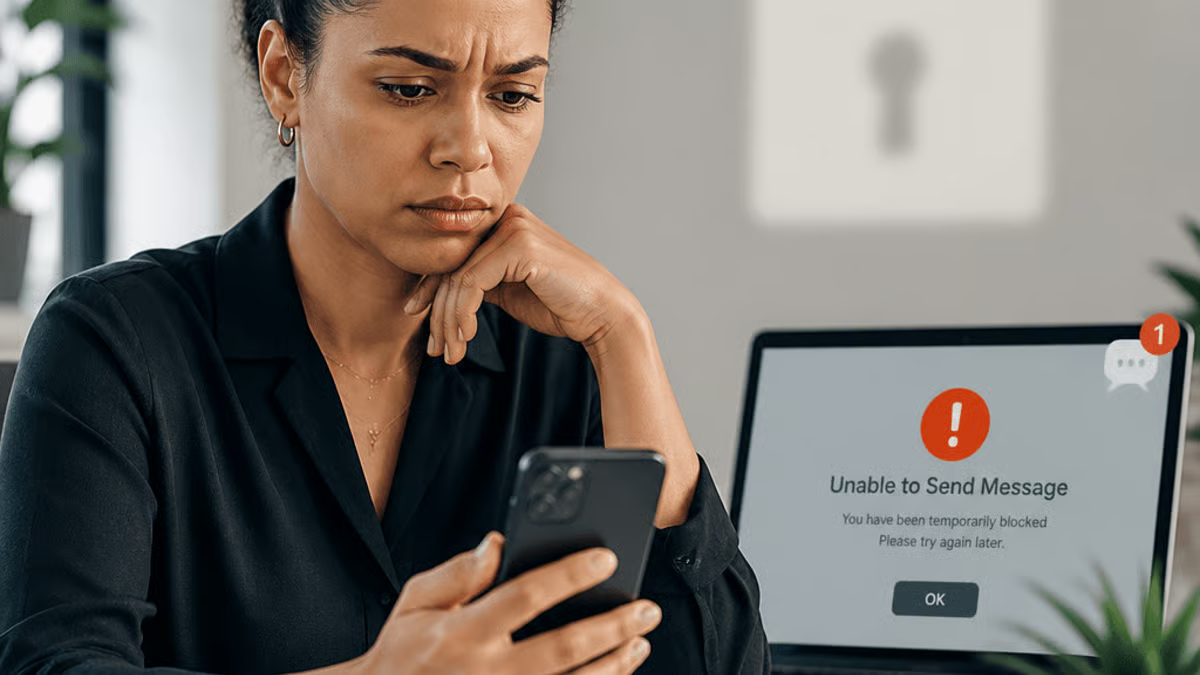
Meta is working to fix a major glitch that locked countless WhatsApp users out of their accounts today. The issue, which began appearing Monday afternoon, mistakenly flagged legitimate accounts and placed them “under review,” leaving users staring at error messages instead of their message threads. It’s the kind of automated moderation mishap that raises questions about how much control algorithms have over our digital lives.
WhatsApp users across multiple regions found themselves suddenly cut off from the world’s most popular messaging app Monday afternoon, and Meta is now racing to undo the damage. The company confirmed it’s restoring access to accounts that were mistakenly flagged by its automated systems and placed under review, but the scope of the disruption remains unclear.
Users took to social media throughout the day reporting identical experiences – opening WhatsApp only to find their accounts suspended pending review, with no clear explanation of what rules they’d allegedly violated. For an app that’s become essential infrastructure for 2 billion people worldwide, even a brief outage creates chaos. Small businesses lose customer contact, families can’t coordinate, and in some regions where WhatsApp dominates communication, people are effectively cut off.
What makes this incident particularly frustrating is the lack of transparency. Meta hasn’t said how many accounts were affected, what geographic regions saw the most problems, or what exactly went wrong with its flagging systems. The company’s brief statement to TechCrunch acknowledged the problem and promised fixes, but offered none of the technical detail that might prevent similar incidents.
This isn’t WhatsApp‘s first rodeo with automated moderation gone awry. The platform relies heavily on machine learning to detect spam, abuse, and policy violations at scale – an approach that works most of the time but occasionally sweeps up innocent users in its net. The challenge is balancing aggressive abuse prevention with avoiding false positives that lock out legitimate users.
The timing is awkward for Meta, which has been pitching WhatsApp Business as a reliable platform for commerce and customer service. When your account can vanish without warning due to an algorithmic hiccup, it’s tough to build a business on that foundation. Merchants who depend on WhatsApp for orders and customer communication were left scrambling for alternative ways to reach clients.
What likely happened here is a configuration change or model update that made Meta’s spam detection systems too aggressive, flagging normal user behavior as suspicious. These systems look at patterns like message volume, link sharing, and account age to identify potential bad actors. When the thresholds get miscalibrated, regular users get caught in the crossfire.
The incident also underscores a broader tension in how tech platforms moderate content and behavior. Automated systems are essential for platforms operating at Meta’s scale – there’s no way to manually review everything. But when those systems make mistakes, users often have little recourse. The “under review” limbo some accounts entered today offers no timeline, no appeals process, and no human to explain what went wrong.
For users still waiting to regain access, Meta’s statement offers cold comfort. The company says it’s working on restoring accounts, but hasn’t provided an estimated timeline or confirmed whether all affected users will get their accounts back. Some users report already regaining access, while others remain locked out hours after the problem started.
The episode is a reminder of how dependent we’ve become on platforms we don’t control. When Meta’s algorithms decide your account looks suspicious, you’re at their mercy until someone on their end fixes it. There’s no customer service number to call, no guaranteed response time, and often no explanation of what triggered the flag in the first place.
As Meta works to restore the affected accounts, the incident serves as an uncomfortable reminder of the fragility of our digital communication infrastructure. When automated systems make mistakes at scale, millions can be impacted before humans even notice something’s wrong. For WhatsApp users who depend on the app for everything from family communication to running their businesses, today’s outage is more than an inconvenience – it’s a vulnerability they can’t easily route around. The real test will be whether Meta provides a transparent post-mortem and implements safeguards to prevent similar mass false positives in the future.





Leave a Reply