
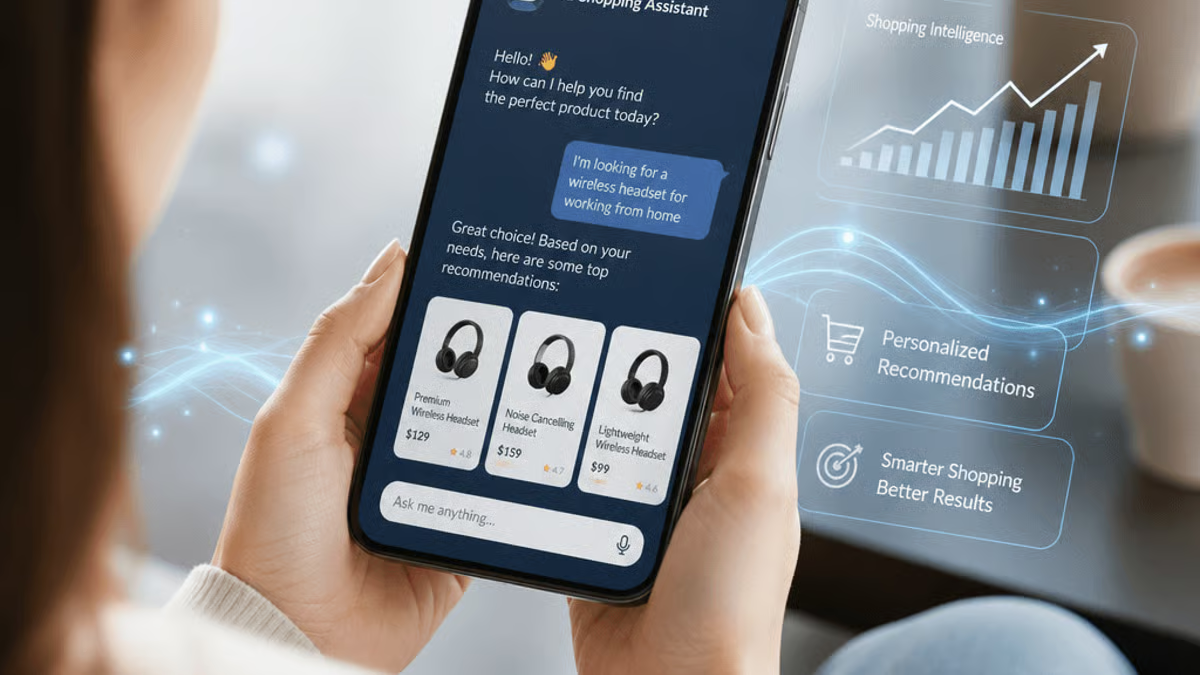
AI-powered shopping searches just hit a tipping point. The technology surged 200% over the past year, forcing 86% of commerce leaders to completely rethink customer expectations, according to new data from ZDNet. What started as experimental chatbot features has become the fastest-growing channel in e-commerce, and retailers who aren’t adapting are already falling behind. The shift marks a fundamental change in how consumers discover and buy products online.
The numbers tell a story of accelerating disruption. AI-powered shopping searches tripled in just 12 months, growing faster than mobile commerce did during its breakthrough period. But it’s not just the velocity that has commerce leaders nervous – it’s what the technology is doing to customer expectations.
Eighty-six percent of commerce executives now believe AI is fundamentally raising the bar for what shoppers demand, according to ZDNet. That’s forcing a wholesale rethinking of everything from search interfaces to product recommendations to checkout flows. The old keyword-based search model is starting to look ancient.
Consumers are gravitating toward AI shopping tools because they work more like conversations than queries. Instead of typing “blue running shoes size 10,” shoppers now ask “what’s the best shoe for marathon training in wet weather?” The AI doesn’t just return product listings – it understands context, asks follow-up questions, and guides buyers through decisions. Traditional search can’t compete with that experience.
The shift is hitting hardest at retailers who invested heavily in legacy search infrastructure. Companies spent years optimizing for SEO and keyword strategies, only to watch AI shopping assistants bypass those systems entirely. Some major e-commerce platforms are now racing to retrofit conversational AI onto architectures that weren’t designed for it.
Early movers are already seeing results. Retailers who deployed AI shopping assistants report higher conversion rates and larger basket sizes compared to traditional search users. The AI tools excel at cross-selling and upselling because they understand purchase intent in ways keyword search never could. When a shopper asks about camping gear, the AI knows to suggest complementary items without feeling pushy.
But the technology creates new challenges too. AI shopping assistants require massive product knowledge bases, real-time inventory integration, and sophisticated natural language processing. Smaller retailers worry they lack the resources to compete as AI becomes table stakes. The concern is that AI shopping could consolidate power among tech giants who have the infrastructure and data to build superior experiences.
The competitive pressure is intensifying as Amazon and other major platforms double down on AI shopping features. Third-party sellers on these platforms suddenly find themselves competing not just with other merchants, but with AI assistants that might favor certain products or brands. The algorithms that determine what AI recommends have become the new battleground for visibility.
Commerce leaders are also grappling with accuracy issues. AI shopping assistants occasionally hallucinate product features or make incorrect recommendations, creating potential liability concerns. Retailers need systems to verify AI responses against actual product data, adding another layer of complexity to implementation.
The 200% growth in AI shopping searches suggests this isn’t a passing trend. Customer behavior is shifting permanently, and commerce platforms need to adapt or fade. The retailers thriving right now are those treating AI as core infrastructure rather than a feature add-on.
What’s coming next looks even more transformative. Visual AI search – where shoppers can upload photos and find similar products – is gaining traction. Voice-based AI shopping through smart speakers is expanding beyond simple reorders. And AR-enabled AI assistants that help visualize products in real spaces are moving from pilot programs to mainstream deployment.
The timeline for adoption is compressing fast. Commerce leaders who thought they had years to experiment with AI now realize they have months. Customer expectations are moving faster than enterprise technology cycles, creating a painful gap for traditional retailers.
The 200% surge in AI shopping searches isn’t just a metric – it’s a mandate for transformation. Commerce leaders face a choice between investing heavily in AI capabilities now or watching customers migrate to competitors who already have. The 86% of executives who recognize AI is raising expectations understand that meeting those expectations requires more than incremental updates. It demands rethinking the entire shopping experience from the ground up. Retailers who move fast have a window to differentiate, but that window is closing as AI shopping features become commoditized. The next 12 months will separate the commerce winners from the ones struggling to catch up.











Leave a Reply