
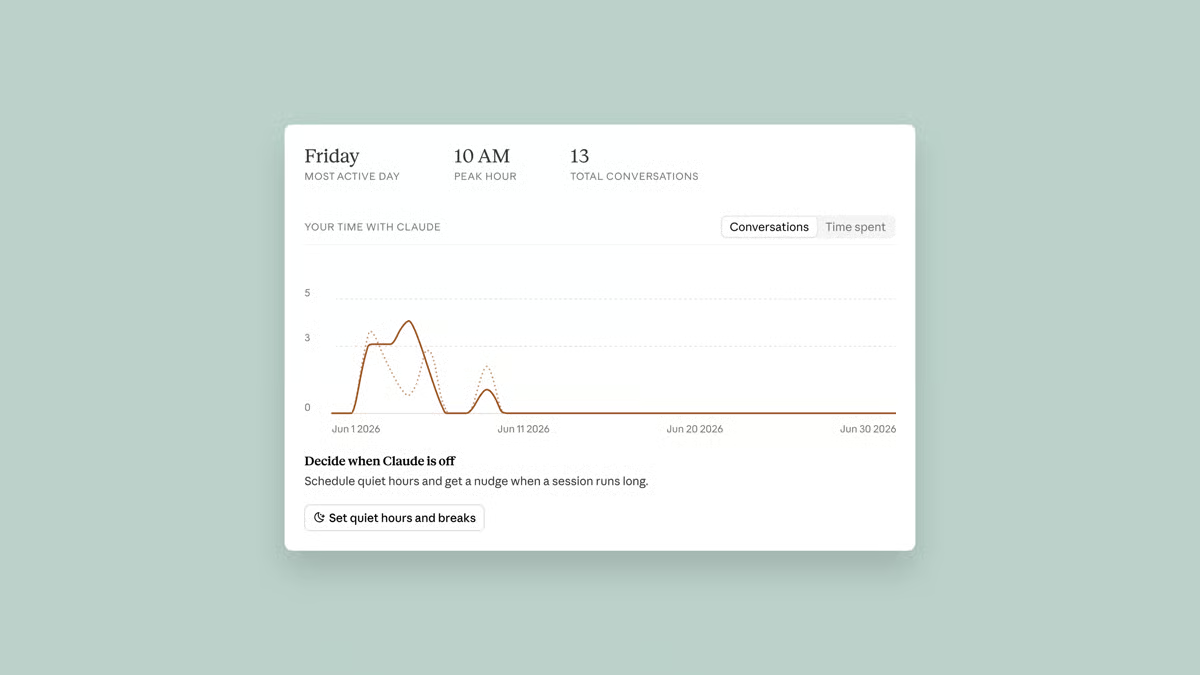
Anthropic just brought the year-in-review craze to AI chatbots. The company rolled out Claude Reflect on Thursday, a new feature that lets users analyze their chat history across the past month, three months, six months, or year. Think Spotify Wrapped, but for your AI conversations. The dashboard reveals key topics you’ve discussed, the types of tasks you’ve delegated to Claude, and when you’re most likely to fire up the chatbot.
Anthropic is turning your Claude conversations into data you can actually see. The AI startup announced Claude Reflect on Thursday, joining the growing list of apps – from Spotify to YouTube to Uber – offering users a personalized look back at how they’ve spent their time.
The new feature gives Claude users a breakdown of their chat patterns over customizable timeframes. According to Anthropic’s blog post, the dashboard starts with a summary of your most frequent topics, the types of work you’re offloading to the AI, and your peak usage windows. It’s metadata mining meets self-reflection, packaged in the viral format Spotify perfected.
The timing isn’t accidental. As the AI chatbot wars intensify between Anthropic, OpenAI, and Google, understanding user behavior becomes critical competitive intelligence. While OpenAI’s ChatGPT dominates mindshare with roughly 200 million weekly active users, Anthropic has carved out a following among professionals who value Claude’s longer context windows and more measured responses.
Claude Reflect essentially turns usage data into a product feature. Instead of just collecting analytics on the backend, Anthropic is surfacing those insights directly to users. The company frames it as a way to “see your patterns and shape them” – self-improvement language that echoes broader wellness tech trends.
But there’s a strategic layer here too. By showing users exactly how they’re using Claude, Anthropic can subtly encourage more engagement. If you notice you only use the chatbot for coding help on Tuesday mornings, you might start thinking about other ways to incorporate it into your workflow. It’s the same playbook fitness apps use when they show you weekly step counts.
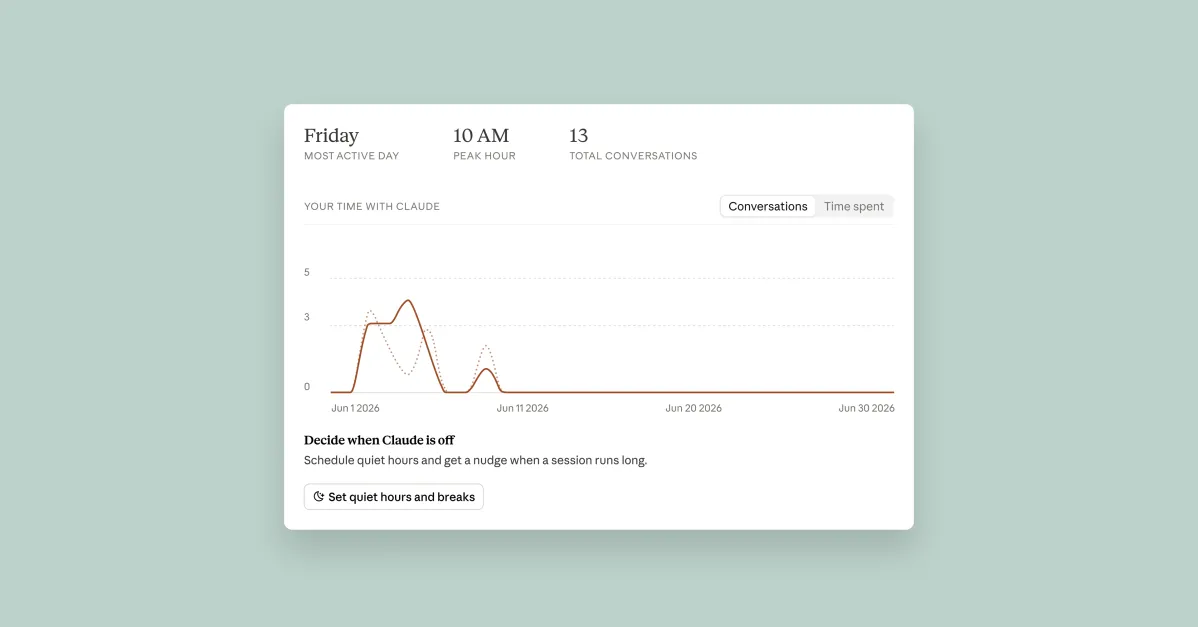
The feature also addresses growing concerns about AI transparency. As these tools become more embedded in daily work, users want visibility into their dependency patterns. Are you spending two hours a day chatting with an AI? Claude Reflect will tell you, complete with pretty graphs courtesy of the dashboard imagery Anthropic shared.
For now, the feature appears to focus purely on usage metrics rather than conversation content analysis. That’s a careful line to walk given privacy sensitivities around AI chat logs. Anthropic has positioned itself as the more privacy-conscious alternative in the AI space, and Claude Reflect seems designed to maintain that reputation while still extracting value from user data.
The broader trend reveals how AI companies are borrowing playbooks from consumer social apps. Spotify Wrapped became a cultural phenomenon because it turned passive listening data into shareable social content. While it’s unclear if Claude Reflect includes social sharing features, the format invites that kind of engagement.
What’s notable is the shift from AI as a pure utility to AI as an experience product. Early chatbots were judged solely on output quality. Now companies are adding layers of personalization, memory, and self-awareness features that make the tools feel more like digital companions than search engines.
OpenAI has moved in similar directions with ChatGPT’s memory features and customization options. Google’s Gemini integrates across the company’s product ecosystem. Anthropic’s angle with Claude Reflect is quantified self-knowledge – giving users the metrics to understand their own AI consumption habits.
The feature rollout comes as Anthropic continues its aggressive product cadence. The company recently secured major funding and has been rapidly expanding Claude’s capabilities. Adding a reflection dashboard costs relatively little to build but potentially increases user stickiness significantly.
It also generates valuable feedback loops for Anthropic’s product team. Aggregate data from millions of users checking their Claude Reflect dashboards will reveal which features matter most and which time periods people care about tracking. That intelligence feeds directly back into product development priorities.
Claude Reflect represents more than just a fun year-in-review gimmick. It’s Anthropic’s bet that transparency around AI usage will build trust and drive engagement in an increasingly crowded market. As chatbots evolve from novelty tools to daily workflows, features that help users understand their relationship with AI could become as important as the underlying model quality. Whether users actually want to see how much time they’re spending with Claude – or if they’ll find it quietly unsettling – will determine if this Wrapped-style feature becomes a retention tool or just another dashboard nobody checks.








Leave a Reply