
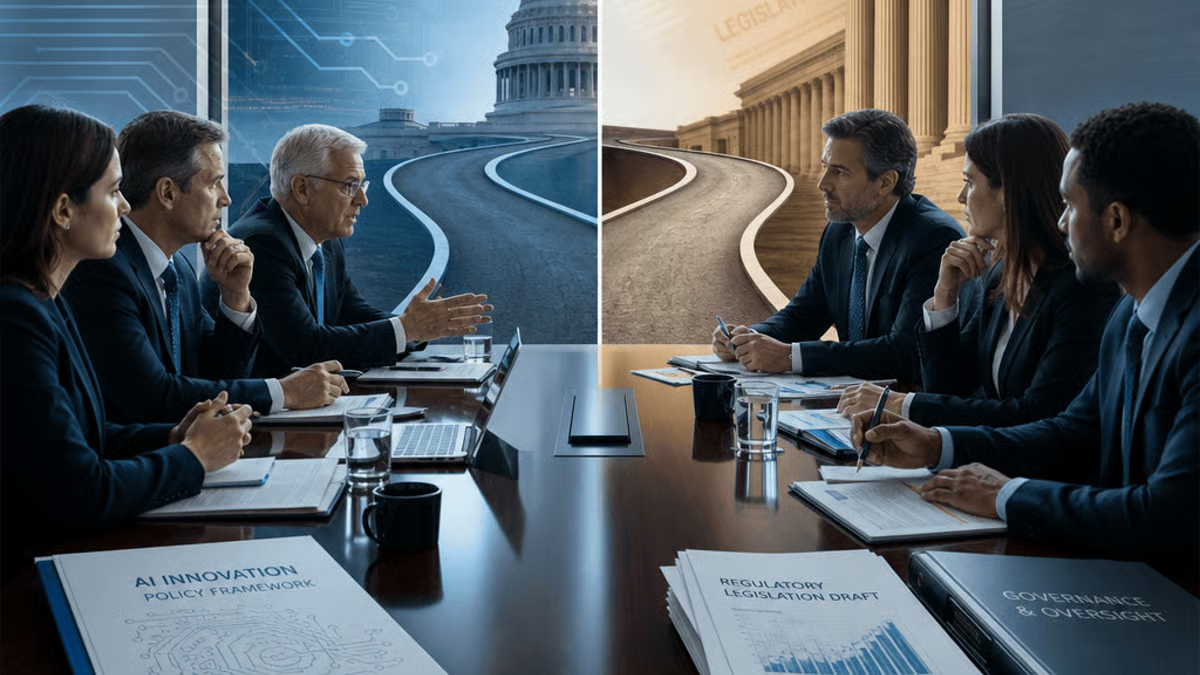
The AI industry is making its biggest political bet yet. As lawmakers race to draft comprehensive AI legislation, two competing industry PACs are pouring millions into election campaigns, each pushing radically different visions for how Washington should regulate artificial intelligence. The split reveals deep fractures in Silicon Valley over whether the industry needs strict oversight or a lighter regulatory touch – and the outcome could reshape the entire sector.
The AI industry’s political arms race is now in full swing. Two rival political action committees are flooding Congressional campaigns with cash, each backing competing versions of AI regulation that could determine whether the technology faces strict government oversight or operates with minimal constraints.
The timing isn’t coincidental. Lawmakers are closer than ever to passing comprehensive AI legislation, with multiple bills working through committee that address everything from algorithmic transparency to safety testing requirements. The industry knows this is its moment to shape the rules before they’re written in stone.
OpenAI, Google, Microsoft, Meta, and Anthropic are among the major players backing these PACs, though they’re not all on the same side. The split reflects a fundamental disagreement that’s been brewing in Silicon Valley for months – do AI companies need strong federal guardrails, or will regulation stifle American innovation and hand the advantage to China?
One faction is pushing for what they call “responsible innovation” frameworks – essentially lighter-touch regulation focused on voluntary industry standards and self-certification. This group argues that overly prescriptive rules could freeze AI development in place, preventing beneficial applications in healthcare, education, and climate research.
The competing PAC is advocating for mandatory safety testing, third-party audits, and strict liability provisions. Their pitch to lawmakers emphasizes AI risks – from deepfake election interference to autonomous weapons systems – and argues that only federal enforcement can prevent catastrophic outcomes.
The millions flowing into these PACs represent a dramatic escalation in tech’s political spending. While Silicon Valley has always maintained a Washington presence, AI companies are now matching or exceeding the lobbying budgets of traditional heavy hitters like pharmaceutical manufacturers and defense contractors.
Congressional staffers say the competing pitches are creating confusion on Capitol Hill. “We’re getting two completely different stories about what the industry needs,” one senior aide told reporters on background. “It makes it harder to figure out what’s genuine concern versus what’s just companies protecting their business models.”
The regulatory battle extends beyond federal legislation. State-level AI bills are proliferating, with California, New York, and Texas all considering their own frameworks. The PACs are targeting state races too, trying to create a patchwork that favors their preferred approach.
Industry observers say the split partly reflects different business models. Companies heavily invested in consumer-facing AI products tend to favor lighter regulation, while those building enterprise systems or focused on AI safety research are more open to oversight. But there are exceptions – and some companies are quietly funding both sides.
The European Union’s AI Act, which took effect last year, looms over these debates. That sweeping law created risk-based categories for AI systems, with strict requirements for “high-risk” applications. Some American executives point to it as a cautionary tale of overregulation, while others see it as a model worth adapting.
What’s clear is that AI companies have decided they can’t afford to sit on the sidelines. The technology is advancing too quickly, public concern is mounting too fast, and lawmakers are too eager to act. Better to shape the conversation now than fight unfavorable rules later.
The lobbying blitz is already showing results. Several Congressional proposals have been significantly revised after industry input, with some safety provisions weakened and others strengthened depending on which PAC had more influence with specific lawmakers. Committee hearings have featured dueling expert witnesses, each backed by different industry factions.
But the strategy carries risks. If voters perceive AI companies as trying to buy favorable treatment, it could trigger a backlash that leads to even stricter regulation. Some consumer advocacy groups are already highlighting the PAC spending as evidence that the industry can’t be trusted to police itself.
The next few months will be critical. Multiple AI bills are expected to reach the House and Senate floors before the fall election cycle heats up. Whichever regulatory framework wins out will likely set the template for years to come – making these millions in PAC spending look like a bargain compared to the billions at stake in market positioning.
The AI industry’s political spending spree marks a turning point in how Silicon Valley engages with Washington. With competing PACs pushing divergent agendas, lawmakers face the challenge of sorting genuine safety concerns from corporate positioning. The regulatory framework that emerges from this battle will shape not just how AI is governed, but who gets to build it and how fast the technology can advance. For an industry that moves at breakneck speed, the slow grind of legislative politics has suddenly become the most important arena.









Leave a Reply