
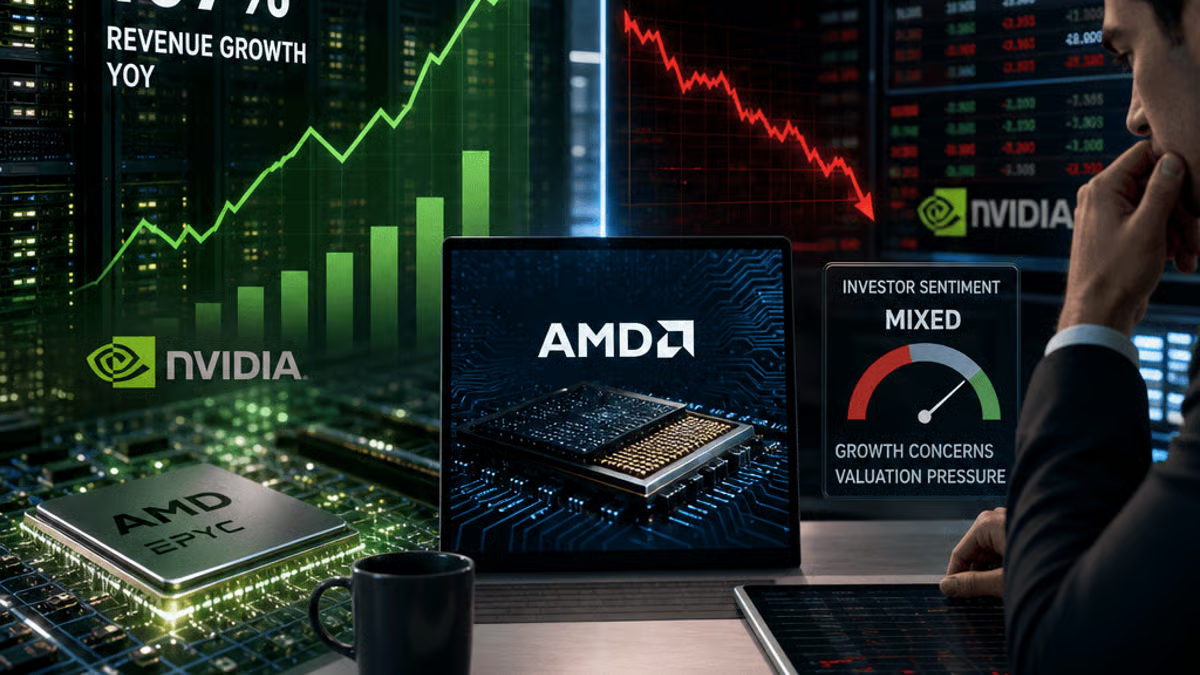
AMD just posted blockbuster Q2 2026 earnings with revenue climbing 50% year-over-year, powered by a stunning 107% surge in data center sales – yet Wall Street responded by sending the stock down in after-hours trading. The paradox highlights how stratospheric expectations have become in the AI infrastructure arms race, where even triple-digit growth in the hottest segment of tech can disappoint if it doesn’t match the fever pitch of investor projections.
AMD just delivered the kind of earnings beat that would’ve sent champagne corks flying a few years ago. Revenue climbed 50% compared to the same quarter last year, and the company’s Data Center segment – the crown jewel driving AI infrastructure buildouts – more than doubled with 107% growth. Yet the stock fell in extended trading, a stark reminder that in today’s AI gold rush, even spectacular isn’t always enough.
The numbers tell a story of a company riding the generative AI wave but struggling to escape Nvidia’s shadow. AMD’s Data Center unit, which includes the Instinct MI300 series AI accelerators and EPCC server processors, has become the company’s growth engine as hyperscalers and enterprises scramble to secure GPU capacity for training large language models and running inference workloads. That 107% year-over-year surge reflects real traction in a market where supply constraints have forced customers to diversify beyond Nvidia’s dominant H100 and H200 chips.
But context matters. While AMD’s data center revenue doubled, Nvidia has been posting quarters with data center growth exceeding 200% and grabbing an estimated 80-90% market share in AI training chips. Investors have priced AMD shares for disruption, not just participation. The after-hours selloff suggests either the Q2 results came in below whisper numbers, or more likely, the company’s Q3 guidance failed to signal the kind of accelerating market share gains Wall Street craves.
The broader picture shows AMD executing on CEO Lisa Su’s strategy to position the company as the credible alternative in AI infrastructure. Enterprise customers are increasingly adopting multi-vendor strategies to avoid single-supplier risk, and AMD’s MI300X accelerators have won design wins at Microsoft Azure, Oracle Cloud, and others. The 107% data center growth proves the strategy is working – AMD is capturing a meaningful slice of the explosive AI infrastructure spending wave that’s reshaping tech capital expenditures.
Yet the stock reaction reveals how unforgiving the market has become for AI infrastructure plays. Investors are essentially demanding AMD prove it can sustain triple-digit growth quarters while simultaneously taking meaningful share from Nvidia’s entrenched position. It’s a tough bar to clear, especially as the competitive landscape intensifies with new entrants like startups building custom AI chips and hyperscalers developing in-house silicon.
AMD’s 50% overall revenue growth also masks mixed performance across other segments. The company’s gaming division has faced headwinds from a softer PC market, and its embedded business has cycled through inventory corrections. The data center unit’s outsized performance is carrying the company, which makes its trajectory even more critical for the investment thesis.
The market’s muted response might also reflect concerns about sustainability. Can AMD maintain 100%+ data center growth as comps get tougher? Will Nvidia’s next-generation Blackwell platform, expected to ramp later this year, reassert dominance? Are hyperscaler customers reaching peak AI infrastructure spending, or is this just the beginning of a multi-year buildout cycle?
What’s undeniable is that AMD has positioned itself as the primary beneficiary if customers decide to diversify their AI chip suppliers. The company’s CDNA architecture and ROCm software ecosystem have matured enough to handle production workloads, removing earlier barriers to adoption. Every percentage point of market share AMD captures in the AI accelerator market translates to billions in potential revenue given the size of the opportunity.
The stock’s decline despite strong results also highlights a broader recalibration happening across AI infrastructure stocks. After the euphoric run-up through 2025 and early 2026, investors are scrutinizing whether growth rates justify valuations. AMD isn’t alone – even slight misses or cautious guidance from chip designers, foundries, and data center equipment makers have triggered sharp selloffs as the market hunts for signs the AI spending boom might moderate.
AMD’s Q2 results capture the strange dynamics of today’s AI infrastructure market, where doubling revenue in your hottest segment still isn’t enough if expectations have run ahead of reality. The company is clearly winning business and executing on its strategy to become the viable Nvidia alternative, but investors are demanding proof that momentum can accelerate from here. The coming quarters will determine whether AMD can sustain triple-digit data center growth and convert its technology wins into the kind of market share gains that justify its premium valuation – or whether it remains perpetually in Nvidia’s shadow despite posting numbers that would be the envy of nearly any other semiconductor company.









Leave a Reply