
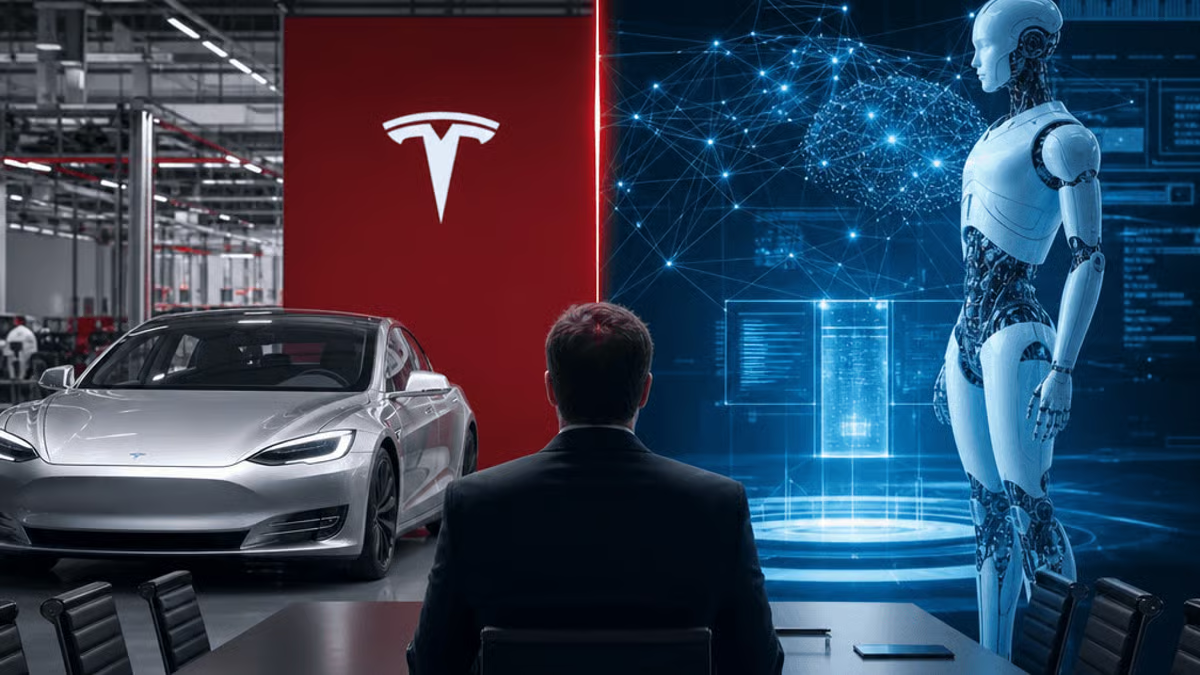
Tesla CEO Elon Musk is spending half his time talking about robots and artificial intelligence instead of cars during the company’s quarterly earnings calls, according to an exclusive TechCrunch analysis spanning seven years. The data-driven investigation reveals a dramatic shift in focus at the world’s most valuable automaker, raising questions about whether Tesla’s future lies more in autonomous systems and humanoid robots than in electric vehicles. As investors pour billions into the company based on its automotive promises, Musk’s attention appears increasingly divided between the factory floor and the AI lab.
Tesla investors dialing into quarterly earnings calls expecting updates on vehicle production, delivery numbers, and new models are getting something quite different – extended dissertations on humanoid robots, autonomous driving systems, and artificial intelligence architecture. A comprehensive TechCrunch analysis of seven years of earnings call transcripts reveals that CEO Elon Musk now spends approximately half his speaking time on AI and robotics topics rather than the car business that generates virtually all of Tesla’s revenue.
The data paints a stark picture of diverging priorities. While Tesla remains the world’s most valuable automaker with a market cap built on electric vehicle sales, Musk’s attention has steadily migrated toward future technologies that don’t yet contribute meaningfully to the bottom line. The shift becomes even more pronounced in recent quarters, according to the TechCrunch investigation, as Tesla’s Optimus humanoid robot and Full Self-Driving software consume an outsized portion of executive commentary.
This strategic pivot isn’t happening in a vacuum. Tesla faces its most competitive environment yet, with legacy automakers like Ford and General Motors rapidly expanding EV lineups, while Chinese manufacturers like BYD threaten Tesla’s dominance in the world’s largest auto market. Yet rather than doubling down on the core business facing these challenges, Musk’s public focus has shifted to technologies that won’t generate significant revenue for years.
The earnings call analysis reveals a CEO increasingly positioning Tesla as an AI company that happens to make cars, rather than a car company deploying AI. Musk regularly spends minutes at a time explaining neural network architectures, compute infrastructure, and robotics challenges – technical deep dives that often leave Wall Street analysts struggling to connect the dots back to near-term financial performance.
Investor patience with this approach shows signs of wearing thin. Tesla’s stock has experienced increased volatility as traders wrestle with how to value a company whose CEO seems more interested in discussing hypothetical robot factories than actual vehicle margins. The disconnect becomes particularly stark when Musk fields questions about production challenges or supply chain issues with brief responses before pivoting back to his preferred topics of autonomous systems and artificial general intelligence.
The TechCrunch analysis arrives at a critical moment for Tesla. The company has promised a robotaxi network that continues to face regulatory and technical hurdles, while the Optimus robot remains largely a prototype despite Musk’s ambitious predictions about its eventual ubiquity. Meanwhile, Tesla’s automotive gross margins have compressed as the company cuts prices to maintain market share against surging competition.
Industry observers note that Musk’s fixation on AI and robotics reflects legitimate long-term opportunities, but the execution gap between vision and reality continues to widen. Tesla bulls argue the company’s investments in autonomous technology and AI will eventually justify current valuations, while skeptics see a CEO distracted from immediate operational challenges by futuristic moonshots.
The data also highlights how dramatically Musk’s communication strategy has evolved. Earlier earnings calls focused heavily on production ramps, manufacturing efficiency, and vehicle specifications – concrete metrics that investors could model and trade on. The current format feels more like a technology conference keynote than a financial results briefing, with Musk often speaking in broad philosophical terms about the future of robotics and artificial intelligence.
This shift extends beyond just talk. Tesla has been aggressively hiring AI researchers and robotics engineers, building out massive compute infrastructure for neural network training, and dedicating factory space to robot development. The company’s capital allocation increasingly reflects Musk’s stated priorities, even as the core automotive business demands continued investment to maintain its competitive position.
The question facing investors is whether Musk’s AI and robotics vision represents genuine strategic foresight or a dangerous distraction from the business that actually pays the bills. Tesla generates virtually all its revenue from selling cars and energy products, not from AI software or humanoid robots. Yet the CEO’s public attention – and increasingly, the company’s resources – flow toward technologies that remain largely speculative.
The TechCrunch analysis exposes a fundamental tension at the heart of Tesla – a company valued as an automaker but increasingly run like an AI research lab. While Musk’s long-term vision of autonomous vehicles and humanoid robots might eventually justify this strategic shift, investors are left wondering who’s minding the store in the core automotive business that faces mounting competitive pressure. The data suggests Tesla isn’t just making a bet on AI and robotics; it’s making that bet with executive attention and resources that could otherwise address immediate market challenges. For shareholders, the question isn’t whether AI and robots represent the future – it’s whether Tesla can afford to focus on tomorrow while today’s car business demands urgent attention.



Leave a Reply