
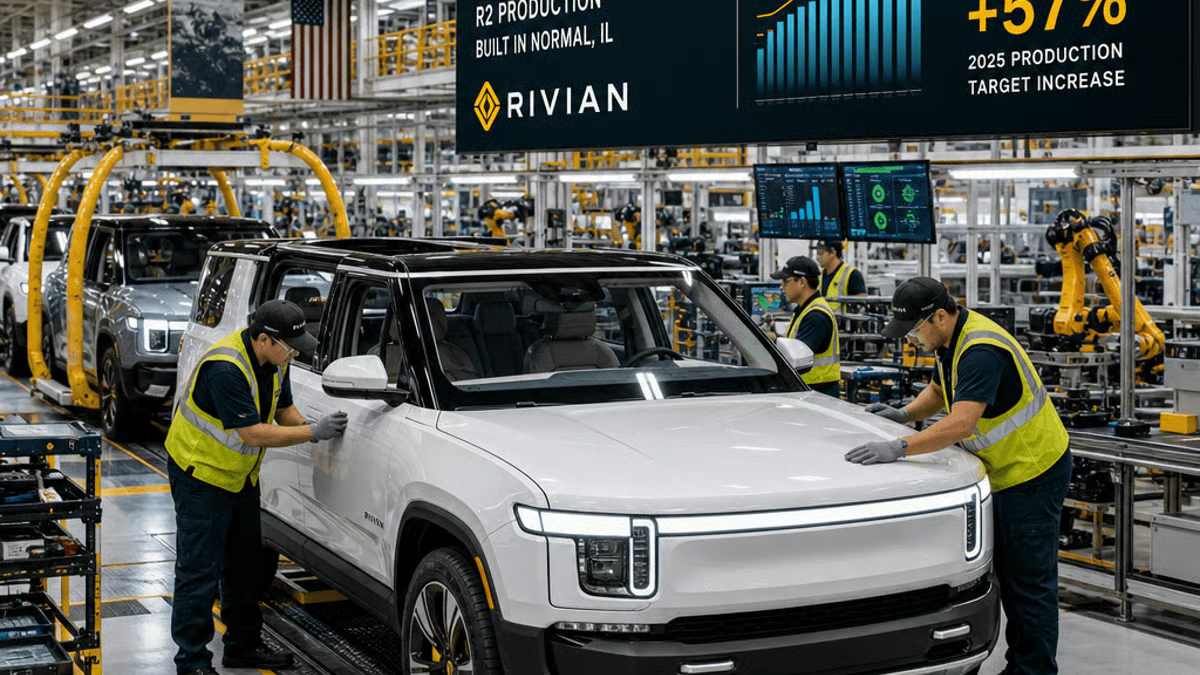
Rivian just gave Wall Street something it rarely sees from young automakers – an upward revision. The electric vehicle maker raised its 2026 sales forecast, projecting it’ll ship several thousand more vehicles than originally expected after ramping production of its highly anticipated R2 SUV. The guidance bump, disclosed in an update to investors, marks a sharp turn for a company that’s spent the past year navigating production constraints and cash burn concerns. It’s also a crucial test of whether Rivian can scale beyond its niche enthusiast base.
Rivian is betting big that its R2 SUV can change the company’s trajectory, and early production data suggests the gamble might be paying off. The Irvine-based EV maker now expects to deliver a few thousand more vehicles by year-end than it projected just three months ago, a rare bit of good news for a startup that’s been under intense pressure to prove it can scale profitably.
The revised guidance comes barely a month after Rivian started shipping the R2, its much-hyped entry into the mid-priced electric SUV market. While the company hasn’t disclosed exact production numbers, the forecast increase suggests the Normal, Illinois plant is hitting its stride after extensive retooling earlier this year. That’s critical timing – Rivian burned through roughly $1.5 billion in cash last quarter, and investors have been vocal about wanting to see production efficiency improve.
What makes this announcement particularly significant is the context. Most EV startups spend their first few years slashing forecasts and explaining away production delays. Lucid Motors has done it. Fisker did it repeatedly before its recent troubles. For Rivian to move in the opposite direction, especially after launching a completely new model line, signals that something’s working behind the scenes.
The R2 itself represents Rivian’s most important product bet to date. Priced around $45,000, it sits squarely in the sweet spot where Tesla has dominated with the Model Y. Rivian’s existing R1T truck and R1S SUV have won rave reviews, but their $70,000-plus price tags kept them confined to a relatively narrow slice of buyers. The R2 is supposed to change that equation, bringing Rivian’s adventure-ready brand to a mass-market audience.
But scaling production is where things get tricky. Rivian’s Illinois facility underwent months of downtime earlier this year to prepare for R2 manufacturing, a risky move that temporarily cratered output of the R1 vehicles. The company essentially had to rebuild portions of its assembly line while keeping enough R1 production going to maintain cash flow. According to analysts who’ve toured the plant, Rivian implemented a flexible manufacturing system that can switch between R1 and R2 production based on demand – a level of sophistication that took Tesla years to achieve.
The updated forecast also arrives as the broader EV market shows signs of bifurcation. Premium EVs continue selling well, while cheaper models are struggling with thin margins and intense competition from Chinese manufacturers. Rivian’s positioning in the $45,000-$70,000 range could be a sweet spot, assuming buyers see enough value in the brand’s outdoor-oriented features and software capabilities.
Investors have been cautiously optimistic. Rivian’s stock jumped nearly 8% in after-hours trading following the announcement, though it’s still down more than 40% from its 2021 IPO highs. The company has backing from Amazon, which has ordered 100,000 electric delivery vans and remains a major shareholder. That relationship provides both cash cushion and volume orders, but it also means Rivian needs to prove it can succeed in the consumer market on its own merits.
The timing of this guidance raise is also notable. We’re now in the back half of 2026, which means Rivian has roughly five months to deliver on these new projections. The company will need to maintain R2 production rates while avoiding the quality issues that have plagued other EV makers during rapid scale-ups. Tesla famously went through what CEO Elon Musk called “production hell” with the Model 3. Rivian’s trying to avoid a similar fate.
What happens next depends largely on execution. Can Rivian maintain R2 production quality while scaling volume? Will the increased output strain its service network and customer support? And critically, can the company improve its cash burn rate before needing to raise more capital? Those questions will define whether this guidance raise was the start of a genuine turnaround or just a brief bright spot in a longer struggle.
Rivian’s decision to raise its sales forecast is the kind of signal investors and industry watchers have been waiting for – proof that the company can execute on ambitious production targets while launching new models. But the real test starts now. The next few quarters will reveal whether this guidance bump reflects genuine operational improvements or just early R2 enthusiasm that’ll fade as production complexities mount. For an EV startup that’s still burning cash and fighting for market share against Tesla and legacy automakers, there’s no room for missteps. If Rivian delivers on these numbers while improving margins, it’ll cement its position as a serious long-term player. If it stumbles, the market won’t be forgiving.










Leave a Reply