
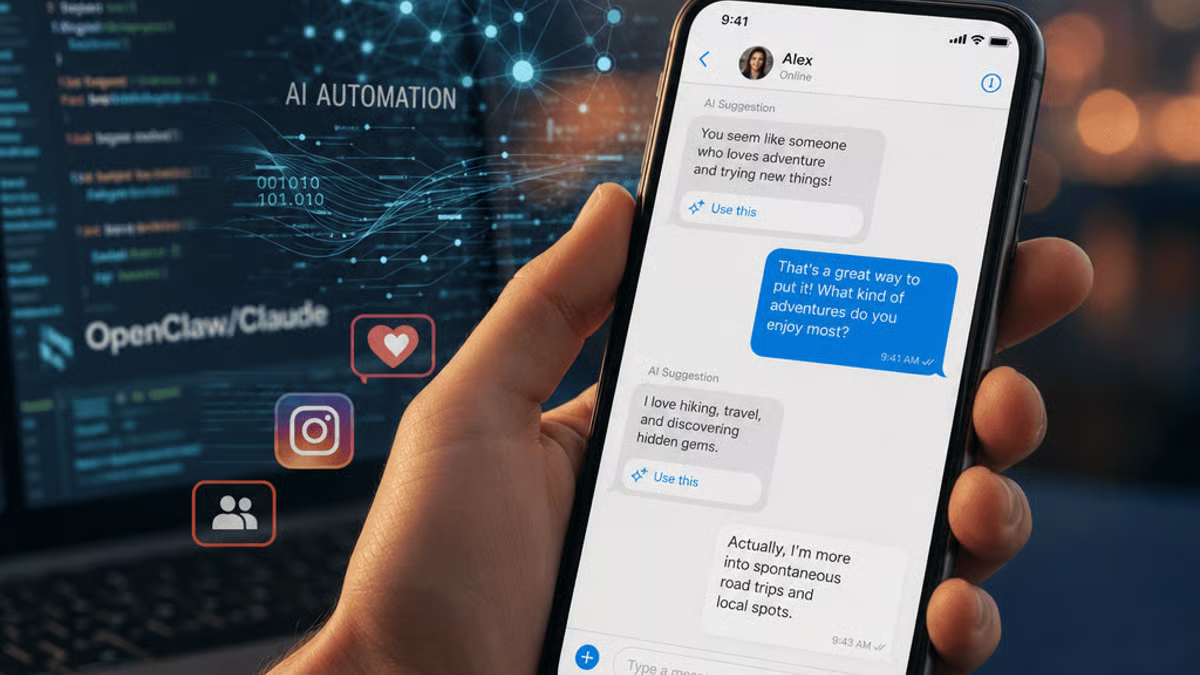
The AI automation wave just crashed into an unexpected corner of daily life – dating. Ben Guez, a developer who’s been experimenting with Anthropic’s Claude AI tools, built an automated script using OpenClaw that’s now filling his Instagram DMs with what he calls “potential international wives.” It’s the latest sign that AI automation tools, originally designed for enterprise workflows, are leaking into increasingly personal—and controversial—consumer use cases.
Ben Guez isn’t waiting for dating apps to integrate AI – he’s building his own automated matchmaker. Using Anthropic’s OpenClaw framework, the developer cobbled together a script that autonomously browses Instagram, identifies potential matches, and slides into DMs on his behalf. The result? What Guez describes as “a bunch of potential international wives” now populating his message requests.
OpenClaw, part of Anthropic’s computer use capabilities released earlier this year, allows Claude AI to interact with software interfaces like a human would – clicking buttons, filling forms, scrolling through feeds. It’s designed for enterprise automation, helping companies streamline workflows that span multiple applications. But Guez’s dating bot shows how these tools are already escaping their intended corporate confines.
The technical setup sounds straightforward enough. Guez combined OpenClaw’s browser automation with Claude’s language processing and what he calls “Instagram trials” – likely test accounts or API experiments – to create a system that can evaluate profiles, craft personalized messages, and manage conversations at scale. It’s essentially cold email automation, but for romance.
This isn’t the first time AI has invaded dating. Apps like Tinder and Bumble have integrated AI features for profile optimization and conversation starters. But those are platform-sanctioned tools. Guez’s approach operates in a grayer area – using third-party automation on a platform that explicitly prohibits bots in its terms of service.
Meta, which owns Instagram, has spent years fighting automation that violates user experience and safety standards. The company’s policies forbid “automated means to access Instagram, add or download contacts, or send or redirect messages.” Yet enforcement remains spotty, especially for sophisticated scripts that mimic human behavior patterns.
The broader trend is clear – consumer AI adoption is accelerating in unexpected directions. While OpenAI, Google, and Anthropic focus marketing on productivity and enterprise use cases, everyday users are repurposing these tools for everything from gaming the job application process to automating social media engagement.
Some developers argue this democratizes access to automation previously available only to companies with engineering resources. Critics counter that it erodes authenticity in spaces designed for genuine human connection. Dating automation raises particularly thorny questions – if the person you’re messaging isn’t actually writing their messages, is that catfishing by proxy?
Anthropichasn’t publicly commented on consumer applications of OpenClaw beyond its intended enterprise scope. The company’s usage policies prohibit “activities that have high risk of physical harm” and “fraudulent or deceptive activity,” but romantic automation occupies murky territory between legitimate personal use and manipulative behavior.
The technical capabilities keep expanding faster than social norms can adapt. Claude’s latest models can maintain context across lengthy conversations, understand nuanced social cues, and adjust messaging tone based on recipient responses. In theory, an AI could conduct entire relationship trajectories from first message to date scheduling without meaningful human involvement.
Whether Guez’s experiment results in actual relationships remains unclear. What’s certain is that AI-powered social automation is moving from novelty to mainstream faster than platforms, regulators, or users are prepared to handle. The same tools streamlining customer service workflows are now optimizing pickup lines – and nobody’s quite sure what guardrails should exist.
For now, dating automation exists in a wild west phase where technical possibility outpaces social consensus. As AI agents become more capable of mimicking human interaction, the line between efficiency tool and deception engine grows increasingly blurred.
Guez’s dating bot is less about finding love and more about what happens when powerful automation tools escape enterprise containment. As AI agents become sophisticated enough to handle nuanced social interactions, we’re entering territory where the distinction between authentic human connection and algorithmic optimization collapses entirely. Whether that’s innovation or erosion depends on which side of the DM you’re on.







Leave a Reply