
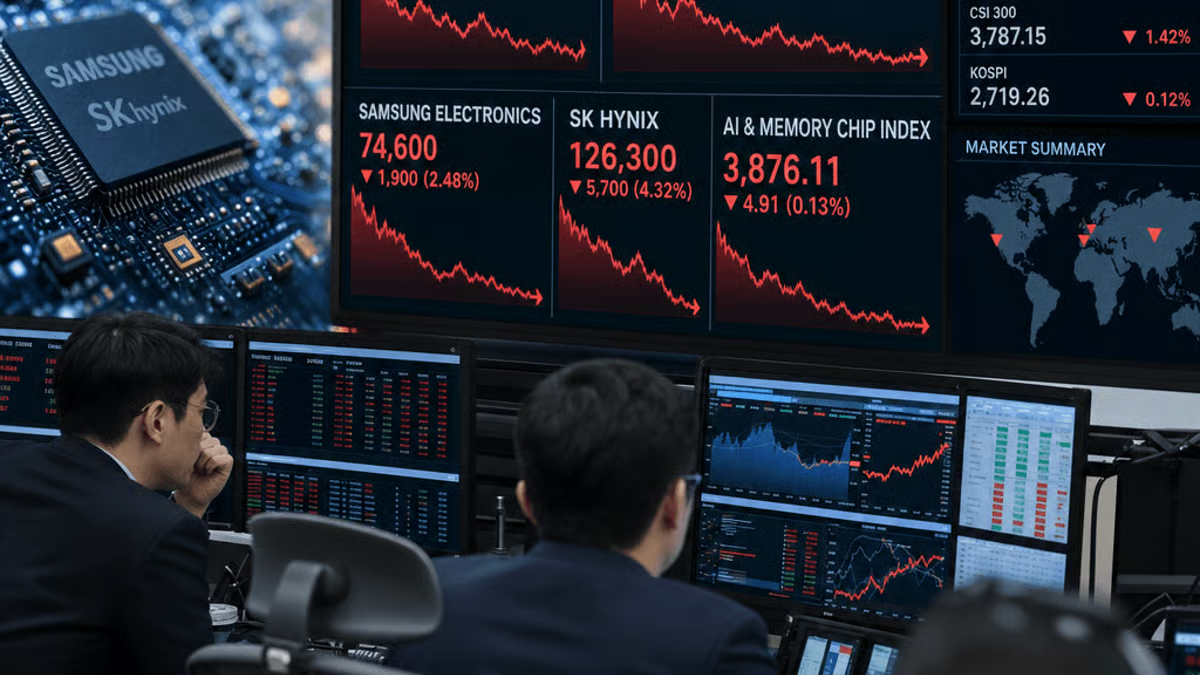
The semiconductor selloff that hammered Wall Street just went global. Samsung Electronics and SK Hynix shares crashed more than 7% in early Thursday trading as Korea’s KOSPI joined the chip rout, sending shockwaves through the AI infrastructure supply chain. The plunge marks a dramatic reversal for the two memory giants that have been riding the AI boom, raising fresh questions about whether the market’s betting on a slowdown in data center spending.
Samsung Electronics and SK Hynix just became the latest casualties in a semiconductor selloff that’s morphing into a full-blown global rout. Shares of both Korean giants tumbled more than 7% in Thursday morning trading, extending a brutal tech selloff that started on Wall Street and now threatens to reshape investor sentiment around the AI infrastructure buildout.
The timing couldn’t be worse for Korea’s chip champions. Both companies have been positioning themselves as indispensable suppliers to the AI revolution, with SK Hynix particularly dominant in high-bandwidth memory (HBM) chips that power Nvidia‘s AI accelerators. Samsung has been racing to catch up in the HBM market while maintaining its lead in conventional memory chips. Now the market’s suddenly questioning whether the AI spending spree has legs.
The selloff rippled across Korea’s KOSPI index as investors dumped anything semiconductor-related. It’s the kind of indiscriminate selling that suggests genuine fear rather than rational repricing. When Samsung – the world’s largest memory chipmaker – drops 7% in a single session, that’s not just profit-taking. That’s a reset in expectations about where chip demand is headed.
What makes this particularly significant is the role both companies play in the AI infrastructure stack. SK Hynix supplies the specialized HBM3 and HBM3E memory that’s absolutely critical for training large language models. Samsung produces the DRAM and NAND flash that fill out data centers. If the market thinks demand from hyperscalers is softening, these are exactly the stocks that get hit first.
The contagion from Wall Street appears to be spreading faster than many expected. U.S. semiconductor stocks have been under pressure as investors wrestle with whether AI capital expenditures can maintain their torrid pace. Major cloud providers have been signaling they’ll keep spending, but the market’s starting to price in the possibility of a pause or slowdown. That uncertainty is now crossing the Pacific.
For SK Hynix, the selloff is particularly striking given the company’s recent momentum. The chipmaker has been reporting robust earnings driven by insatiable demand for HBM chips, with some analysts projecting the HBM market could hit $30 billion by 2025. The company’s positioned as Nvidia‘s primary HBM supplier, a relationship that seemed bulletproof just weeks ago. Now investors are suddenly worried about what happens if AI chip orders slow.
Samsung faces its own set of pressures. The company’s been playing catch-up in HBM technology while dealing with softer conventional memory markets. A broader chip downturn would hit Samsung across multiple fronts – from smartphone components to data center infrastructure. The 7% drop suggests investors think the company’s exposure to cyclical memory markets outweighs its AI upside.
The real question is whether this is a temporary panic or the start of a more fundamental repricing. Memory chip markets are notoriously cyclical, swinging between shortages and gluts. The AI boom has been powerful enough to override normal cyclical patterns, keeping pricing and margins elevated even as supply increases. But if hyperscale spending actually slows, the memory market could swing from shortage to oversupply faster than anyone expects.
What happens in Korea doesn’t stay in Korea. Samsung and SK Hynix are bellwethers for the entire semiconductor ecosystem. Their chips flow into products from Apple iPhones to Microsoft Azure data centers. A sustained downturn for Korean chipmakers would signal broader problems for the tech hardware supply chain.
The selloff also raises uncomfortable questions about AI infrastructure economics. If the market’s getting nervous about memory chip demand, that implies skepticism about whether AI workloads will grow fast enough to justify the massive data center buildouts underway. Companies like Microsoft, Google, and Meta have been spending billions on AI infrastructure. Any hint that spending might slow sends ripples through the entire supply chain.
For now, the Korean chip giants are caught in a broader market rotation out of anything AI-adjacent. Whether this turns into a longer-term correction depends on what actually happens with hyperscale spending over the next few quarters. But when two of the world’s most critical chip suppliers drop 7% in a single morning, that’s a signal the market’s reassessing the AI infrastructure thesis in real time.
The 7% crash in Samsung and SK Hynix shares marks a pivotal moment for the AI infrastructure story. What started as a Wall Street chip selloff has now gone global, hitting two suppliers that sit at the heart of the AI hardware ecosystem. Whether this is short-term volatility or the beginning of a broader reassessment of AI economics will become clear in the coming weeks as we see actual demand signals from hyperscalers. For now, the market’s voting with its feet – and it’s running away from semiconductor exposure faster than many expected. Investors should watch for how this affects pricing power in the memory market and whether other Asian chipmakers follow Korea into the selloff.









Leave a Reply