
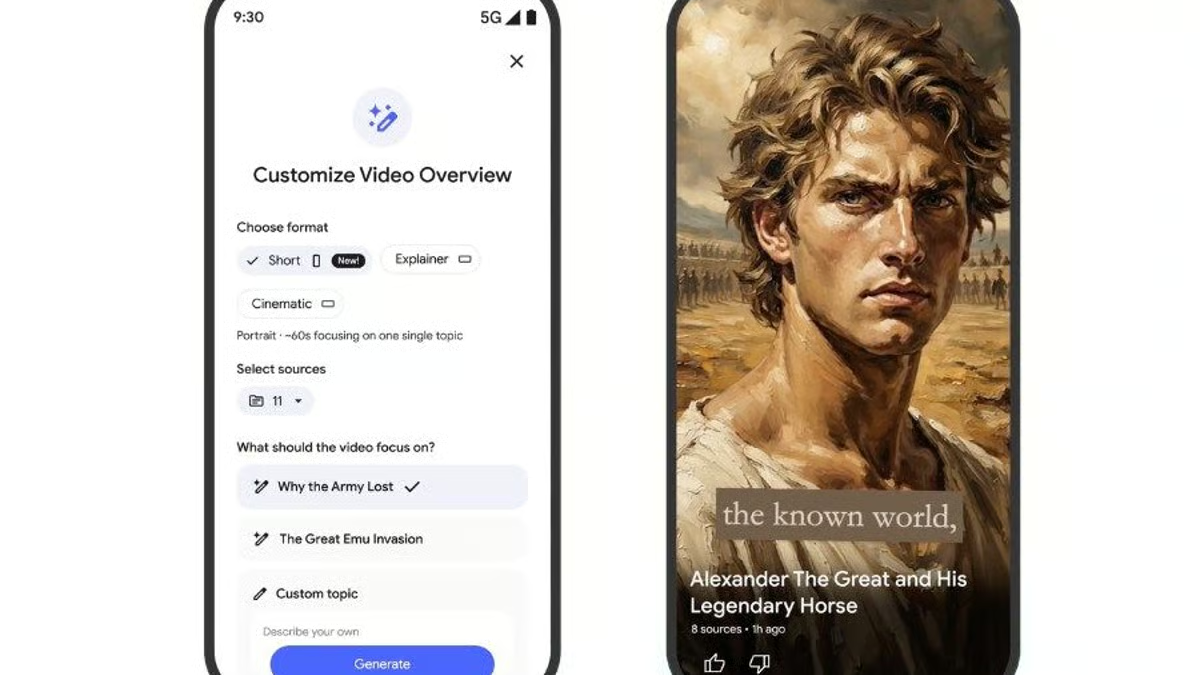
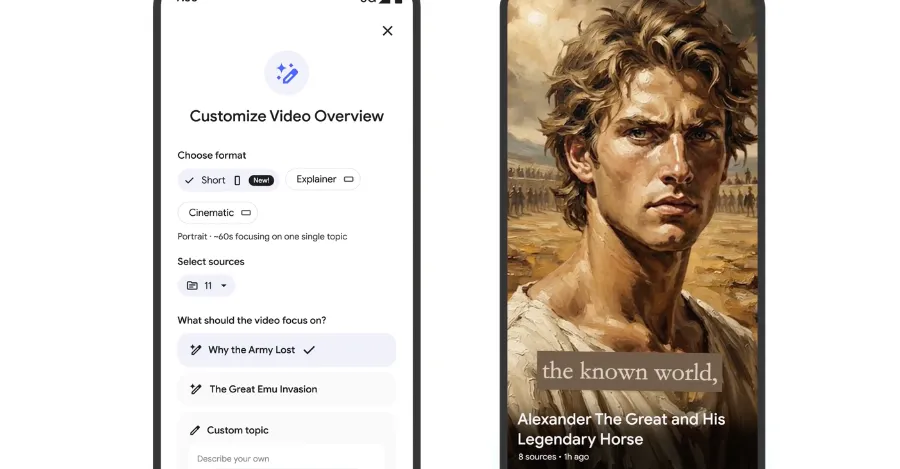
Google just turned research notes into social media content. The company’s rolling out TikTok-style AI video clips to NotebookLM, letting Google AI Ultra and Pro subscribers transform uploaded research into 60-second vertical videos. The feature, which Google’s calling Short Video Overviews, marks the latest evolution in how AI tools are packaging information for an audience that expects bite-sized, scroll-friendly content—even when they’re trying to learn something.
Google’s NotebookLM just made doom-scrolling educational. The AI-powered research assistant is rolling out Short Video Overviews—60-second vertical clips that transform uploaded research materials into TikTok-style videos complete with AI-generated visuals and narration.
The feature launched exclusively for Google AI Ultra and Pro subscribers, positioning it as a premium add-on to NotebookLM’s existing toolkit. According to Google’s announcement on X, the company’s pitching this as “doom scrolling but make it educational,” acknowledging the very real tension between how people actually consume content and how they probably should.
The demo video Google shared showcases the feature’s capabilities through an unlikely subject: Australia’s infamous Great Emu War of 1932. The 60-second clip pairs paper cutout-style AI art of emus with narration explaining the historical footnote where Australian military forces failed to control an emu population. It’s whimsical, quick, and exactly the kind of content that works on platforms like TikTok or Instagram Reels.
But this isn’t just Google chasing trends. NotebookLM’s evolution into a multi-format content generator reflects something bigger happening in AI: the shift from text-based outputs to rich media experiences. When NotebookLM launched, it focused on text summaries and Q&A. Then came AI podcasts that could discuss your research, followed by cinematic video overviews and visual explainers. Now, with Short Video Overviews, Google’s completed the content format bingo card.
The timing matters. As platforms like TikTok and YouTube Shorts dominate how younger audiences consume information, there’s growing pressure on educational and productivity tools to meet users where they already are. Students don’t just want to read summaries anymore—they want content that fits into their existing scroll habits. Google’s betting that premium subscribers will pay for AI that transforms dense research into shareable, digestible clips.
What’s particularly clever about this approach is how it sidesteps one of AI video generation’s biggest problems: the uncanny valley. By leaning into paper cutout-style art rather than photorealistic renders, Google avoids the creepy factor that plagues many AI video tools. The aesthetic choice feels intentional, almost nostalgic, like a digital version of those animated explainer videos that went viral a decade ago.
For Google, NotebookLM represents a quieter but potentially more sustainable AI play than flashy chatbots. While competitors race to build the smartest conversational AI, Google’s building tools that slot into actual workflows. Researchers, students, and knowledge workers don’t necessarily need another chatbot—they need AI that does something specific and does it well.
The premium-only rollout also signals Google’s monetization strategy. After giving away powerful AI features for free across its product line, the company’s now drawing clearer lines between what’s free and what requires a subscription. NotebookLM’s Short Video Overviews sit firmly behind that paywall, available only to Google AI Ultra and Pro users—the company’s premium tiers that compete with offerings from OpenAI and Microsoft.
There’s an interesting creative tension here too. NotebookLM started as a tool for serious research and note-taking. Now it’s generating TikTok-style clips. That’s either a brilliant recognition of how modern learning works or a concerning dumbing-down of complex information into bite-sized entertainment. Probably both.
The feature arrives as the broader AI video generation space heats up. Companies like Runway, Pika, and OpenAI’s Sora have dominated headlines with their text-to-video capabilities. But Google’s taking a different angle: rather than letting users prompt whatever they want, NotebookLM generates videos specifically from uploaded research materials. It’s constrained, purpose-built AI rather than open-ended generation.
What remains to be seen is whether people actually want their research notes turned into social media clips. The use case makes sense for educators creating content or students looking to share what they’ve learned. But for individual researchers working through complex materials, a 60-second video might feel reductive rather than helpful. Then again, maybe that’s exactly the point—forcing clarity through brevity.
Google’s Short Video Overviews feature represents more than just another AI gimmick—it’s a recognition that information consumption habits have fundamentally shifted toward short-form video. Whether that’s a win for accessibility or a loss for depth depends on who’s using it and why. For students and educators looking to make research more engaging, this could be genuinely useful. For serious researchers, it might feel like AI trying too hard to be cool. Either way, NotebookLM’s evolution from text-based research tool to multi-format content generator shows where Google thinks productivity AI is headed: toward meeting users in the formats they already prefer, even if that means turning academic research into something you’d find between dance videos and recipe hacks.









Leave a Reply