
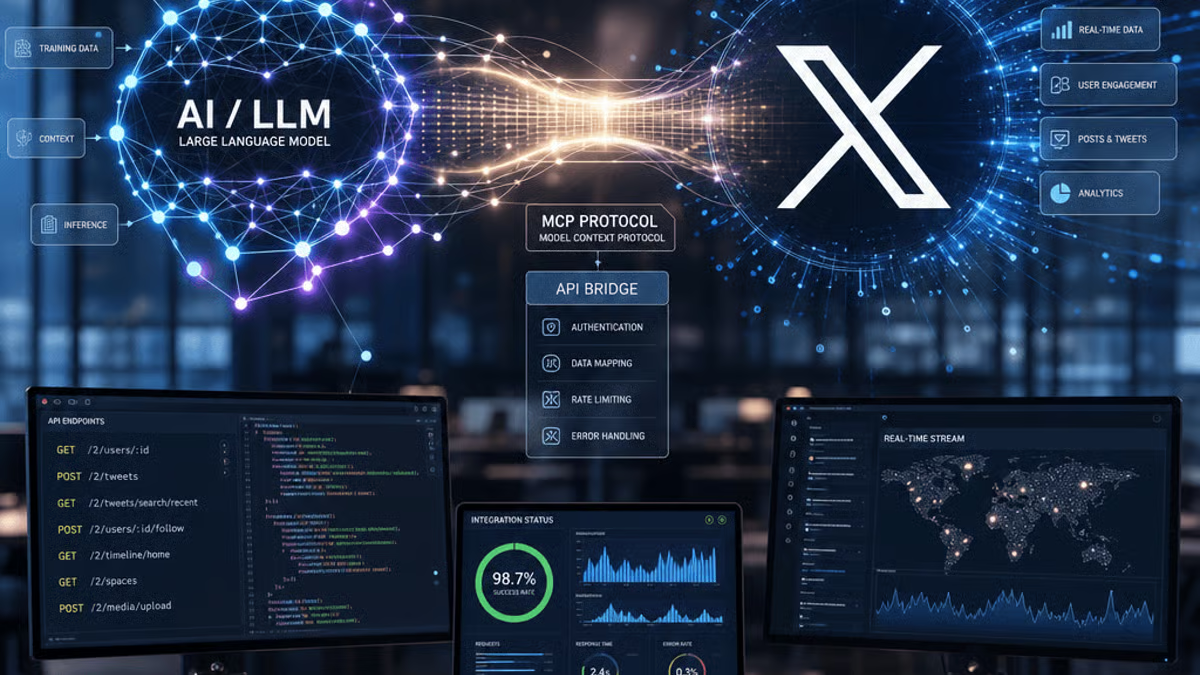
X is making a play for AI developers. The social platform just launched a hosted Model Context Protocol (MCP) server, dramatically simplifying how AI applications tap into X’s API infrastructure. The move positions X as a more AI-friendly platform at a time when developers are racing to integrate social data into large language models and autonomous agents. It’s a technical shift that could reshape how AI tools interact with real-time social conversations.
X just rolled out infrastructure that could make it significantly easier for AI developers to tap into the platform’s real-time data streams. The company launched a hosted Model Context Protocol server, a move that essentially creates a standardized bridge between AI applications and X’s API.
The timing isn’t coincidental. As AI assistants and autonomous agents proliferate, platforms are scrambling to position themselves as essential data sources. OpenAI, Anthropic, and a wave of startups are building tools that need to interact with social platforms, but integration has traditionally required custom API work for each service.
The Model Context Protocol changes that calculus. Originally developed by Anthropic, MCP creates a standardized way for AI systems to connect with external data sources and tools. Think of it as a universal adapter – instead of building separate integrations for every platform, developers can write to the MCP specification once and connect to any service offering an MCP server.
For X, this means AI applications can now query posts, analyze trends, retrieve user data, and even publish content through a consistent interface. A developer building an AI research assistant, for instance, could enable it to pull relevant X threads without writing platform-specific API code. The same goes for autonomous agents that need to monitor social sentiment or post updates.
The competitive dynamics here matter. Meta has been pushing its own AI integration tools, while professional networks like LinkedIn are exploring similar developer-friendly infrastructure. X’s MCP implementation puts it in direct competition for the attention of AI builders who are deciding which platforms to prioritize.
What makes MCP particularly powerful is its focus on context. Unlike traditional APIs that simply return data, the protocol is designed to give AI systems richer understanding of what they’re accessing. When an AI agent queries X through MCP, it receives not just raw posts but structured information about conversations, relationships, and platform-specific nuances.
The developer experience shift is substantial. Previously, integrating X functionality into an AI application meant wrestling with authentication flows, rate limits, and endpoint documentation. With the hosted MCP server, much of that complexity gets abstracted away. Developers familiar with the Model Context Protocol can plug into X the same way they’d connect to file systems, databases, or other MCP-compatible services.
There are obvious implications for how AI tools will surface and interact with social content. Imagine AI research assistants that can seamlessly cite X discussions, customer service bots that monitor brand mentions and respond contextually, or analysis tools that track emerging narratives across the platform in real-time.
X hasn’t disclosed specific technical limitations or usage tiers for the MCP server, but the infrastructure likely inherits the rate limits and access controls of the underlying API. For developers on X’s free tier, that could mean restricted functionality. Premium API access would presumably unlock more robust MCP capabilities.
The announcement also reflects X’s broader strategy under Elon Musk’s ownership. The platform has been simultaneously tightening some API restrictions while opening new pathways for specific use cases. AI integration appears to be one area where X sees strategic value in accessibility.
Competitors are watching closely. If X’s MCP implementation proves popular with developers, expect other social platforms to follow suit. The Model Context Protocol is gaining traction as a standard, and first-mover advantage in AI developer tooling could translate to ecosystem lock-in.
For the AI industry, X’s move is another signal that social platforms are evolving from content destinations to infrastructure layers. As large language models and AI agents become more capable, their usefulness depends partly on what external systems they can access. Platforms offering frictionless integration through standards like MCP position themselves as essential components of the AI stack.
The practical question for developers is whether X’s data is valuable enough to justify the integration. Real-time conversation analysis, trend detection, and social sentiment are legitimate use cases. But X’s content moderation challenges and advertiser concerns could make some AI companies hesitant to build dependencies on the platform.
X’s MCP server launch is less about immediate user impact and more about positioning in the emerging AI infrastructure landscape. By adopting Anthropic’s Model Context Protocol standard, X makes itself more accessible to the wave of AI developers building assistants, agents, and analysis tools. Whether this translates to meaningful developer adoption depends on how X’s real-time social data stacks up against competing platforms and whether the company can maintain API stability. For now, it’s a clear signal that social platforms recognize their future role isn’t just hosting content but serving as data layers for AI systems. Developers building the next generation of AI tools just got one more integration option, and X is betting that frictionless access will make it indispensable infrastructure.











Leave a Reply