
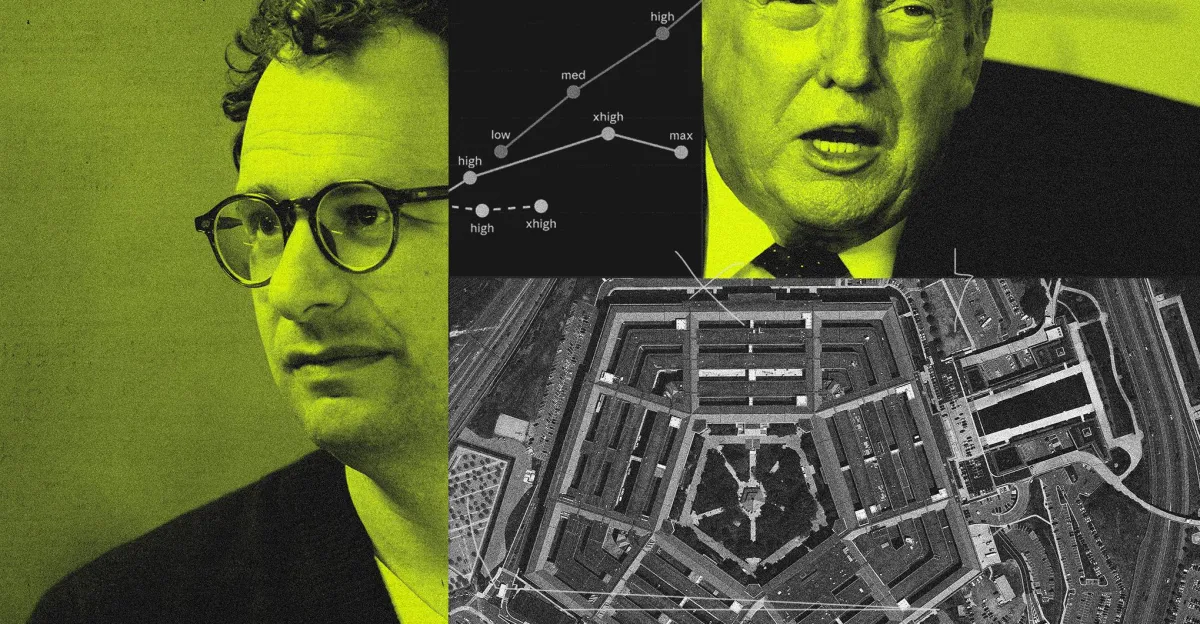
The Pentagon just handed out security clearances to Silicon Valley’s AI elite. In a sweeping announcement Friday, the Defense Department confirmed classified AI contracts with OpenAI, Google, Microsoft, Amazon, Nvidia, xAI, and startup Reflection—granting these companies access to work on sensitive military systems. But the big story is who got left out: Anthropic, which the Pentagon previously used for classified work, now finds itself labeled a supply-chain risk and shut out entirely.
The Pentagon’s AI strategy just became crystal clear: embrace Silicon Valley’s biggest players while drawing hard lines around perceived risks. According to Friday’s Defense Department announcement, seven major tech companies now have clearance to deploy their AI systems on classified military networks. OpenAI, Google, Microsoft, Amazon, Nvidia, Elon Musk’s xAI, and the less-known startup Reflection all made the cut.
But the real headline is Anthropic’s conspicuous absence. The AI safety-focused company, which previously worked with the Pentagon on classified information projects, has been shut out after Defense officials declared it a supply-chain risk. The Pentagon offered no public explanation for the designation, leaving the industry scrambling to understand what changed. Anthropic has positioned itself as the responsible AI player, emphasizing safety and constitutional AI principles—traits you’d think the military would value.
This builds on momentum that’s been brewing for months. OpenAI struck its initial Pentagon deal earlier this year for what the Defense Department called the “lawful” deployment of AI systems, as reported by The Verge. That agreement marked a significant shift for OpenAI CEO Sam Altman, who had previously maintained distance from military applications. Then came xAI’s deal in February, bringing Musk’s Grok AI into the defense fold despite the entrepreneur’s reputation for unpredictability.
Google’s participation represents another reversal. The tech giant famously backed away from Project Maven in 2018 after employee protests over military AI work. But according to The Information’s reporting, Google has now struck a similar classified agreement with the Pentagon. The company appears willing to navigate employee concerns differently this time around, likely viewing the strategic and financial upside as too significant to ignore.
The inclusion of Microsoft, Amazon, and Nvidia feels almost inevitable given their existing defense contracts and cloud infrastructure deals. Microsoft already provides cloud services through its Azure Government offering and has deep ties to defense and intelligence agencies. Amazon Web Services holds massive government contracts including the Joint Warfighting Cloud Capability. Nvidia’s chips power AI systems across the military-industrial complex, making its formal inclusion more of a paperwork exercise than a strategic shift.
What remains murky is what these companies will actually do with classified access. The agreements reportedly allow AI tools to operate on secure military networks, but the Pentagon hasn’t specified which systems, what applications, or under what oversight. Will OpenAI’s GPT models help intelligence analysts sift through classified communications? Could Google’s AI assist with satellite imagery analysis? Might Nvidia’s hardware accelerate weapons systems development? The Defense Department’s vague language about “lawful use” does little to illuminate actual applications.
Then there’s the Anthropic question. Industry insiders are buzzing about what supply-chain risk could possibly disqualify a U.S.-based AI company that’s backed by Google, which itself just secured Pentagon clearance. The Wall Street Journal noted the exclusion but offered no additional clarity. Speculation ranges from foreign investment concerns to disagreements over data handling to simple bureaucratic classification issues that might get resolved later.
The timing matters too. As global AI competition intensifies—particularly with China’s rapid military AI development—the Pentagon appears determined to move fast and leverage commercial innovation rather than building everything in-house. These deals let the Defense Department tap into billions of dollars in private AI research without footing the entire development bill. But that speed comes with tradeoffs around transparency, oversight, and public accountability.
Reflection’s inclusion as the sole startup is interesting. The company remains relatively unknown compared to the tech giants, suggesting the Pentagon is willing to work with smaller players that meet its criteria. That could open doors for other AI startups seeking defense contracts, though the classified nature of these agreements makes it hard for outsiders to understand what those criteria actually are.
What happens next will shape both military AI and the broader industry for years. If these partnerships deliver results, expect more tech companies to pursue defense work despite potential employee backlash. If they stumble—through security breaches, ethical controversies, or performance failures—the Pentagon’s commercial AI experiment could face serious scrutiny from Congress and the public.
The Pentagon’s selective embrace of commercial AI reveals as much about geopolitical priorities as technological ones. By clearing seven companies for classified work while excluding Anthropic, defense officials are making calculated bets about which partnerships serve national security—and which pose unspecified risks. For the approved companies, this opens lucrative revenue streams and positions them as essential infrastructure for military AI. For Anthropic, it’s a puzzling setback that raises questions about transparency in government procurement. As these AI systems move from Silicon Valley labs onto classified military networks, the public deserves more clarity about what these tools will do, who oversees them, and how supply-chain risk determinations get made. The AI arms race is accelerating, and the Pentagon just picked its horses.






Leave a Reply