
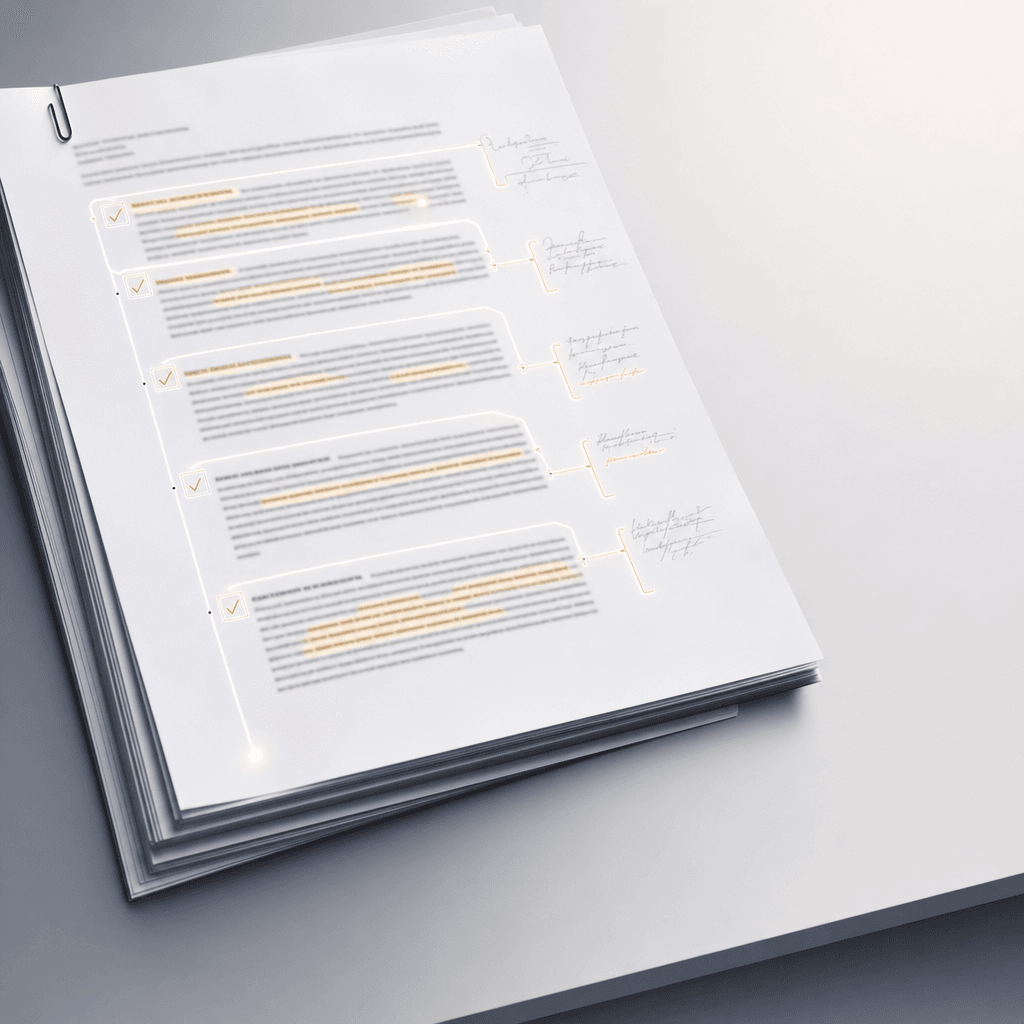
Microsoft is launching Legal Agent, a specialized AI tool embedded directly in Word that targets legal teams with automated contract review capabilities. Unlike generic AI assistants, the new agent follows structured workflows modeled on actual legal practice – reviewing contracts clause by clause against customizable playbooks. The launch signals Microsoft’s push beyond general-purpose AI into vertical-specific agents that could reshape how in-house counsel and law firms handle document-heavy work.
Microsoft is making its boldest play yet for the legal industry with Legal Agent, a specialized AI tool launching inside Word that’s built to handle the nitty-gritty work of contract review. The move comes as the company pushes deeper into vertical-specific AI agents, betting that lawyers will trust purpose-built tools over general chatbots when it comes to high-stakes documents.
Legal Agent doesn’t just summarize contracts or answer questions about them. According to Sumit Chauhan, corporate vice president of Microsoft’s Office Product Group, the agent “follows structured workflows shaped by real legal practice, managing clearly defined, repeatable tasks like reviewing contracts clause by clause against a playbook.” That playbook approach is key – legal teams can set their own parameters and standards, then let the AI systematically work through documents.
The agent integrates directly with Word’s existing track changes feature, meaning it can pick up where human reviewers left off or work alongside them in real-time. It handles negotiation history, flags problematic clauses, and manages the kind of complex document workflows that typically eat up hours of associate attorney time. Microsoft’s clearly aiming this at both in-house legal departments drowning in vendor contracts and law firms looking to streamline routine review work.
What sets this apart from Microsoft’s broader Copilot offerings is the structured, domain-specific approach. General-purpose AI models often struggle with legal nuance – they might miss a critical liability clause or misinterpret industry-standard language. By building workflows around actual legal practice patterns, Microsoft is trying to solve the trust problem that’s kept many law firms cautious about AI adoption.
The timing is notable. Legal tech has been one of the slower sectors to embrace generative AI, with firms worried about hallucinations, confidentiality breaches, and malpractice liability. But the pressure to cut costs and speed up document review is intense. According to recent legal industry surveys, contract review remains one of the most time-consuming and least satisfying tasks for attorneys – exactly the kind of work ripe for AI disruption.
Microsoft isn’t alone in this space. Startups like Harvey AI and Casetext (acquired by Thomson Reuters) have been building legal-specific AI tools, while established players like LexisNexis are racing to embed AI into their platforms. But Microsoft has a massive advantage: Word is already the default tool for legal document work. By embedding Legal Agent directly into the workflow lawyers already use, the company sidesteps the adoption friction that standalone tools face.
The legal industry has been here before with technology promises. Document automation tools, e-discovery platforms, and contract management systems all pledged to revolutionize legal work. Some delivered, many overpromised. What’s different now is the technology’s ability to actually understand context and nuance, not just pattern-match keywords. Whether Legal Agent can thread that needle between useful automation and trustworthy advice will determine if this is a genuine breakthrough or another oversold tool.
For corporate legal departments, the value proposition is straightforward: review more contracts faster without hiring additional headcount. For law firms, it’s trickier – efficiency gains could mean fewer billable hours, unless they redeploy attorney time to higher-value strategic work. That tension between efficiency and economics has defined legal tech adoption for decades.
Microsoft hasn’t disclosed pricing yet, but the agent will likely sit within the company’s broader Copilot licensing structure. The company’s been pushing enterprise customers toward Copilot subscriptions across its Office suite, and Legal Agent gives corporate legal teams a concrete reason to justify the added cost.
Microsoft’s Legal Agent represents a calculated bet that the future of enterprise AI lies in specialized vertical tools, not one-size-fits-all assistants. By targeting legal teams with workflows designed around actual practice patterns, the company is trying to crack a notoriously cautious market that’s been slow to trust AI with high-stakes work. If Legal Agent delivers on its promise of accurate, reliable contract review, it could accelerate AI adoption across legal departments and put pressure on competitors to build equally specialized tools. The bigger question is whether this marks the beginning of a wave of profession-specific AI agents – think accounting agents, HR agents, compliance agents – or if legal work’s unique combination of structure and nuance makes it a special case. Either way, for the thousands of lawyers who spend their days reviewing contracts, this could be the first AI tool that actually fits how they work.











Leave a Reply