
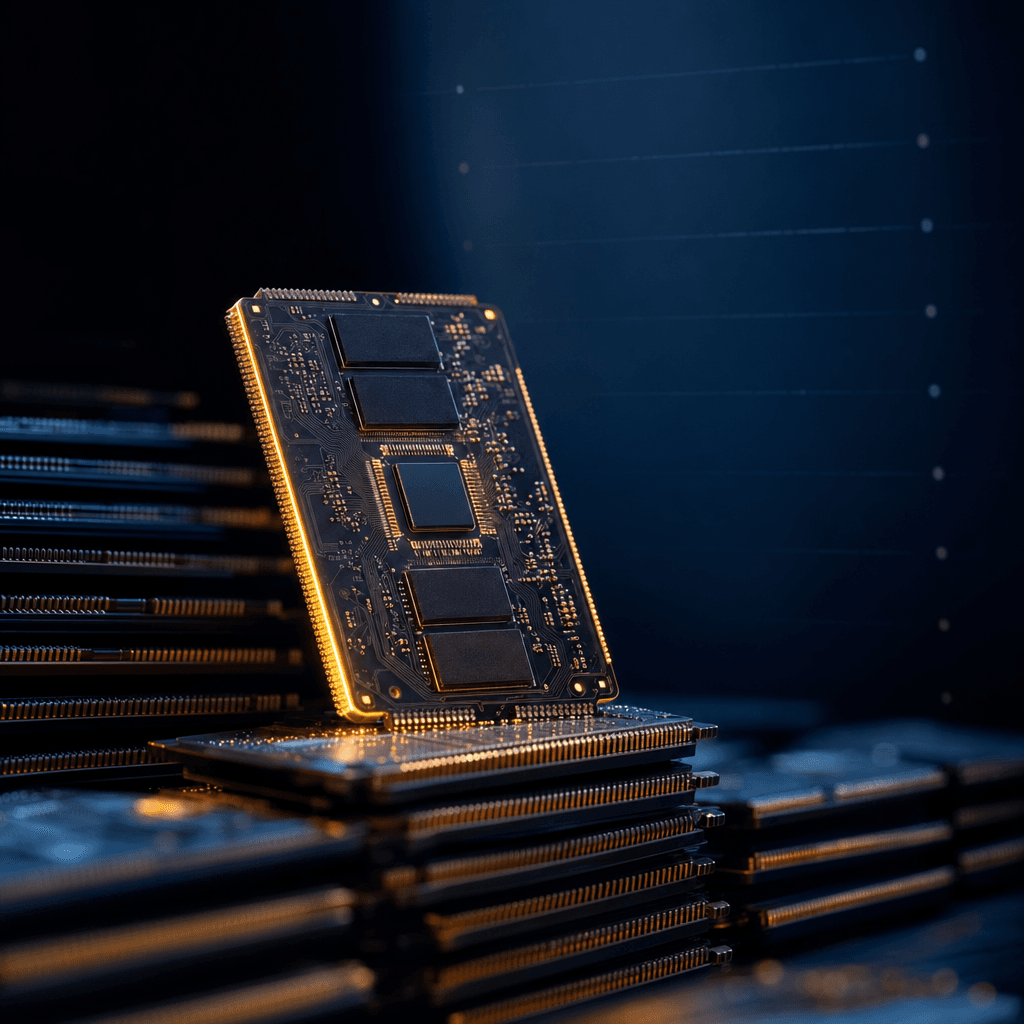
Apple CEO Tim Cook just put the entire tech industry on notice: the memory shortage that’s been constraining Mac production isn’t going away anytime soon. During the company’s quarterly earnings call, Cook warned that memory constraints will persist through multiple quarters ahead, forcing Apple to explore a range of strategic options to navigate what’s becoming one of the most severe supply crunches in recent memory. The warning comes as AI-powered devices drain global memory capacity faster than manufacturers can scale production.
Apple CEO Tim Cook just delivered the confirmation Wall Street didn’t want to hear. During the company’s latest quarterly earnings call, Cook warned investors and industry watchers that the memory constraints currently throttling Mac production won’t resolve quickly. “We’ll look at a range of options,” Cook said, according to CNBC’s coverage, signaling that Apple is preparing for an extended battle over memory supply.
The admission marks a rare public acknowledgment from Cook about supply chain vulnerabilities, and it comes at a critical moment. Apple’s AI-enhanced devices, particularly Macs equipped with advanced Apple Intelligence features, have seen demand surge beyond the company’s internal projections. But the memory chips needed to power those AI capabilities are in desperately short supply across the entire semiconductor industry.
Cook’s warning builds on earlier reports that Apple has been struggling with Mac supply shortages driven by unexpected AI demand. What appeared to be a temporary constraint now looks like a structural supply chain challenge that could reshape how Apple approaches memory procurement. The company’s traditional just-in-time manufacturing philosophy is colliding head-on with a memory market that can’t scale fast enough to meet AI-driven demand.
The numbers tell the story. Memory manufacturers are already running at near-maximum capacity, yet AI devices from Apple, Microsoft, and other major players require significantly more memory than previous generation products. A typical AI-capable laptop needs 16GB to 32GB of unified memory, compared to 8GB for standard models. That doubling or quadrupling of memory requirements is hitting supply chains that were sized for pre-AI demand levels.
Cook’s phrase “a range of options” is deliberately vague, but industry analysts are reading between the lines. Apple could pursue several strategies: securing long-term supply agreements with memory makers like Samsung and SK Hynix, investing directly in memory production capacity, redesigning products to use memory more efficiently, or even acquiring smaller memory suppliers. Each option carries significant financial and strategic implications.
The timing couldn’t be more challenging for Apple. The company is in the middle of a critical transition, positioning AI as the centerpiece of its product roadmap. Apple Intelligence features are meant to drive the next upgrade cycle across Macs, iPads, and iPhones. But if customers can’t actually buy the AI-enhanced devices because of memory shortages, that entire strategy stalls.
Competitors are watching closely. Microsoft faces similar memory constraints for its Copilot+ PCs, while Google and Meta are competing for the same memory supply to power their AI infrastructure. The memory crunch isn’t just an Apple problem – it’s an industry-wide crisis that’s forcing every tech giant to rethink supply chain strategy.
What makes Cook’s warning particularly significant is the timeline. By signaling that constraints will last “multiple quarters,” Apple is effectively telling the market to expect limited availability well into 2027. That’s an unusually long horizon for supply chain guidance, suggesting that Apple’s internal forecasts show no quick resolution even as new memory fabs come online.
The broader implications extend beyond Apple’s quarterly results. If the world’s most valuable tech company with the deepest pockets and strongest supplier relationships can’t secure enough memory, smaller players face an even bleaker picture. The memory shortage could accelerate consolidation in the PC market as only the largest manufacturers maintain access to constrained supply.
Apple’s financial strength gives it options that competitors lack. The company’s $162 billion cash position means it could theoretically invest billions in memory production capacity or lock up supply through massive prepayment agreements. But even Apple can’t wave a magic wand and create new semiconductor fabs overnight – advanced memory production facilities take years to build and billions to finance.
Cook’s measured tone during the earnings call suggests Apple is approaching this methodically rather than panicking. But make no mistake: this is a five-alarm fire for Apple’s operations team. Every quarter of constrained Mac supply means lost revenue, frustrated customers, and potential market share losses to competitors who might secure better memory allocations.
Tim Cook’s warning about extended memory constraints isn’t just a supply chain update – it’s a signal that the AI revolution is running headfirst into the physical limits of semiconductor manufacturing. Apple’s scramble for options reflects a broader industry reckoning: AI features sell devices, but without memory chips to power them, those devices can’t ship. How Apple navigates this crunch – whether through massive supply investments, product redesigns, or strategic partnerships – will likely set the template for how the entire tech industry manages the transition to AI-first computing. For now, customers hoping for that new AI-powered Mac might need to practice patience measured in quarters, not weeks.








Leave a Reply