
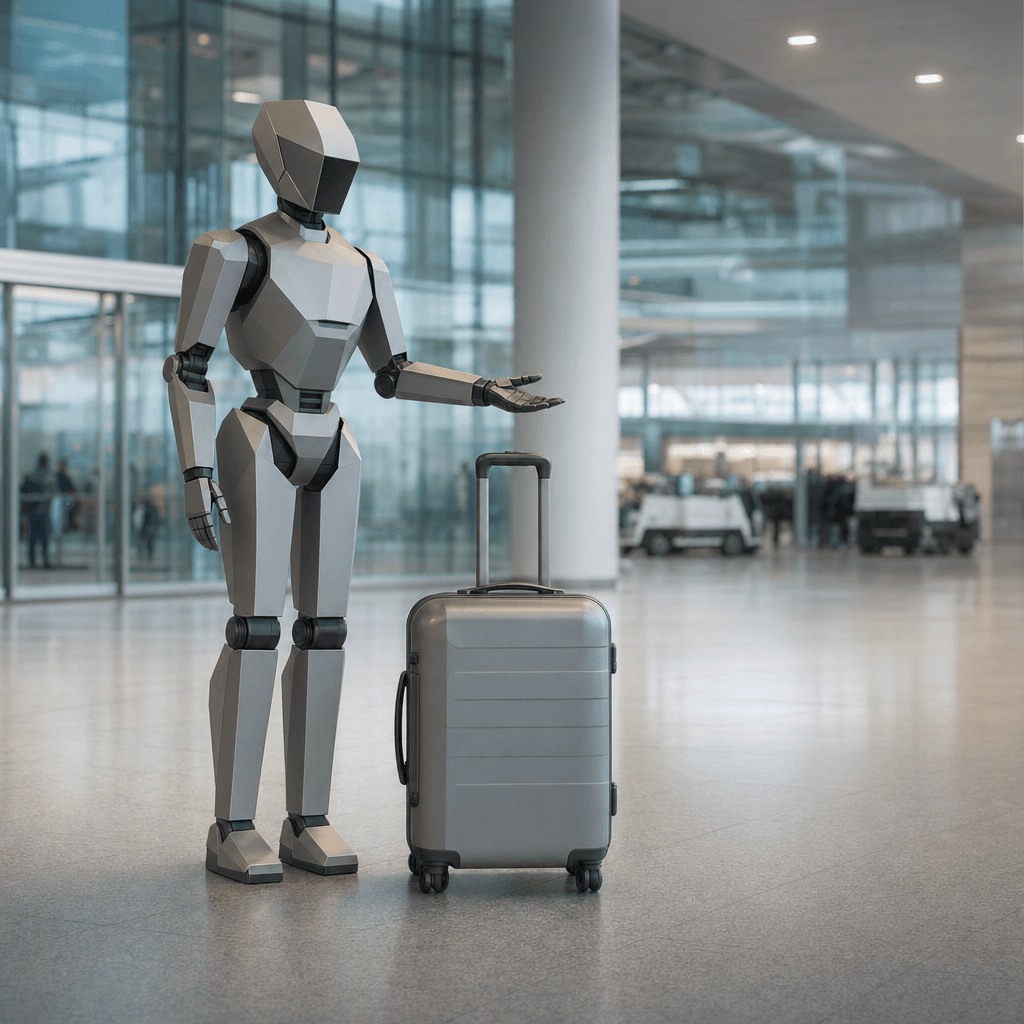
Japan Airlines has launched trials of humanoid robots at Tokyo’s Haneda Airport, marking one of the aviation industry’s most ambitious attempts to address chronic labor shortages through automation. The pilot program, which began this week at one of Asia’s busiest airports, deploys humanoid robots in ground service operations as Japan grapples with a rapidly aging workforce that’s left airlines scrambling for solutions. The move signals a broader shift in how the aviation sector plans to tackle workforce challenges that have plagued the industry since pandemic-era staffing cuts.
Japan Airlines is betting on humanoid robots to solve a problem that’s plagued Japanese aviation for years. The carrier’s new trial at Haneda Airport puts machines to work in ground services, testing whether automation can fill gaps left by Japan’s shrinking workforce. It’s a high-stakes experiment that could reshape how airlines operate worldwide.
The timing isn’t coincidental. Japan’s working-age population has been declining for over a decade, with the country’s 65-and-over demographic now representing nearly 30% of the total population. Airlines have felt the squeeze acutely, struggling to staff everything from check-in counters to baggage handling as younger workers gravitate toward tech sector jobs. Japan Airlines isn’t alone in facing this crunch, but it’s among the first major carriers to deploy humanoid robots as a potential fix.
Haneda Airport, which handles over 87 million passengers annually, provides an ideal testing ground. The facility’s complex ground operations require constant coordination between human workers and increasingly sophisticated automated systems. By introducing humanoid robots into this environment, JAL can evaluate whether machines can handle tasks that traditionally required human judgment and dexterity, from assisting passengers with mobility challenges to managing luggage in tight spaces.
The robots represent a different approach than the automated guided vehicles and conveyor systems already common in airports. Humanoid designs allow machines to navigate spaces built for people, use existing tools and equipment, and potentially interact with passengers in ways that feel more natural than kiosks or screens. That versatility matters in an airport environment where adaptability often determines whether automation succeeds or becomes an expensive dead end.
Japan’s broader robotics push extends far beyond aviation. The country has invested billions in developing service robots for healthcare, retail, and hospitality as it confronts demographic realities that other developed nations will soon face. Companies like SoftBank Robotics and Toyota have poured resources into humanoid development, viewing Japan’s labor crisis as both challenge and opportunity. Japan Airlines‘ trial taps into this ecosystem, potentially accelerating commercialization if the airport deployment proves successful.
But significant hurdles remain. Humanoid robots still struggle with unpredictable environments, complex social interactions, and tasks requiring fine motor skills. Airports present all three challenges simultaneously. Weather conditions change, passengers have diverse needs and languages, and ground operations involve everything from scanning boarding passes to securing cargo. The machines will need to prove they can handle this variability reliably before airlines commit to large-scale deployment.
Cost considerations loom large as well. While Japan’s labor shortage drives up wages, robotics systems require substantial upfront investment plus ongoing maintenance and updates. Japan Airlines hasn’t disclosed trial costs, but industry analysts estimate that humanoid robots suitable for airport work currently run $50,000 to $150,000 per unit, with operational expenses adding thousands more annually. The economics only make sense if robots can truly replace human workers rather than merely supplement them.
The trial’s outcome could influence decisions across the Asia-Pacific region, where multiple countries face similar demographic pressures. South Korea, Singapore, and Taiwan all report labor shortages in service industries, with aviation particularly hard-hit. If Japan Airlines demonstrates that humanoid robots can effectively handle ground services, expect other carriers to launch their own pilots within months.
Regulatory questions remain unresolved. Japan’s Ministry of Land, Infrastructure, Transport and Tourism must balance innovation encouragement with passenger safety requirements. Current aviation regulations don’t explicitly address humanoid robots in operational roles, creating gray areas around liability, certification, and safety protocols. How Japanese authorities handle these issues will likely shape international standards as other countries watch closely.
The Haneda trial also tests passenger acceptance. Previous attempts to deploy service robots in public spaces have produced mixed results, with some travelers embracing the technology while others find it off-putting or prefer human interaction. Japan Airlines will need to monitor passenger feedback carefully, adjusting deployment strategies based on real-world reactions rather than assumptions about customer preferences.
Japan Airlines’ humanoid robot trial at Haneda represents more than a single carrier’s attempt to address staffing challenges. It’s a test case for whether automation can meaningfully solve labor shortages that threaten service quality across the aviation industry. If successful, the program could accelerate robotics adoption globally, fundamentally changing how airports operate and how airlines allocate human talent. But if the machines can’t handle the complexity and unpredictability of real-world ground operations, the trial will serve as a reminder that some jobs still resist automation despite advancing technology. Either way, the aviation industry is watching closely, knowing that Japan’s demographic future is the world’s present.









Leave a Reply