
- ■
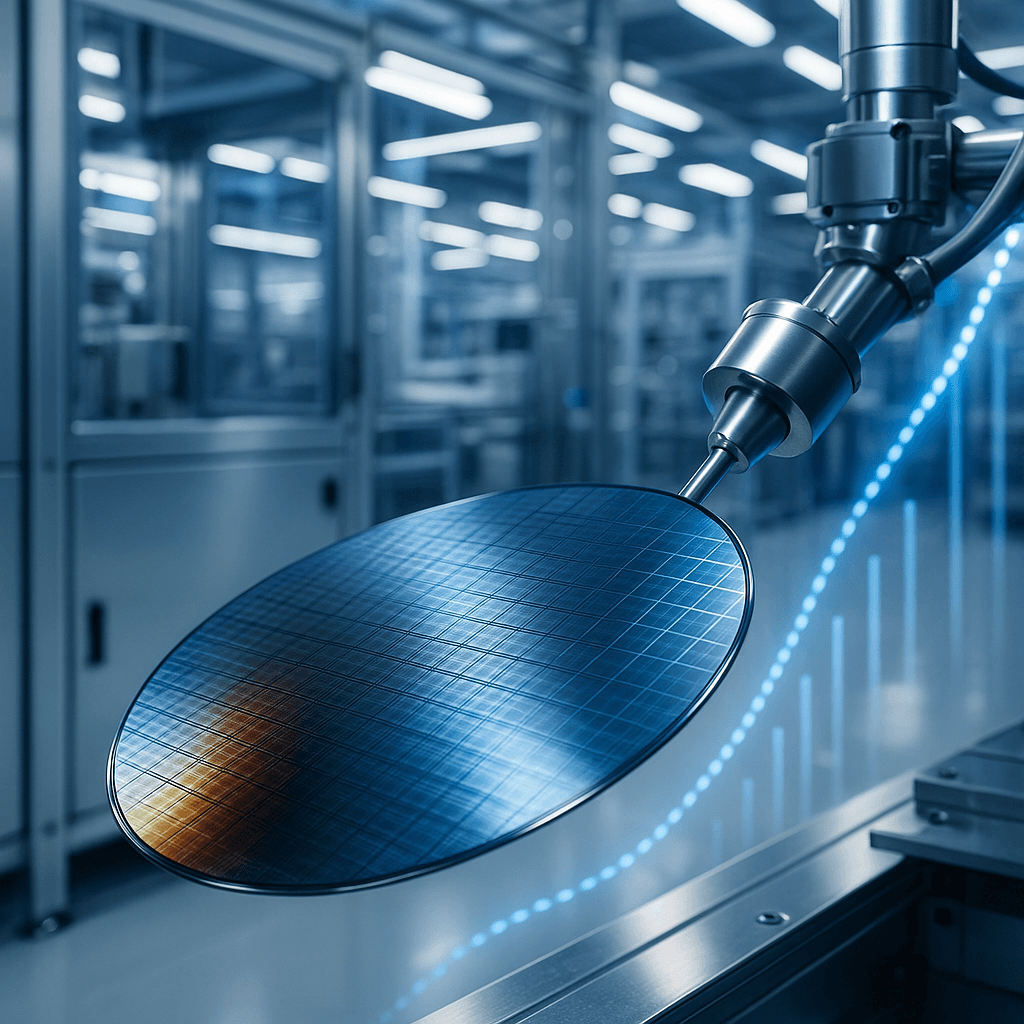
TSMC’s Q1 2026 profit jumped 58% year-over-year, beating analyst estimates as AI chip orders continue breaking records
- ■
The Taiwan-based chipmaker manufactures cutting-edge processors for Nvidia, Apple, and other tech giants building AI infrastructure
- ■
TSMC expects AI-related demand to accelerate through 2026, with capacity constraints at advanced nodes driving premium pricing
- ■
The results underscore how AI investments are reshaping semiconductor economics and solidifying TSMC’s position as critical infrastructure
Taiwan Semiconductor Manufacturing Company just posted a 58% jump in first-quarter profit, crushing analyst estimates as the world’s largest contract chipmaker rides an unprecedented wave of AI-driven demand. The blockbuster results signal that the AI hardware boom shows no signs of slowing, with TSMC’s advanced manufacturing capacity becoming the critical bottleneck for tech giants racing to build out their AI infrastructure. The company’s outlook suggests this record run has room to grow.
TSMC just delivered another data point confirming what the entire tech industry already knows: AI demand isn’t just strong, it’s rewriting the economics of semiconductor manufacturing. The company’s first-quarter profit surge of 58% landed well above Wall Street’s expectations, driven almost entirely by orders for advanced chips powering AI data centers and devices.
The Hsinchu-based manufacturer has become the physical embodiment of the AI infrastructure buildout. Every Nvidia H100 GPU, every Apple Neural Engine, every custom AI accelerator from Google and Amazon flows through TSMC’s fabrication plants. According to the earnings report, that positioning is paying off in ways that would’ve seemed impossible just three years ago.
The numbers tell a story of constrained supply meeting insatiable demand. TSMC’s advanced process nodes, particularly its 3-nanometer and 5-nanometer technologies, are running at maximum capacity. Companies aren’t just ordering chips – they’re bidding for production slots months in advance, effectively creating a seller’s market for the world’s most sophisticated manufacturing processes.
What makes this quarter particularly notable is the breadth of AI demand. It’s not just Nvidia dominating orders anymore. Apple is ramping production for AI-enabled devices. Microsoft and Amazon are designing custom chips for their cloud infrastructure. Even automotive companies are ordering AI processors for next-generation vehicles. TSMC sits at the center of all these converging trends.
The company’s guidance suggests this isn’t a temporary spike. Management expects AI-related revenue to continue growing through the remainder of 2026, with no immediate relief on capacity constraints. That’s remarkable given how much manufacturing capability TSMC has already brought online over the past 18 months. The chipmaker has been investing billions in new fabrication facilities in Taiwan, Arizona, and Japan, but demand is outpacing even aggressive expansion plans.
Competitive dynamics are also working in TSMC’s favor. While Samsung and Intel are investing heavily in advanced manufacturing, neither has matched TSMC’s yield rates or reliability at cutting-edge nodes. For AI chips where performance and power efficiency are critical, customers consistently choose TSMC despite premium pricing. That technical moat is translating directly into margin expansion.
The geopolitical dimension adds another layer to TSMC’s story. With most advanced chip production concentrated in Taiwan, governments worldwide are pushing for manufacturing diversification. TSMC’s Arizona facility is ramping production, supported by US CHIPS Act funding, but the Taiwan operations remain the company’s technological crown jewel. The Q1 results demonstrate that despite geopolitical concerns, customers have little choice but to rely on TSMC for their most advanced chips.
Investors are taking notice. TSMC’s stock has become a proxy for AI infrastructure investment, with the company’s market capitalization reflecting its position as an essential enabler of the AI revolution. The 58% profit increase validates the premium valuation, showing that AI demand is translating into actual financial performance rather than just hype.
Looking at the semiconductor supply chain more broadly, TSMC’s results have implications for the entire ecosystem. Equipment makers like ASML, which supplies the extreme ultraviolet lithography machines necessary for advanced chip production, are seeing sustained order books. Materials suppliers and packaging specialists are all benefiting from the same AI-driven wave.
The earnings also highlight how AI is reshaping technology spending patterns. Rather than broad-based semiconductor growth, we’re seeing concentrated demand for the most advanced chips. TSMC’s older process nodes aren’t seeing the same explosive growth, underscoring how AI workloads require cutting-edge silicon that only a handful of manufacturing processes can deliver.
TSMC’s 58% profit surge isn’t just an earnings beat – it’s a signal about where the AI infrastructure buildout stands. The combination of record demand, constrained supply, and no near-term relief on capacity suggests the semiconductor shortage for advanced AI chips will persist well into 2027. For tech companies betting big on AI, securing TSMC manufacturing capacity has become as strategic as developing the algorithms themselves. The question now isn’t whether AI demand will sustain TSMC’s growth, but whether even the world’s most advanced chipmaker can scale fast enough to meet it.










Leave a Reply