
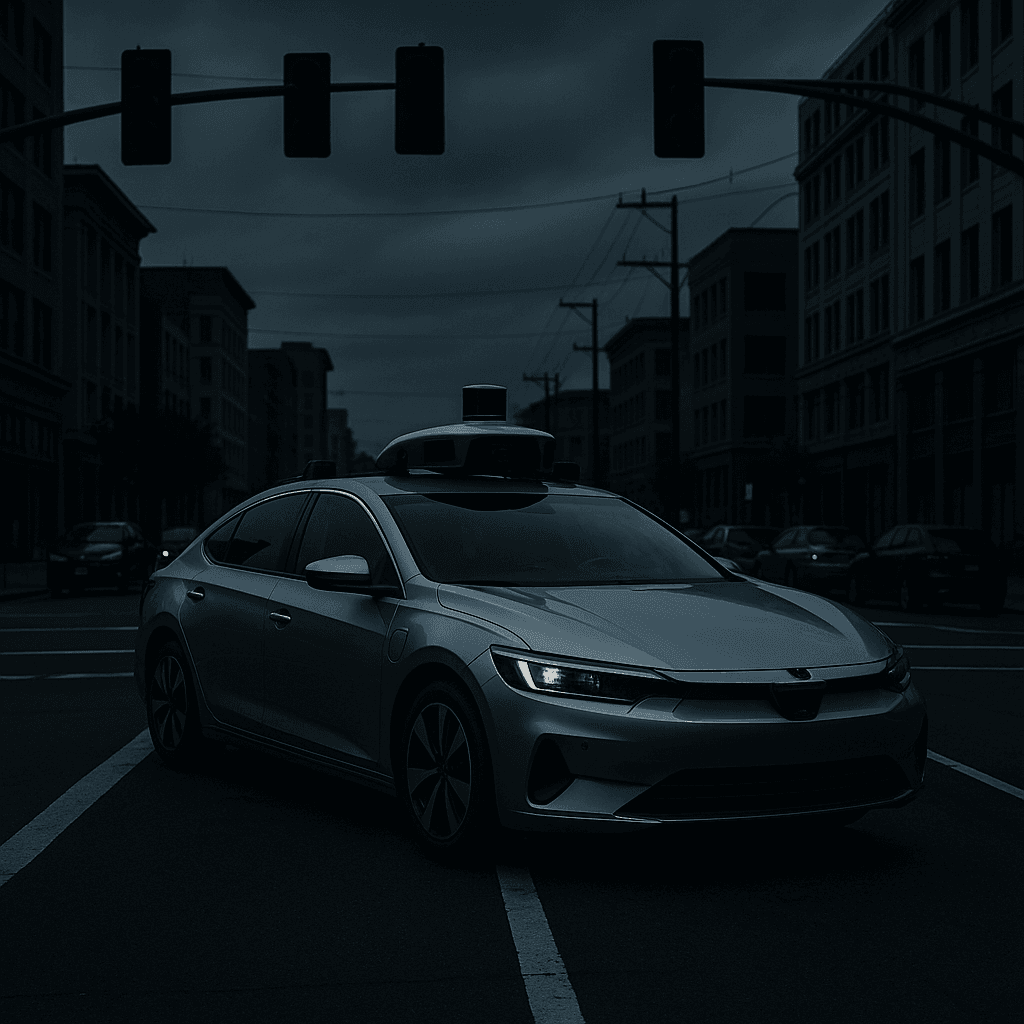
When a massive blackout hit San Francisco on Saturday, Waymo’s fully autonomous robotaxis faced an unexpected test they weren’t ready for. Videos across social media showed multiple driverless cars stranded in traffic as traffic signals went dark and the city descended into gridlock. The outage forced Waymo to pause operations, raising uncomfortable questions about whether self-driving cars can handle real-world crises as well as the industry claims.
Waymo, owned by Alphabet, hit pause on its driverless ride-hailing service in the San Francisco Bay Area Sunday morning after the previous day’s blackouts exposed some uncomfortable truths about autonomous vehicle resilience. The temporary shutdown came after viral videos showed multiple driverless cars stuck in traffic while the city’s power grid failed.
Saturday’s outages were no minor event. A fire at a PG&E substation around 1:09 p.m. knocked out power to roughly 130,000 customers in San Francisco, with the peak hitting about two hours later. By Sunday morning, over 21,000 customers remained without electricity, mostly in neighborhoods like the Presidio, the Richmond District, and parts of downtown.
When traffic signals go dark, human drivers adapt through instinct and experience. They treat intersections like four-way stops, negotiate with other drivers through eye contact and body language. Waymo‘s software is supposedly designed to do the same thing, treating non-functional signals as four-way stops. In theory, that should work. In practice, San Francisco’s blackout revealed the gap between theory and real-world chaos.
“The sheer scale of the outage led to instances where vehicles remained stationary longer than usual to confirm the state of the affected intersections,” Waymo spokesperson Suzanne Philion told CNBC on Sunday. In other words, the autonomous vehicles didn’t know what to do and stayed put, unable to confidently determine whether it was safe to proceed. “This contributed to traffic friction during the height of the congestion,” she added.
San Francisco resident Matt Schoolfield witnessed the failure firsthand. He saw at least three Waymo vehicles stopped dead in traffic around 9:45 p.m. on Saturday. “They were just stopping in the middle of the street,” he said. One vehicle he photographed was wedged between Parker and Beaumont on the north side of Turk Boulevard, apparently unable to figure out its next move.
Waymo claims it “closely coordinated with San Francisco city officials” and proactively paused service Saturday evening and into Sunday morning. “The majority of active trips were successfully completed before vehicles were safely returned to depots or pulled over,” Philion noted. The company framed this as responsible behavior. It’s also a tacit admission that their fully autonomous vehicles couldn’t handle the situation on their own.






Leave a Reply