
- ■
Samsung’s APV codec achieved IETF standardization as RFC 9924 in February 2026, with full source code released on GitHub as OpenAPV
- ■
Galaxy S26 Ultra becomes first Android phone with APV support, enabling real-time 8K professional video processing on mobile hardware
- ■
Android 16, FFmpeg, and DaVinci Resolve have added APV compatibility, accelerating ecosystem adoption beyond Samsung devices
- ■
The codec uses lightweight entropy coding and frame tiling to match desktop-grade quality without the computational overhead
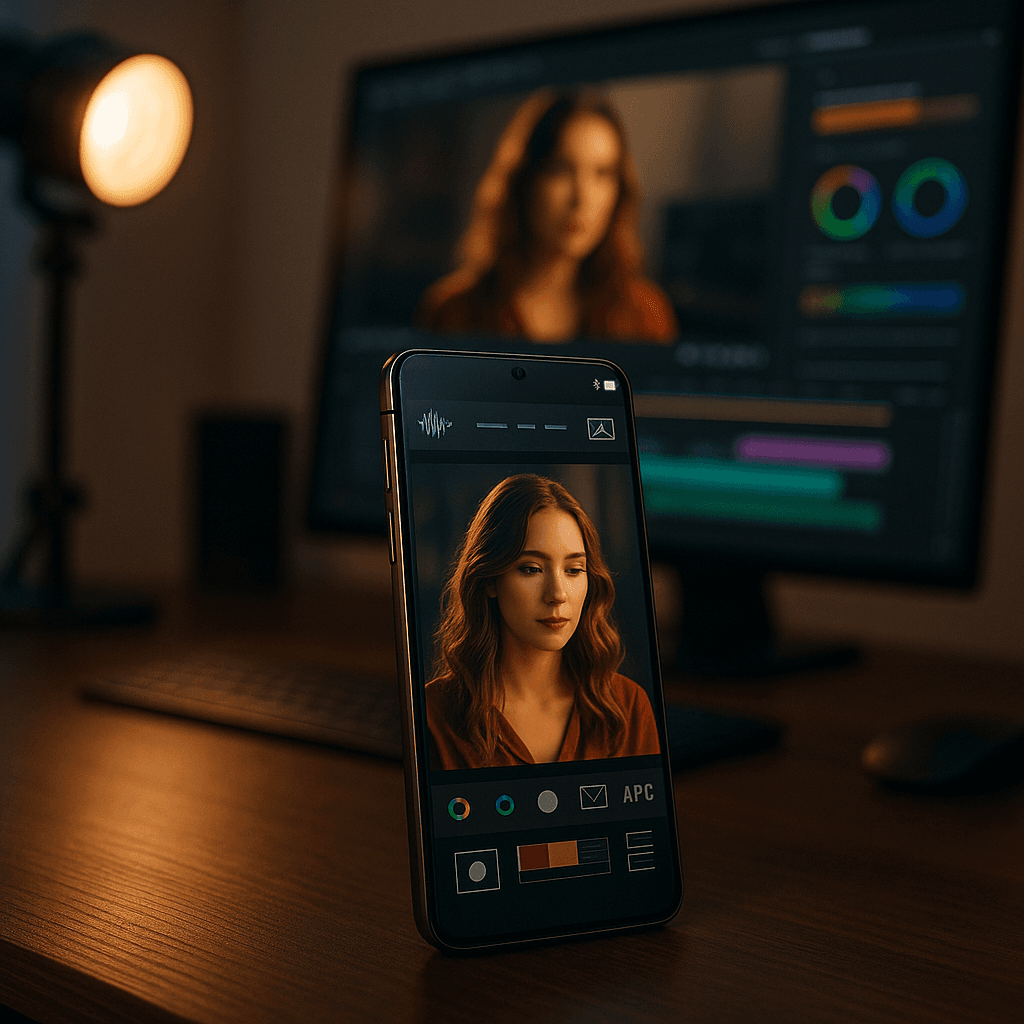
Samsung just made a play to redefine professional mobile video. The company’s Advanced Professional Video (APV) codec – now shipping on the Galaxy S26 Ultra – became an official global standard through the Internet Engineering Task Force in February 2026 as RFC 9924. Unlike traditional pro codecs built for high-end hardware, APV processes 8K video in real time on smartphones while preserving color accuracy through multiple editing rounds, a technical feat Samsung says will democratize cinema-grade production.
Samsung is betting that professional video production belongs in your pocket, not just in expensive editing bays. The company’s Advanced Professional Video codec – three years in development across five global research centers – just cleared a major milestone. In February 2026, the Internet Engineering Task Force published APV as RFC 9924, effectively crowning it a de facto global standard. Days later, Samsung shipped the Galaxy S26 Ultra as the first Android device with native APV support.
The timing isn’t coincidental. Mobile video quality has been stuck in a frustrating middle ground – good enough for social media, but lacking the color fidelity and post-production flexibility that professional workflows demand. Traditional pro codecs like ProRes prioritize image preservation but require computational muscle that smartphones simply don’t have. Consumer codecs like H.264 compress efficiently but sacrifice the detail colorists and VFX artists need.
APV rewrites those tradeoffs. According to Samsung’s technical documentation, the codec handles real-time 8K video processing on mobile chipsets while maintaining what the company calls “100% original color and detail preservation” even after multiple editing passes. The secret lies in two innovations: lightweight entropy coding that reduces processor load, and frame tiling that splits video into segments processed simultaneously across multiple cores.
That parallel processing approach matters more than it sounds. Desktop pro codecs choke mobile processors because they treat each frame as a monolithic block of data. By dividing frames into tiles, APV lets a smartphone’s application processor distribute the workload the same way high-end workstations do – just on a smaller scale. The result is what Samsung claims as lossless quality without the computational penalty.
But the real story isn’t just technical specs. It’s what Samsung chose to do next. Instead of locking APV behind licensing fees or proprietary walls, the company published the complete source code on GitHub under the name OpenAPV. They also joined the Academy Software Foundation in August 2024, the same consortium that stewards open-source tools used in major film productions.
That openness is already paying dividends. Android 16 added native APV support, meaning any Android device maker can implement the codec without Samsung’s involvement. The widely-used video tool FFmpeg integrated APV compatibility, as did Blackmagic’s DaVinci Resolve, one of the industry’s dominant color grading platforms. According to Samsung’s developer documentation, this cross-platform support creates a continuous workflow from mobile capture through desktop post-production.
The development path wasn’t linear. Samsung Research initiated the project, then distributed work across research teams in America, India, Poland, and Japan. The global collaboration led to APV’s first public reveal at the Samsung Developer Conference in October 2023. From there, Samsung’s Mobile eXperience division took over product integration, optimizing the codec for the thermal and power constraints of smartphone hardware.
What separates APV from earlier mobile video attempts is its focus on the complete production pipeline. Color grading – where filmmakers apply precise tones to match their creative vision – requires codecs that don’t introduce artifacts or shift hues during compression. Visual effects work demands clean plates with maximum detail retention. Samsung designed APV specifically for these workflows, not just playback quality.
The comparison table Samsung published tells the story bluntly. Conventional codecs optimize for “viewing and sharing” with a focus on “reducing file size.” APV targets “professional editing and high-quality preservation” with “real-time 8K processing on mobile phones.” The use cases diverge just as sharply: social media uploads versus film production and advanced editing.
Still, adoption faces real hurdles. Professional videographers have spent years building workflows around established codecs. Switching requires not just technical compatibility but trust that APV won’t introduce unexpected artifacts under deadline pressure. DaVinci Resolve support helps, but the ecosystem needs buy-in from Adobe Premiere, Final Cut Pro, and other editing platforms that dominate professional studios.
Samsung’s open-source strategy addresses that concern directly. By making APV freely available and standardized through IETF, the company removed the barriers that typically slow codec adoption. Any software developer can implement APV without negotiating licenses or reverse-engineering proprietary formats. That’s the same playbook that helped VP9 and AV1 gain traction against patented alternatives.
The Galaxy S26 Ultra launch in February 2026 serves as APV’s real-world stress test. Samsung equipped the device with the codec as a headline feature, positioning it for creators who want desktop-caliber output without carrying desktop-caliber gear. Whether that pitch resonates depends on how well APV performs under actual production conditions – not just Samsung’s controlled demonstrations.
For now, APV represents Samsung’s clearest attempt yet to redefine what smartphones can do beyond consuming content. The company isn’t just building better cameras; it’s engineering the entire software stack that turns raw sensor data into editable footage. If APV delivers on its technical promises and ecosystem adoption continues, the gap between mobile and professional video gear might finally start closing.
Samsung’s APV codec isn’t just another technical specification – it’s a direct challenge to the assumption that professional video requires professional hardware. By achieving IETF standardization, releasing open-source code, and securing ecosystem support from Android, FFmpeg, and DaVinci Resolve, Samsung built the infrastructure for mobile-first professional workflows. The Galaxy S26 Ultra proves the technology works in production hardware. Now the question shifts from technical feasibility to market adoption: will creators trust their smartphones for work that currently demands dedicated cameras and editing rigs? The answer depends less on Samsung’s engineering and more on whether the broader video production industry sees APV as liberation from expensive gear or just another format to support.











Leave a Reply