
AMD just dropped earnings that tell the story of tech’s AI transformation in one dramatic split. The chipmaker’s data center business more than doubled year-over-year to hit $6.7 billion in Q2 2026, driven entirely by enterprises scrambling for AI compute capacity. Meanwhile, gaming revenue tumbled 31% to $779 million as console shortages and price hikes took their toll. The company’s overall revenue hit a record $11.5 billion, with data centers now representing 58% of total business – a stark pivot from its gaming roots.
AMD is riding the AI wave straight to the bank. The company’s Q2 2026 earnings reveal a business in the middle of a massive transformation, with data center chips for AI workloads now completely overshadowing its legacy gaming business.
The numbers are striking. Data center revenue hit $6.7 billion, more than doubling from the $3.2 billion AMD reported in the same quarter last year – a 107% leap according to the company’s official filing. That’s also up from the $5.8 billion AMD posted in Q1, showing accelerating momentum as enterprises continue their scramble for AI compute capacity.
The data center surge pushed AMD’s total revenue to a record $11.5 billion for the quarter, up 50% year-over-year. More tellingly, data center now represents 58% of the entire company’s revenue – a dramatic shift for a chipmaker that built its reputation on gaming graphics cards and console processors.
That gaming heritage is now taking a backseat. Gaming revenue fell to $779 million in Q2, down 31% from last year’s comparable quarter. The decline reflects slowing sales across AMD’s major gaming platforms including Microsoft’s Xbox Series X/S, Sony’s PlayStation 5, and Valve’s Steam Deck. Price increases and ongoing component shortages have dampened consumer demand for gaming hardware, creating a stark contrast with the explosive growth in enterprise AI spending.
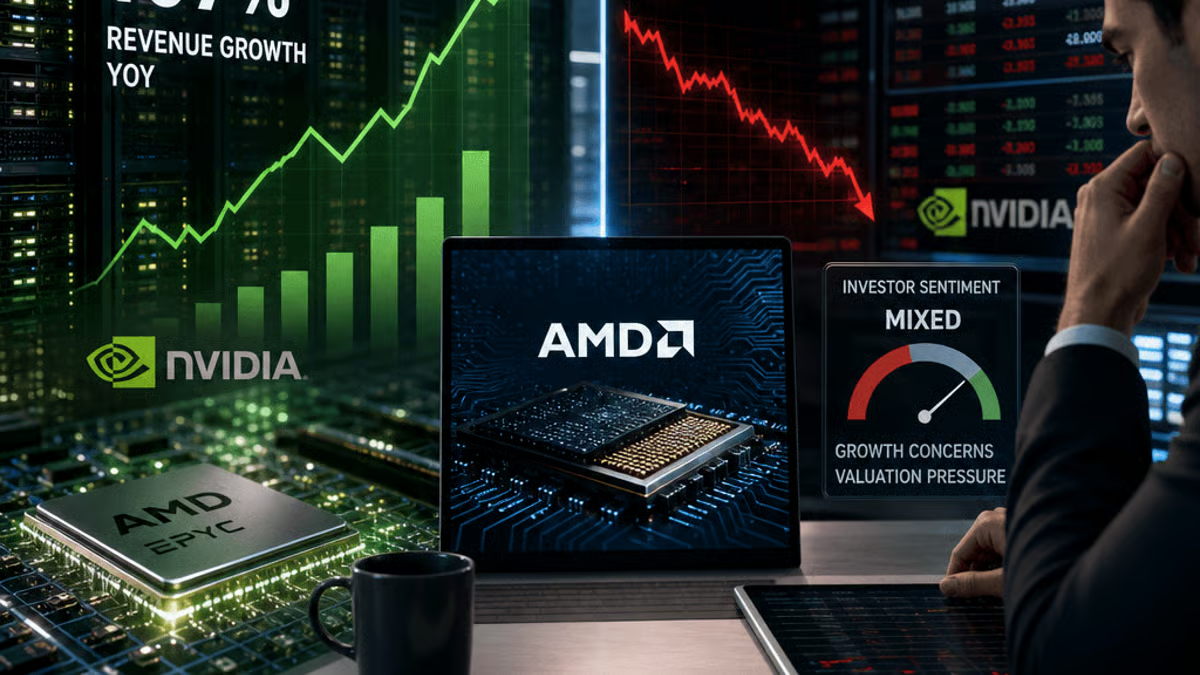
The bifurcation in AMD’s business mirrors broader trends reshaping the semiconductor industry. While consumer electronics face macroeconomic pressures and market saturation, data center chips for training and running large language models have become the hottest commodity in tech. Nvidia has famously captured much of this market with its dominant position in AI accelerators, but AMD’s aggressive growth shows there’s plenty of room for competition as cloud providers and enterprises diversify their chip suppliers.
AMD’s data center momentum is driven by its EPYC server processors and Instinct AI accelerators, which are finding homes in massive cloud infrastructure buildouts. Hyperscalers like Microsoft, Google, and Amazon Web Services are all racing to expand AI capacity, creating unprecedented demand for high-performance compute chips. The company’s MI300 series accelerators, designed specifically for AI workloads, have become a key weapon in this fight.
The gaming decline, while notable, may not worry AMD investors given the data center windfall. Console cycles are inherently lumpy, and the current generation of Xbox and PlayStation hardware is several years into its lifecycle. Component shortages that plagued the industry continue to ease, but elevated prices have kept some consumers on the sidelines. The Steam Deck, while innovative, represents a smaller market segment compared to traditional consoles.
What’s more interesting is how AMD is positioning itself in the AI chip wars. The company has consistently positioned its offerings as more open and flexible alternatives to Nvidia’s CUDA-locked ecosystem. With enterprises increasingly concerned about vendor lock-in and looking to diversify their AI infrastructure, AMD’s timing couldn’t be better.
The 58% data center revenue mix also gives AMD more predictable, higher-margin business compared to the volatile consumer gaming market. Enterprise contracts tend to be larger and longer-term, with cloud providers committing to multi-year agreements. This shift toward enterprise revenue is exactly what Wall Street wants to see from semiconductor companies.
Looking ahead, AMD’s challenge will be maintaining this torrid growth pace as comparisons get tougher and Nvidia continues to dominate mindshare in AI. But with data center revenue up 15% just from Q1 to Q2, and enterprises showing no signs of slowing their AI infrastructure investments, AMD has momentum on its side. The gaming business may be struggling, but in 2026, AI is where the real money lives.
AMD’s Q2 earnings paint a vivid picture of tech’s AI-driven reshuffling. The company’s data center business has exploded to become the dominant revenue driver at 58% of total sales, fueled by insatiable demand for AI compute chips from cloud providers and enterprises. While gaming revenue took a significant hit from console market headwinds, the data center surge more than compensated, pushing overall revenue to record levels. For AMD, the message is clear: the future is in data centers powering AI workloads, not gaming rigs. As enterprises continue racing to build out AI infrastructure and diversify away from Nvidia’s dominance, AMD’s aggressive positioning in this market looks increasingly prescient.









Leave a Reply