
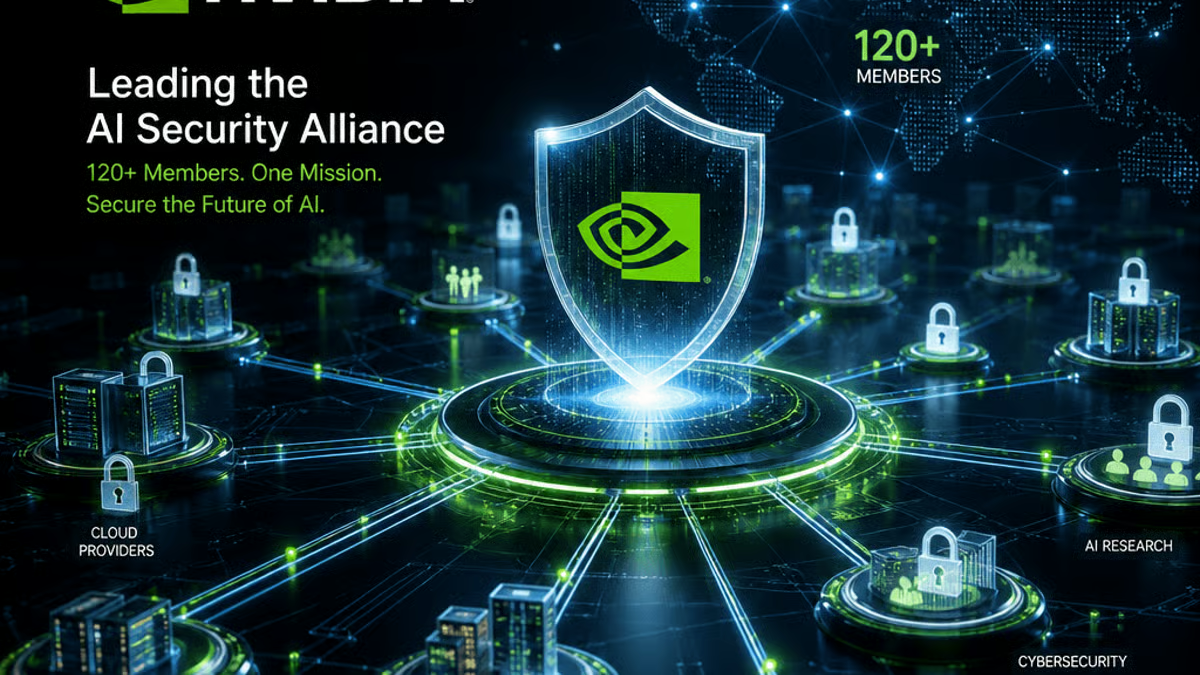
Nvidia isn’t wasting any time. Just one week after launching the Open Secure AI Alliance, the chipmaker’s new industry coalition has already attracted over 120 companies and released its first set of proposals focused on defending against AI agents. The breakneck speed signals how urgent AI security has become as autonomous systems move from labs into production environments across enterprise tech stacks.
Nvidia just demonstrated what happens when the world’s most valuable chipmaker decides something matters. The Open Secure AI Alliance, announced barely seven days ago, has already grown to over 120 member companies and shipped its first batch of technical proposals for defending against AI agents. The velocity is remarkable even by Silicon Valley standards, where industry groups typically spend months in formation mode before producing anything substantive.
The focus on AI agent security couldn’t be more timely. As companies rush to deploy autonomous AI systems that can take actions without human oversight, the potential attack surface has exploded. These aren’t just chatbots that can hallucinate embarrassing responses. We’re talking about AI agents that can execute financial transactions, modify codebases, and access sensitive data across enterprise systems. One compromised agent could cascade through an organization faster than any human security team could respond.
Nvidia’s ability to assemble this coalition so quickly reveals just how much leverage the company wields right now. When you control the GPUs that power nearly every major AI deployment, CEOs tend to return your calls. The 120-plus member roster, while not publicly detailed in available materials, likely spans cloud providers, enterprise software vendors, cybersecurity firms, and AI startups – all of whom depend on Nvidia’s hardware to run their models.
The alliance’s first proposals target what insiders are calling the “agent trust problem.” As AI systems gain more autonomy, enterprises need frameworks to verify agent behavior, contain potential damage, and maintain audit trails when things go wrong. Traditional cybersecurity tools weren’t built for threats that can reason, adapt, and exploit vulnerabilities faster than signature-based defenses can update.
This isn’t Nvidia’s first rodeo with industry coordination. The company has long understood that hardware dominance requires ecosystem cultivation. But the Open Secure AI Alliance represents something different – a recognition that AI security concerns could slow enterprise adoption and, by extension, GPU demand. By taking the lead on security standards, Nvidia is essentially clearing obstacles from its own growth path.
The speed also suggests these proposals weren’t drafted from scratch last week. Nvidia likely had security frameworks ready to deploy, waiting for the right moment to rally industry support. That kind of preparation reveals how seriously the company takes potential AI security backlash that could spook enterprise buyers.
What makes this particularly interesting is the timing relative to regulatory movements. Governments worldwide are still figuring out how to regulate AI, often months behind the technology curve. Industry-led alliances like this one can establish de facto standards before official rules arrive, effectively letting companies write their own regulatory playbook. That’s either smart self-governance or regulatory capture, depending on your perspective.
The enterprise AI security market is already heating up. Startups focused on AI red teaming, model monitoring, and agent containment have raised hundreds of millions in recent quarters. Now they’re all likely scrambling to align their products with whatever frameworks the Open Secure AI Alliance publishes. When an Nvidia-led coalition sets technical directions, the rest of the industry typically follows – or risks incompatibility with the dominant hardware platform.
For CIOs evaluating AI deployments, this alliance offers both reassurance and a new complexity. On one hand, coordinated security standards could accelerate safe AI adoption. On the other hand, the proposals are coming from vendors with clear commercial interests in expanding AI usage. Independent security audits will be crucial to verify that these frameworks actually protect enterprises rather than just providing security theater that enables faster sales cycles.
The real test comes in the next few weeks. Can the alliance maintain this momentum and ship implementation tools that security teams can actually deploy? Or will it follow the path of countless industry groups that launch with fanfare, produce white papers nobody reads, and fade into irrelevance? Nvidia’s track record suggests the former, but 120 companies trying to coordinate on anything is inherently messy.
Nvidia is moving at startup speed with enterprise muscle, and that combination could reshape AI security faster than anyone expected. The Open Secure AI Alliance’s first-week output suggests this won’t be another talk-shop industry group. Whether these proposals actually secure AI systems or simply grease the wheels for faster enterprise adoption remains to be seen. But one thing is clear: when Nvidia decides something needs to happen in AI, it usually does. CIOs should pay close attention to what comes out of this alliance – because it’s likely to define the security standards they’ll be implementing within months, not years.








Leave a Reply