
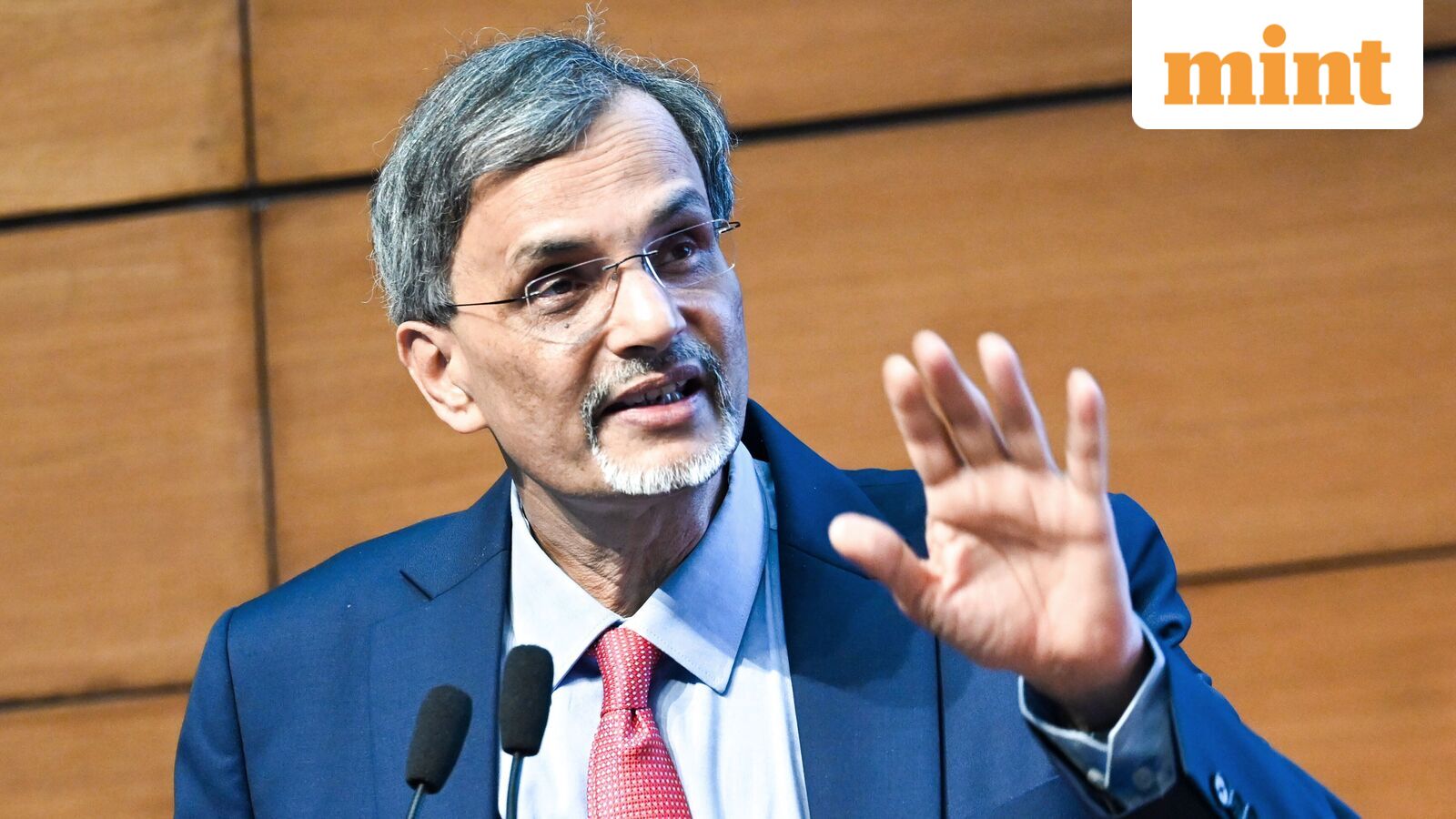
India’s Global Capability Centres (GCCs) have evolved from low-cost back offices into global hubs for engineering, product development, artificial intelligence (AI) and decision-making, but sustaining that advantage will require continuous investment in talent, skills and innovation, chief economic adviser (CEA) V. Anantha Nageswaran said on Thursday.
Speaking at the Confederation of Indian Industry’s (CII) GCC Business Summit 2026, Nageswaran described GCCs as one of India’s “quiet successes”, saying their rise was driven by steady capability building over two decades rather than any single policy intervention.
“India’s Global Capability Centres are one of the quiet successes of our economy. They did not arrive with fanfare. There was no single big announcement. They grew slowly, one centre at a time, one team at a time. And today they are impossible to ignore,” he said.
India now hosts more than 2,100 GCCs employing over 20 lakh professionals, with revenues exceeding $64 billion and projected to approach $100 billion. The centres contribute nearly 2% of GDP, while India accounts for about half of the world’s GCCs, according to industry estimates cited by the CEA.
Nageswaran said the success of India’s GCC ecosystem had been built on talent rather than cost alone.
“These centres first came to India for cost. They stayed for capability,” he said, adding that while cost advantages can be replicated by other low-cost countries, capability is much harder to build and lose.
He said Indian engineers, analysts, designers and researchers had earned the confidence of global corporations by taking ownership of increasingly sophisticated work.
“What began as support became engineering. What began as engineering became product. What began as a back-office became, in many firms, the place where global decisions are now made,” he said.
Beyond the low-cost model
According to the CEA, the growth of GCCs has benefited both multinational companies and India’s workforce. Global firms have gained world-class work at competitive costs, while Indian professionals have secured careers requiring deeper skills and offering better pay than traditional services jobs. He also said GCCs have opened up more opportunities for women and expanded quality employment to more cities.
Addressing the perception that GCCs remain low-value support centres, Nageswaran said the work undertaken in India has become increasingly sophisticated.
Rejecting the perception that GCCs remain low-value operations, Nageswaran said they now run critical functions across industries—from banking risk systems and automotive design to semiconductor engineering, pharmaceutical analytics and digital product development.
He cited German science and technology company Merck’s Bengaluru campus, which houses around 3,300 employees across AI, data and enterprise technology and has become the company’s largest digital capability hub globally.
The CEA said more than 1,200 GCCs in India are now engaged in artificial intelligence and machine learning, while India has become the world’s second-largest base of enterprise AI talent. Intellectual property created in these centres is real, he said, adding that patents are being filed in India, products are being shipped from India and global leadership roles are increasingly being held by executives based here.
AI challenge and the next phase
On the impact of artificial intelligence, Nageswaran acknowledged that routine, repetitive and rule-based work faces genuine disruption.
“The work that was routine, repetitive and rule-bound is exactly the work that AI does most easily and most cheaply. If a centre’s value rests only on doing simple tasks at low cost, then that value is under real threat. We should not pretend otherwise,” he said.
However, he argued that India’s GCC model is moving beyond such work. Artificial intelligence does not build, deploy or govern itself, he said, noting that people are needed to design AI systems, train them, test them, correct them, determine where they should be used and take responsibility when they fail.
“AI does not empty these centres. In the centres that are run well, it raises the value of each person who works there,” he said.
Calling resilience a choice rather than an inevitability, Nageswaran said countries must treat AI as a tool rather than fate.
“The centres that stand still will suffer. The centres that move up will thrive. And our task—industry and government, together—is to make sure that India stays on the right side of that line,” he said.










Leave a Reply