
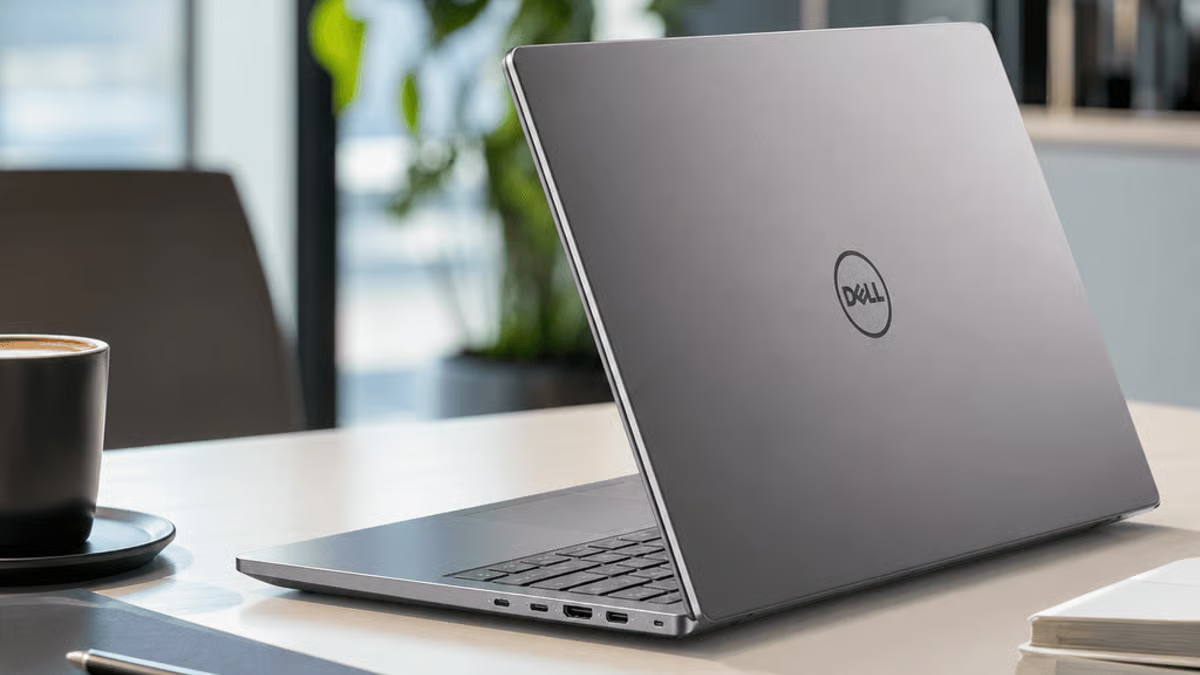
The laptop market’s pricing strategy just shifted. Dell‘s newly reviewed 14S marks what industry watchers are calling the new baseline for mid-range laptops, with a price bump that reflects broader inflationary pressures across consumer electronics. But according to Wired’s hands-on review, the quality improvements might actually justify the cost. As component prices stabilize post-pandemic and manufacturers pour resources into build quality over specs races, the 14S becomes a test case for whether consumers will accept premium pricing in exchange for better craftsmanship.
Dell just put a stake in the ground on laptop pricing, and the industry’s watching closely. The company’s 14S, reviewed this week by Wired, arrives with a price tag that would’ve seemed steep for a mid-range machine just two years ago. But reviewer Luke Larsen suggests the premium might be warranted, pointing to build quality that elevates the 14S above the race-to-the-bottom pricing that’s dominated the laptop market since 2020.
The timing matters. Laptop manufacturers spent the past three years locked in a brutal price war, slashing margins to capture pandemic-era demand for home office setups. That strategy worked while component shortages kept supply tight, but as chip availability normalized through 2025, companies like Dell, HP, and Lenovo found themselves stuck with razor-thin profits on devices that cut corners to hit aggressive price points.
The 14S takes a different approach. According to the Wired review, Dell invested in materials and construction quality that elevate the device beyond typical budget constraints. That decision reflects broader industry trends where manufacturers are betting consumers will pay more for machines that feel premium, even if the internal specs don’t dramatically outpace cheaper alternatives.
It’s a calculated risk in a market that’s proven price-sensitive. Global laptop shipments dropped 14% year-over-year through Q2 2026, according to industry data, as consumers delay upgrades amid economic uncertainty. But average selling prices climbed 8% over the same period, suggesting buyers who do purchase are willing to spend more for quality.
Dell‘s strategy mirrors moves by Apple, which has maintained premium pricing for MacBooks while competitors chased market share. The difference is Dell’s targeting mainstream buyers, not the premium segment Apple dominates. If the 14S finds an audience, expect HP‘s Pavilion line and Lenovo‘s IdeaPad series to follow with similar price-to-quality recalibrations.
The review’s core argument centers on value perception. Larsen acknowledges the 14S costs more than comparable machines from two years ago, but contends the improved build quality, materials, and attention to design details create a device that feels worth the premium. That’s subjective, but it matters in a market where buyers increasingly keep laptops for four or five years instead of upgrading every two.
Component economics support the pricing shift. While chip costs have stabilized, they haven’t returned to pre-pandemic lows. Memory and storage prices firmed through early 2026 as demand from AI infrastructure projects absorbed supply. That creates floor prices manufacturers can’t undercut without sacrificing quality or margins.
For Dell, the 14S also serves as a brand repositioning effort. The company’s spent years associated with budget business laptops and consumer machines that prioritized affordability. Moving upmarket requires convincing buyers Dell can deliver premium quality, not just competitive specs. The Wired review suggests that effort might be working, at least for this model.
What remains unclear is whether this pricing model scales. Premium buyers willing to spend on quality represent a smaller slice of the overall market than budget-conscious shoppers chasing deals. If economic pressures intensify, consumers might retreat to cheaper options regardless of quality gaps. But if the 14S finds traction, it could reset expectations across the industry, making today’s premium pricing tomorrow’s new normal.
The Dell 14S isn’t just another laptop launch – it’s a market signal. If consumers embrace the quality-over-price equation Dell’s proposing, expect the entire mid-range laptop category to shift upward in both cost and construction standards. The alternative is a return to the price wars that squeezed margins and quality throughout the pandemic era. For now, the 14S represents a bet that buyers are ready to pay more for machines built to last, not just to hit a price point. Whether that bet pays off will shape laptop pricing strategies for years to come.











Leave a Reply