
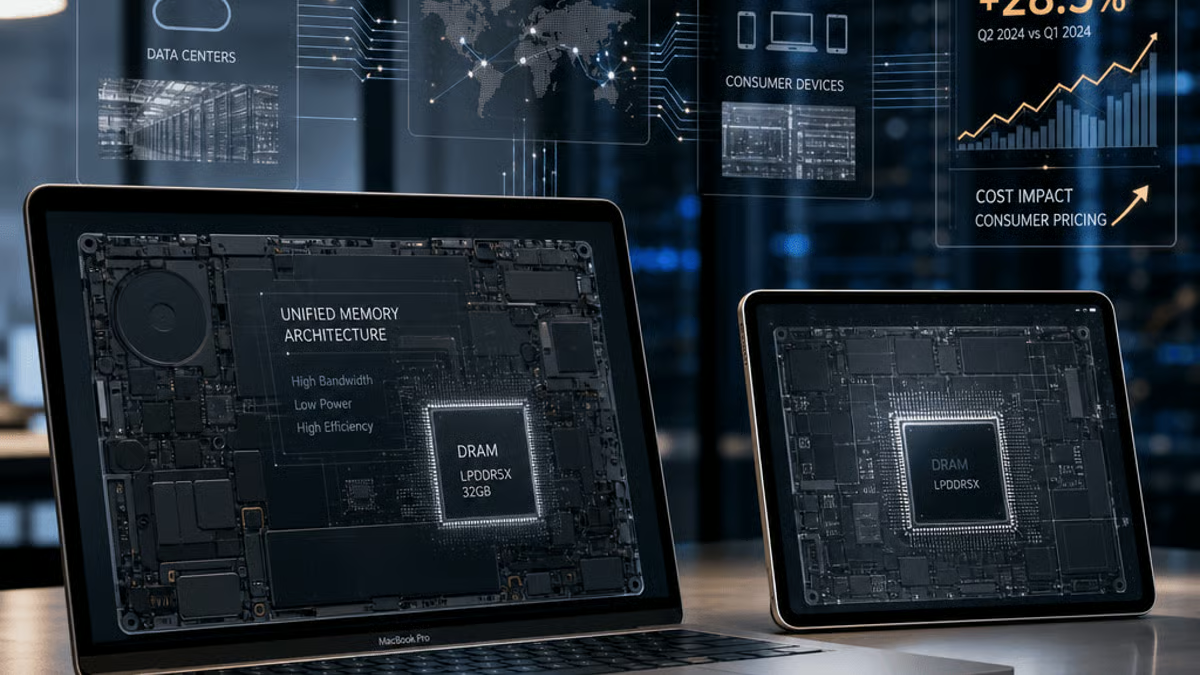
Apple just passed the AI boom’s biggest hidden cost directly to consumers. The company raised prices on MacBook and iPad models this week, with CEO Tim Cook citing surging memory and storage costs – and warning more increases could follow. It’s the first time the memory shortage driving AI infrastructure spending has directly hit mainstream consumer electronics pricing, connecting dots between data center demand and your next laptop purchase.
Apple just made the AI infrastructure crunch everyone’s problem. The company quietly raised prices across its MacBook and iPad product lines this week, marking the first time the memory shortage plaguing tech giants has translated into higher sticker prices for everyday consumers.
Tim Cook didn’t mince words during last week’s statement reported by CNBC. The Apple CEO confirmed the price increases stem from “surging memory and storage costs” and hinted more adjustments could be coming. It’s a rare admission from a company that’s historically absorbed component cost fluctuations rather than pass them to customers.
The timing connects directly to broader industry tremors. Micron reported record earnings last month driven by AI server demand, while SK Hynix just raised $3 billion to expand production capacity. But that enterprise spending boom has created a supply squeeze that’s now rippling through consumer channels. Memory manufacturers have prioritized high-margin AI accelerator chips and server components over traditional PC and tablet memory modules.
Apple’s not alone in feeling the pinch, but it’s the first major player to blink on pricing. Dell and HP have kept list prices stable while quietly extending lead times, betting the shortage eases by Q3. Samsung absorbed the costs in its latest Galaxy Tab refresh, taking a margin hit rather than risk consumer pushback. Apple’s willingness to raise prices suggests the company sees this as a prolonged issue, not a temporary blip.
The price increases vary by configuration, though Apple hasn’t disclosed specific amounts. Industry analysts estimate the adjustments range from $50 to $200 depending on memory and storage tiers. That’s significant for a company that’s built its premium pricing strategy on perceived value rather than component cost pass-throughs.
What makes this particularly thorny for Apple is timing. The company’s pushing hard into AI features with its latest Apple Intelligence rollout, which requires more on-device memory to run efficiently. That means Apple needs more memory per device just as memory gets more expensive – a double squeeze that’s harder to navigate than typical commodity cycles.
The broader market impact could be substantial. If Apple – with its legendary supply chain leverage and $162 billion cash position – can’t absorb these costs, smaller manufacturers will struggle even more. Microsoft is already facing similar pressure on Surface devices, while Chromebook makers are exploring lower-spec configurations to maintain price points.
Memory spot prices tell the story. DRAM prices jumped 18% quarter-over-quarter according to TrendForce data, the steepest climb since 2021’s pandemic-driven shortage. But this time the demand driver isn’t remote work – it’s AI infrastructure spending that shows no signs of slowing. Nvidia alone is projected to ship 1.5 million AI accelerators this year, each packed with high-bandwidth memory that competes with PC components for manufacturing capacity.
Cook’s warning about potential additional increases suggests Apple sees memory costs climbing through year-end at least. The company typically locks in component pricing months ahead, meaning current increases reflect contracts signed in Q1. If those projections hold, more price adjustments could hit in Q4 as new supply agreements kick in.
For consumers, the message is clear – the AI revolution has a price tag that extends beyond ChatGPT subscriptions. The same infrastructure boom powering generative AI tools is making traditional computing devices more expensive. It’s a hidden inflation that’s harder to spot than headline GPU prices but affects far more people.
Apple’s next test comes in September when the company typically refreshes its iPhone lineup. Memory costs affect smartphones too, though Apple has more pricing flexibility in that premium market. How aggressively the company adjusts iPhone pricing – or absorbs costs to protect volume – will signal whether this is a temporary margin squeeze or a longer-term structural shift in consumer electronics economics.
Apple’s price hikes mark an inflection point where AI infrastructure demand stops being a supply chain story and becomes a consumer wallet issue. The company’s willingness to raise prices despite competitive pressure suggests memory costs aren’t moderating anytime soon. For the broader tech industry, it’s a warning shot – the AI boom’s hidden costs are spreading beyond data centers into every device category. Watch how competitors respond over the next quarter. If others follow Apple’s lead, we’re looking at a structural repricing of consumer electronics, not just a temporary adjustment. And if memory manufacturers can’t scale capacity fast enough to meet both AI and consumer demand, the squeeze could last well into 2027.





Leave a Reply