
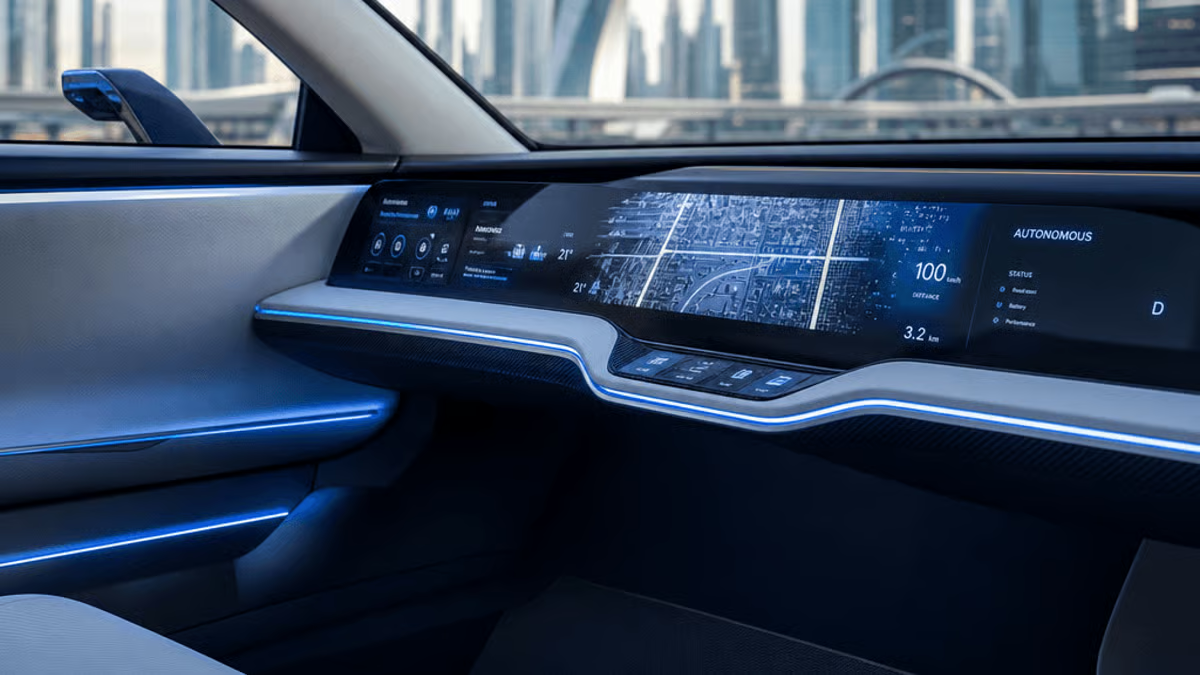
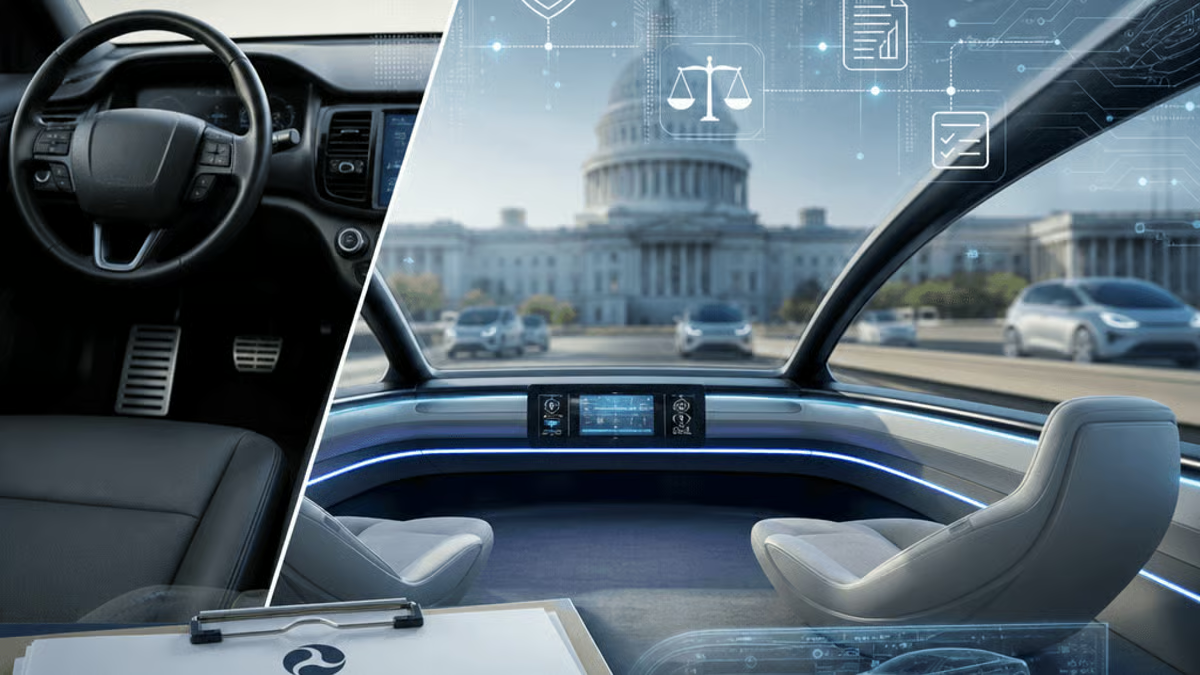
The Trump administration just threw Tesla and the autonomous vehicle industry a major regulatory lifeline. The Department of Transportation proposed eliminating the federal requirement that vehicles have brake pedals – but only for those “designed to be driven exclusively by automated driving systems.” The move could accelerate Tesla’s long-delayed robotaxi program and reshape how companies like Zoox and Waymo design their next-generation fleets.
The Department of Transportation wants to fundamentally rewrite the rulebook for autonomous vehicles. In a proposal published Thursday, the agency is moving to strip away the long-standing federal mandate that all vehicles must have brake pedals – a change that could reshape the entire AV industry.
The catch? The exemption only applies to vehicles “designed to be driven exclusively by automated driving systems.” That means Tesla’s rumored purpose-built robotaxi – the one Elon Musk has been teasing for years – suddenly got a lot more feasible from a regulatory standpoint.
It’s a notable win for Tesla at a time when Musk’s relationship with the Trump administration has never been closer. The timing isn’t lost on industry observers who’ve watched Musk emerge as an informal advisor to the White House on tech policy. While the DOT frames this as a safety-focused modernization, critics will likely see it as regulatory capture in action.
The proposal doesn’t just help Tesla. Amazon-backed Zoox has been running a purpose-built robotaxi in Las Vegas and other cities – a boxy, bidirectional vehicle with no steering wheel or pedals. Under current rules, Zoox and similar companies face strict caps on how many pedal-free vehicles they can deploy. This change could blow those limits wide open.
Waymo, GM’s Cruise, and other players currently operate modified consumer vehicles with traditional controls intact. They’d need to pivot their engineering roadmaps to capitalize on pedal-free designs, but the DOT’s signal is clear: the future belongs to purpose-built AVs, not retrofitted sedans.
The regulatory shift reflects a broader philosophical change in Washington. Where the Biden administration approached AV regulation with caution, emphasizing safety benchmarks and incremental approvals, the Trump DOT is swinging toward industry-friendly deregulation. Transportation Secretary Sean Duffy has signaled openness to letting companies self-certify safety rather than waiting for federal standards that might take years to finalize.
But removing brake pedals isn’t just a symbolic gesture – it has real engineering and safety implications. Traditional fail-safes assume a human can intervene. Pedal-free vehicles need redundant braking systems, sensor arrays that never fail, and software reliable enough to handle every edge case. The DOT’s proposal will likely require extensive documentation proving these systems work, but the burden of proof shifts significantly toward manufacturers.
Industry reaction is already splitting along predictable lines. AV startups and Tesla bulls see this as overdue modernization. Safety advocates and labor groups worry the administration is prioritizing speed over testing. The public comment period opens soon, and expect fierce debate over whether Washington is enabling innovation or rushing unproven technology onto public roads.
For Tesla, the stakes couldn’t be higher. Musk has bet the company’s future on full autonomy, promising a robotaxi network that could turn every Tesla into a revenue-generating asset. But the company’s Full Self-Driving software still requires driver supervision, and its existing fleet isn’t designed for pedal-free operation. This regulatory opening gives Tesla a clearer path to building the purpose-designed robotaxi Musk unveiled in concept form – and actually deploying it at scale.
The proposal also exposes the widening gap between AV leaders and laggards. Companies like Waymo have logged millions of autonomous miles and operate commercial robotaxi services in multiple cities. They have the data and engineering chops to design pedal-free vehicles quickly. Meanwhile, legacy automakers still struggling with Level 2 driver-assist systems could find themselves locked out of the next generation of mobility.
The DOT’s brake-pedal proposal represents more than regulatory housekeeping – it’s a bet that autonomous vehicle technology has matured enough to abandon century-old design assumptions. Whether that bet pays off depends on how companies like Tesla, Zoox, and Waymo execute in the next 18 months. The public comment period will reveal whether Americans trust software enough to eliminate their last physical line of defense. One thing is certain: the autonomous vehicle race just accelerated, and the Trump administration is clearing the track.







Leave a Reply