
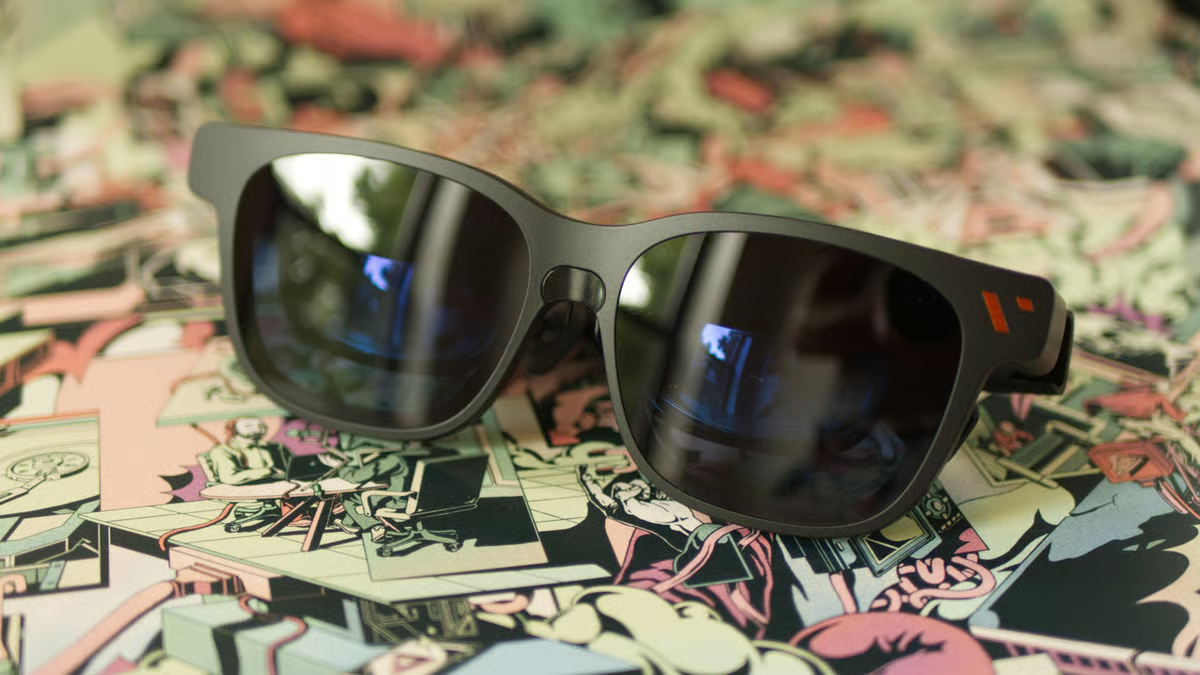
Viture just dropped its most affordable AR glasses with a feature typically reserved for premium models. The $299.99 Pro 2 includes adjustable diopter dials that deliver sharper image clarity than competitors charging $400 or more, according to hands-on testing by The Verge. It’s a strategic move in the crowded display-mirroring glasses market where companies like Xreal and Rokid have struggled to differentiate on price alone.
Viture is betting that premium optics at a mid-range price will crack open the niche market for AR display glasses. The company’s new Pro 2, launching at $299.99, includes diopter-adjusting dials positioned above each lens – hardware that’s been absent from most budget competitors but standard on Viture’s own pricier models.
The feature matters more than it sounds. Unlike traditional AR glasses that force users to buy prescription lens inserts or squint through fixed optics, the Pro 2’s mechanical dials physically move the display panels to match individual vision needs. Cameron Faulkner, writing for The Verge, noted the glasses delivered “sharper-looking screens than models that cost hundreds more” specifically because of this adjustment capability.
Viture isn’t inventing the wheel here – it’s democratizing it. The company previously offered diopter adjustment on models priced around $400, but bringing the tech down to the $300 tier puts pressure on rivals like Xreal and Rokid who’ve dominated the budget display-glasses category without offering comparable optical customization. Most competing models in this price range ship with minimal or zero built-in adjustability, forcing users to accept whatever clarity the fixed lenses provide.
The Pro 2 also shaves weight and thickness compared to Viture’s earlier designs, though specific measurements weren’t disclosed in the initial hands-on coverage. The glasses function primarily as display-mirroring devices – plug them into a Steam Deck, Nintendo Switch, or laptop, and they project a virtual big-screen experience. This positions them squarely in the portable gaming accessory market rather than the standalone AR computing category where Meta and Apple are placing bigger bets.
That distinction is crucial. True AR glasses with onboard computing, spatial awareness, and mixed reality capabilities remain either prohibitively expensive or still in development. Meta’s Ray-Ban smart glasses focus on cameras and audio, while Apple Vision Pro starts at $3,499 with full spatial computing. Viture’s approach – dumb displays that mirror whatever device you plug in – sidesteps the technological and cost barriers of standalone AR while serving a specific use case: gamers and media consumers who want portable privacy screens.
The market for these display-mirroring glasses remains small but growing. Xreal (formerly Nreal) has shipped hundreds of thousands of units since launching in 2021, while companies like Rokid and TCL have introduced competing models at similar price points. But none have solved the fundamental optical problem: what looks sharp to one user appears blurry to another based on individual vision differences. Diopter adjustment addresses this directly, which is why it’s been a premium feature.
Viture’s price compression suggests the company sees an opening to grab market share before the category matures. At $299.99, the Pro 2 undercuts Xreal’s flagship models while offering better out-of-box adaptability for users with mild to moderate vision correction needs. It’s not a mass-market play – these glasses still require wired connections and look decidedly chunky compared to normal eyewear – but it narrows the gap between early-adopter pricing and mainstream accessibility.
The timing also matters. With Steam Deck continuing to gain traction and portable gaming PCs like the ASUS ROG Ally finding audiences, there’s a growing installed base of users who might want larger virtual screens while traveling or gaming in bed. Viture is essentially selling TV screens you can pack in a bag, which becomes more compelling as the source devices get better and the glasses get cheaper.
What the Pro 2 doesn’t do is push the boundary of what AR glasses could become. There’s no hand tracking, no spatial computing, no AI assistance. It’s a display in glasses form, which some might see as limited vision but others will appreciate as focused execution. Not every product needs to be a platform play.
Viture’s Pro 2 doesn’t reinvent AR glasses, but it does make a premium feature accessible at a price point where it matters. By bringing diopter adjustment to the $299 tier, the company is forcing competitors to either match the capability or justify why their fixed-optic designs deserve shelf space. For the specific audience of portable gamers hunting for virtual big screens, that optical flexibility could be the difference between a device that sits in a drawer and one that actually gets used. The broader AR market still has miles to go before mainstream adoption, but incremental improvements like this – better optics, lower prices, lighter designs – are what eventually bridge the gap between novelty and utility.









Leave a Reply