
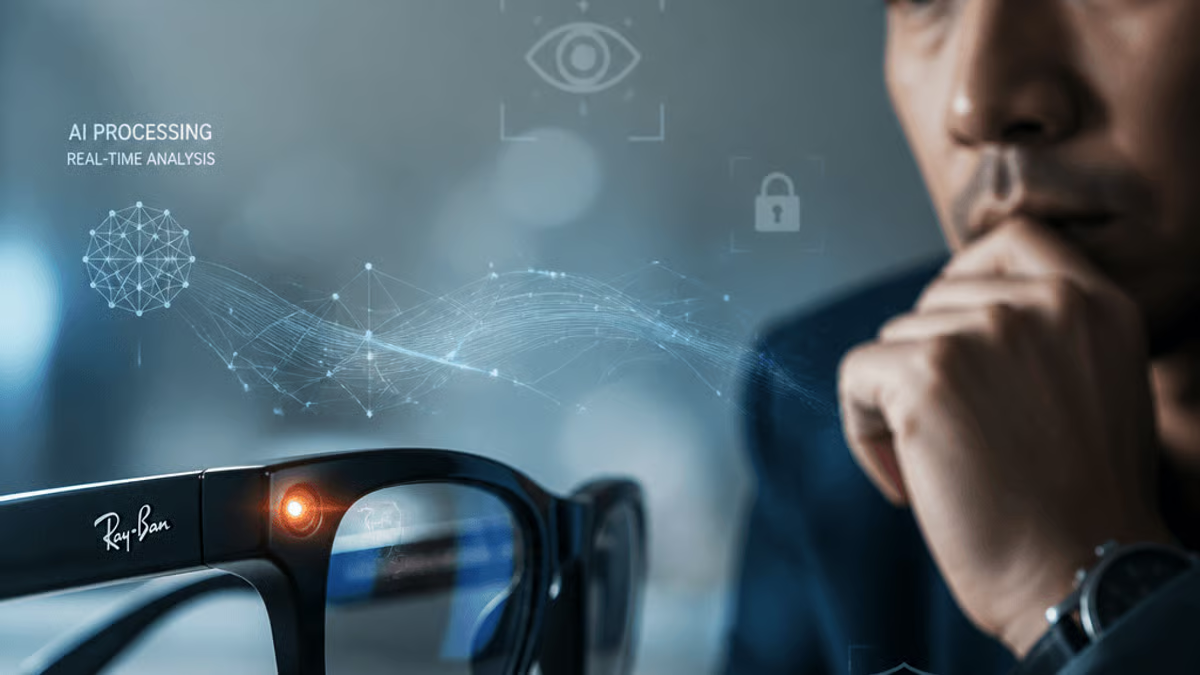
The smart glasses revolution has a problem: people don’t trust them. As Meta, Google, and Apple pour billions into AI-powered eyewear that can record everything you see and hear, privacy advocates are sounding alarms. The question isn’t whether these devices will become mainstream – it’s whether the tech industry can convince a skeptical public that always-on cameras inches from their eyes won’t become surveillance nightmares.
Meta just launched its latest Ray-Ban smart glasses with AI features that can identify objects, translate text, and answer questions about what you’re looking at. Google is quietly testing new prototypes after its Google Glass disaster. Apple is reportedly deep in development on its own AR glasses. The smart glasses race is heating up, but there’s a massive elephant in the room – nobody wants to be secretly recorded.
The technology has come a long way since Google Glass became a cautionary tale in 2014. Back then, early adopters were banned from bars and movie theaters, earning the derisive nickname “Glassholes.” Today’s devices are sleeker, more powerful, and pack AI capabilities that would have seemed like science fiction a decade ago. But the core privacy dilemma hasn’t changed – it’s actually gotten worse.
Meta’s Ray-Ban smart glasses look identical to regular sunglasses, making it nearly impossible to tell when someone is recording. The company added a small LED indicator light, but critics point out it’s barely visible in daylight and could easily be covered with tape. According to privacy researchers at the University of California Berkeley, this creates what they call “ambient anxiety” – the constant uncertainty about whether you’re being recorded.
The AI integration makes things even thornier. These aren’t just cameras anymore – they’re smart cameras that can identify faces, read text, and process conversations in real-time. Meta says its glasses can help you remember where you parked or translate a foreign menu. Privacy advocates hear “persistent surveillance device with facial recognition.”
Google learned this lesson the hard way. Google Glass failed not because the technology wasn’t ready, but because society wasn’t. The company has been cautious ever since, focusing on enterprise applications where privacy expectations are different. But consumer ambitions clearly remain – leaked prototypes suggest Google is working on AI-powered glasses that make Meta’s look modest by comparison.
Apple might have the best shot at cracking the privacy puzzle. The company has built its brand on privacy protection, with features like on-device processing and strict app permissions. Industry insiders speculate that Apple’s glasses will process most data locally rather than uploading to the cloud, though that creates new challenges around battery life and processing power.
The regulatory landscape is shifting too. Several states are considering laws that would require visible recording indicators on all smart glasses. The European Union’s AI Act includes provisions about biometric surveillance that could restrict how these devices operate. Companies are racing to deploy products before regulations lock in.
But legislation alone won’t solve the trust problem. According to Wired’s reporting, the fundamental tension is between making devices useful and making them safe. The most privacy-friendly smart glasses would require explicit consent before recording, show obvious indicators, and limit AI processing – which would also make them significantly less convenient and appealing.
Some startups are trying alternative approaches. A few companies are building smart glasses with privacy-by-design principles, like physical shutters over cameras or glasses that can only record when both hands are holding them. These devices sacrifice some functionality for trust, betting that a privacy-conscious segment of consumers will pay a premium.
The tech giants aren’t convinced that’s the winning strategy. Meta is pushing ahead with broader rollouts, apparently betting that convenience will overcome privacy concerns just like it did with smartphones and social media. The company argues that social norms will adapt, just as they did when camera phones became ubiquitous.
That comparison reveals the real stakes here. Camera phones did change privacy norms – not always for the better. The difference is that phones require a deliberate action to record. Smart glasses could make surveillance ambient and constant, fundamentally altering how we interact in public spaces. Once that genie is out of the bottle, it won’t go back in.
The smart glasses industry stands at a crossroads. Companies can either build devices with meaningful privacy protections that might limit functionality, or push forward with minimally restricted products and hope public acceptance follows. The Google Glass debacle proved that cool technology isn’t enough – trust matters. As Meta, Google, and Apple race to dominate this market, they’re not just competing on features and price. They’re competing to answer a question that will define the next era of computing: can surveillance technology and personal privacy coexist, or will one inevitably consume the other?







Leave a Reply