
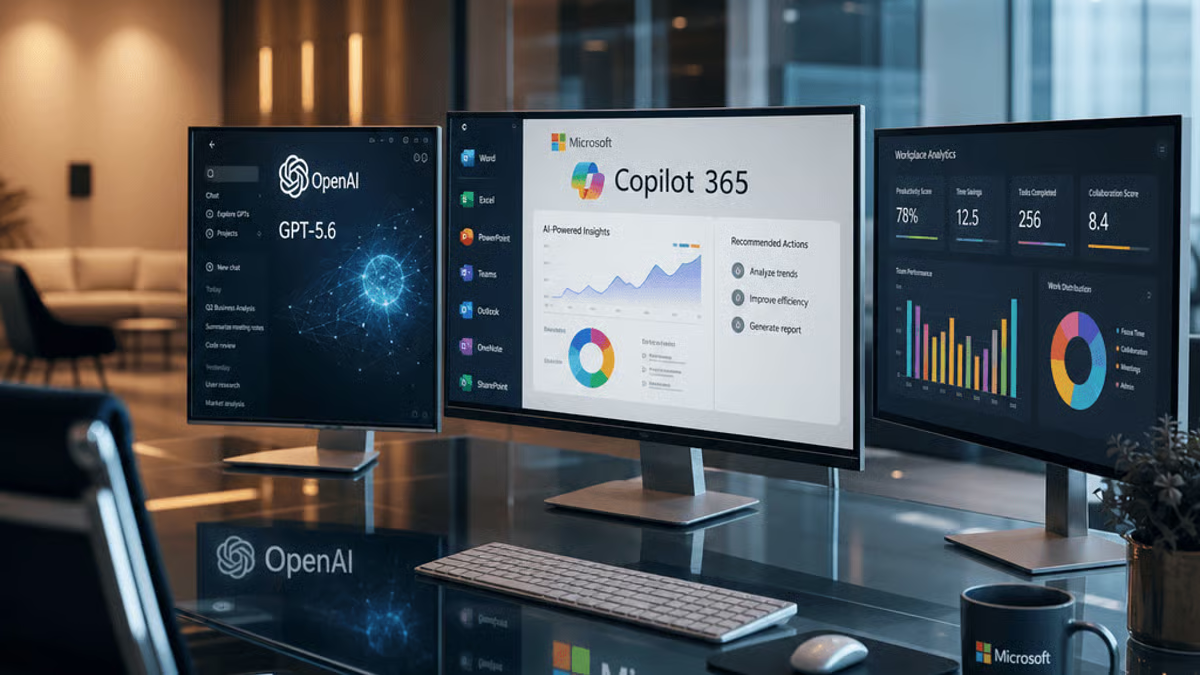
OpenAI just doubled down on its relationship with Microsoft. The AI giant confirmed that its latest GPT-5.6 model family will power Microsoft Copilot 365, the productivity suite used by millions of enterprise workers daily. The announcement comes as industry chatter about a potential partnership fracture reaches fever pitch, signaling that despite mounting tensions, the two tech titans remain deeply intertwined.
OpenAI and Microsoft just sent a clear message to anyone betting on their breakup – not so fast. The confirmation that GPT-5.6 will serve as the preferred AI engine for Microsoft Copilot 365 arrives at a curious moment, right when whispers about partnership strain have reached a crescendo across the industry.
The GPT-5.6 model family represents OpenAI’s latest advancement in large language models, bringing enhanced reasoning capabilities and multimodal processing to enterprise applications. For Microsoft’s sprawling productivity ecosystem, that means smarter document generation in Word, more sophisticated data analysis in Excel, and improved meeting summaries in Teams. The integration touches every corner of the workplace software suite that businesses rely on daily.
But here’s what makes this announcement notable – it’s not just a routine product update. According to TechCrunch, the timing coincides with persistent industry speculation about friction between the two companies. Microsoft’s $13 billion investment in OpenAI created one of tech’s most consequential partnerships, yet recent months have seen both companies make moves that suggest they’re hedging their bets.
Microsoft has been quietly building its own AI infrastructure and exploring alternative model providers, while OpenAI has reportedly grown frustrated with exclusivity constraints. The enterprise AI market has become a high-stakes game where partnerships can shift overnight, and both companies know they’re navigating delicate territory.
The GPT-5.6 integration matters because Copilot 365 has become Microsoft’s flagship AI product, embedded directly into the workflow of millions of knowledge workers. When you’re asking your computer to draft an email, analyze a spreadsheet, or summarize a presentation, you’re now tapping into OpenAI’s newest technology. That’s a level of integration that goes far beyond a simple API relationship.
For context, Microsoft Copilot launched in March 2023 and has since become one of the fastest-growing enterprise software products in company history. The AI assistant handles everything from mundane formatting tasks to complex data synthesis, representing Microsoft’s biggest bet on AI-powered productivity since the launch of Office itself.
What this means for the competitive landscape is significant. Google has been pushing hard with its own AI features in Workspace, powered by its Gemini models. Meta and Amazon are both developing enterprise AI tools. The confirmation that Microsoft is sticking with OpenAI’s cutting-edge models suggests the partnership still delivers advantages neither company wants to sacrifice.
The enterprise AI market is projected to hit $50 billion by 2027, and productivity software represents a massive chunk of that opportunity. Microsoft and OpenAI both understand that fragmenting their partnership now could create an opening for competitors who’ve been waiting for exactly that moment.
Industry analysts have been watching the Microsoft-OpenAI relationship closely, particularly as OpenAI prepares for what many expect will eventually be a public offering. The dynamics of that partnership – including questions about exclusivity, revenue sharing, and strategic control – become even more complex as OpenAI evolves from startup to potential tech giant in its own right.
What’s interesting is what this announcement doesn’t say. There’s no mention of exclusivity terms, no clarity on whether Microsoft will continue as OpenAI’s preferred cloud provider, and no details about how long this GPT-5.6 integration commitment lasts. Those gaps leave plenty of room for both companies to continue exploring their options while maintaining the current arrangement.
For enterprise customers using Copilot 365, the immediate takeaway is straightforward – they’re getting access to OpenAI’s most advanced models without having to change anything about how they work. The AI capabilities they rely on are getting smarter, and the partnership delivering those improvements remains intact, at least for now.
The GPT-5.6 confirmation is both a technical milestone and a strategic signal. OpenAI and Microsoft are telling the market that despite all the speculation, their partnership continues to deliver value neither can easily replicate elsewhere. But the careful language and strategic ambiguities suggest both companies are keeping their options open. For the millions of workers using Copilot 365 daily, that means continued access to cutting-edge AI capabilities. For the broader enterprise AI market, it means the defining partnership of the generative AI era isn’t fracturing just yet – even if the cracks are becoming harder to ignore.










Leave a Reply