
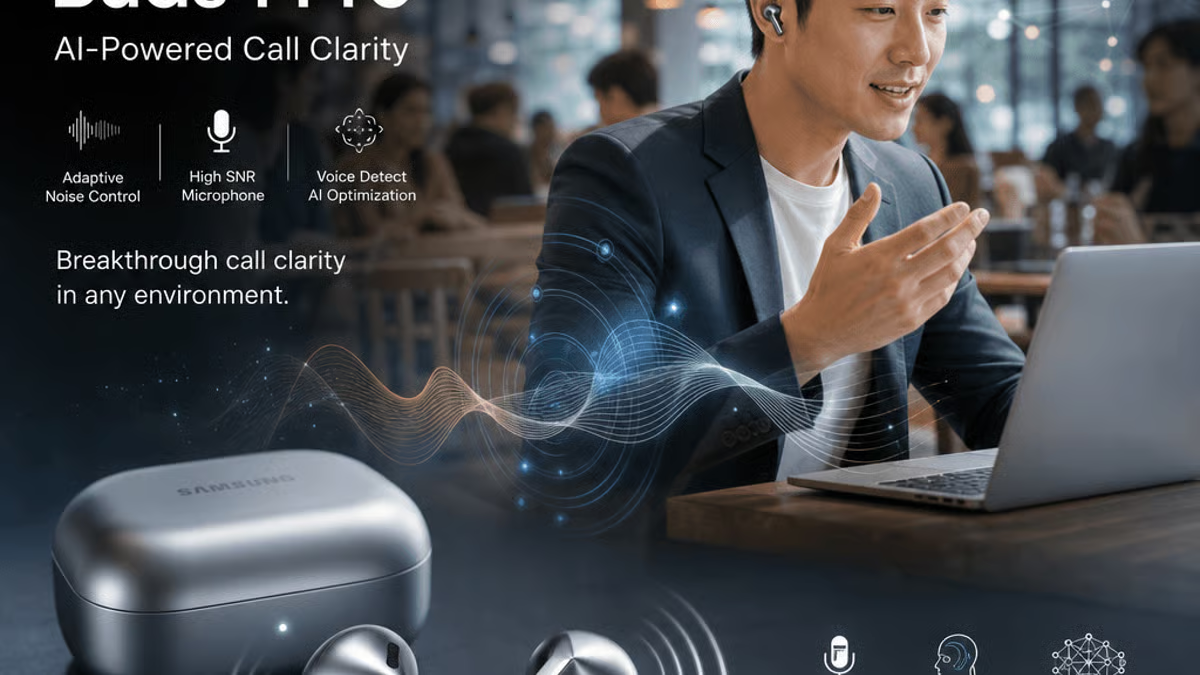
Samsung just launched the Galaxy Buds4 Pro with a completely reimagined approach to earbud call quality. The new earbuds deploy what Samsung calls Sensor Fusion technology – a combination of three microphones, a bone-conduction Voice Pickup Unit sensor, and an on-device Deep Neural Network that the company claims delivers unprecedented voice clarity even in chaotic environments. It’s a direct shot at the longstanding problem that’s plagued wireless earbuds since day one: your voice getting drowned out by background noise.
Samsung is taking a swing at one of the most frustrating problems in wireless audio – being heard clearly on phone calls when you’re anywhere other than a quiet room. The company’s new Galaxy Buds4 Pro, announced today, packs what Samsung’s calling a breakthrough in voice capture technology that goes far beyond just adding more microphones.
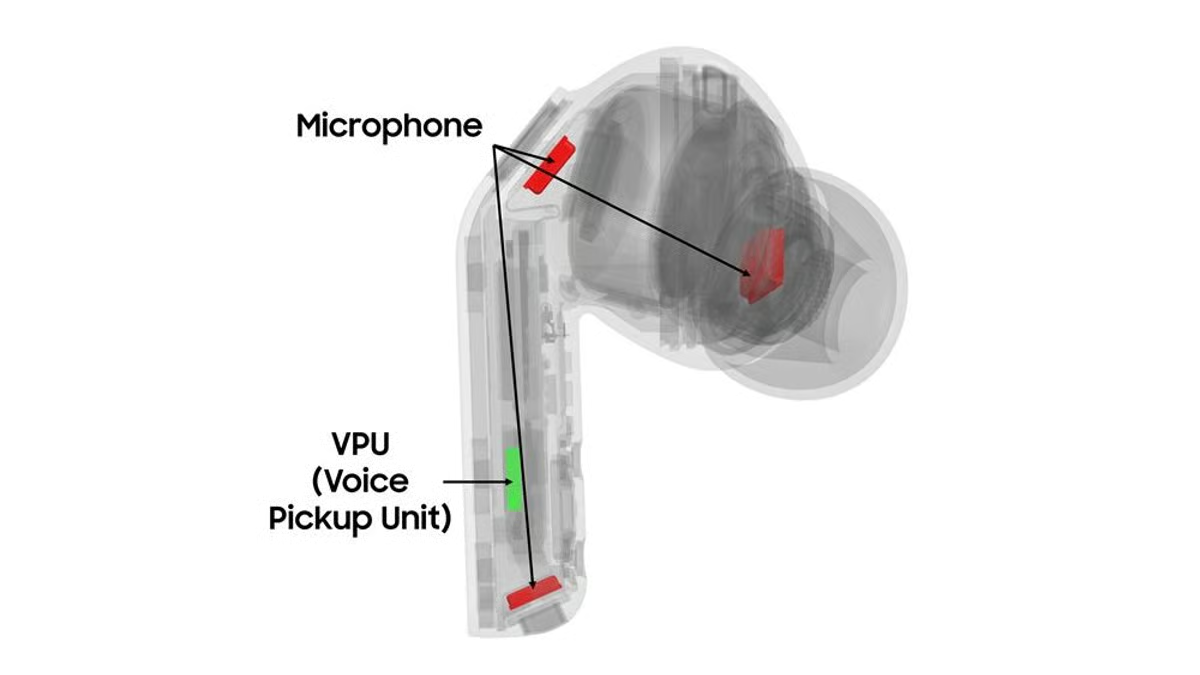
The core innovation is Sensor Fusion, an environment-aware system that doesn’t rely on a single input to figure out what’s your voice and what’s street noise. Instead, Galaxy Buds4 Pro combines data from three microphones – two external ones that directly capture your voice and a third internal mic that picks up speech transmitted through your body – with a Voice Pickup Unit sensor based on bone conduction technology. That VPU sensor detects the physical vibrations in your head when you speak, giving the earbuds a foolproof signal that separates your voice from everything else happening around you.
The problem Samsung’s trying to solve is fundamental physics. An earbud’s microphone sits much farther from your mouth than a phone’s does, which makes your voice way more susceptible to getting buried by ambient sound. Traditional earbuds with single-sensor setups simply can’t compete when the coffee shop chatter or street traffic gets louder than you are. Samsung’s answer is to throw multiple data streams at the problem and let AI figure it out.
That AI comes in the form of a Deep Neural Network that serves as the noise reduction engine. Here’s where things get technically impressive – DNN algorithms typically require massive computing power that won’t fit in something the size of an earbud. Samsung says it “meticulously optimized” its algorithm for on-device processing, cutting the processing load to roughly 10% of what it originally required and shrinking the model size to just 30%. That optimization lets Galaxy Buds4 Pro run powerful AI voice processing locally without draining the battery or requiring cloud connectivity.
But blocking noise is only half the battle. Samsung also upgraded the algorithm to capture 16 times more vocal detail than previous Galaxy Buds models, according to the company’s announcement. The earbuds analyze past, present and predictive sound data to adapt instantly to changing environments – which means high-pitched tones, sharp consonants and subtle word endings stay crisp even when your surroundings get loud.
Galaxy Buds4 Pro even accounts for natural body movements that cause the earbuds to shift in your ears. Those movements create what Samsung calls “fit leakages” that let unwanted background noise seep in. To counter this, the earbuds continuously analyze signals from the inner and outer microphones to estimate leakage in real time and dynamically adjust the audio to maintain call clarity.
When you pair Galaxy Buds4 Pro with a Galaxy smartphone, Samsung says the voice clarity gets maximized through a Super Wideband connection reaching up to 16 kHz. That’s significantly wider bandwidth than standard voice calls, delivering what the company describes as “exceptionally rich and natural voice quality.”
Samsung didn’t just engineer this in a lab and call it done. The company brought the real world into its testing facilities using what it describes as “massive wind simulators” to recreate acoustic scenarios based on actual location recordings. Beyond that, Samsung ran extensive field tests in bustling cafes, loud department stores, echoing train stations, outdoor nighttime walks and even cars with windows rolled down – all to validate that the technology works in genuine real-world scenarios, not just controlled environments.
The launch comes as voice quality has become a crucial differentiator in the crowded wireless earbud market. With remote work and on-the-go calls now standard, consumers are demanding earbuds that don’t force them to find a quiet corner every time their phone rings. Apple‘s AirPods Pro have set a high bar with computational audio, while startups and established players alike have been racing to crack the code on crystal-clear calls in noisy settings.
What makes Samsung’s approach notable is the sensor fusion angle – combining bone conduction with traditional microphones and running it all through an optimized on-device neural network. It’s a hardware-software integration play that leverages Samsung’s chipmaking capabilities and AI expertise in a product category where marginal improvements in call quality can translate to significant competitive advantage.
The Galaxy Buds4 Pro also represents Samsung’s continued push to build a tighter ecosystem between its smartphones and accessories, with the Super Wideband connection delivering enhanced performance specifically when paired with Galaxy devices. That’s a familiar strategy from Samsung’s playbook – create compelling reasons for users to stay within the Samsung hardware family by offering features that work best when everything’s Samsung.
Pricing and availability details weren’t included in today’s announcement, but Samsung notes that Sensor Fusion technology has been supported since the Galaxy Buds Live and subsequent models – suggesting this is an evolution of existing tech rather than a completely greenfield innovation. The 16x improvement in vocal detail capture and the heavily optimized DNN represent the meaningful leaps forward in this generation.
Samsung’s Galaxy Buds4 Pro represents a meaningful step forward in solving wireless earbuds’ most persistent pain point – call quality in noisy environments. By fusing bone conduction sensing with triple-microphone arrays and running it through a heavily optimized on-device neural network, Samsung’s engineering a solution that addresses the fundamental physics problem of earbuds sitting far from your mouth. The real test will be whether that 16x improvement in vocal detail capture and real-time leakage compensation actually deliver noticeably better calls in the chaotic real-world scenarios where previous earbuds have struggled. If Samsung’s extensive field testing translates to genuine performance gains, it could shift expectations across the entire wireless audio market.










Leave a Reply