
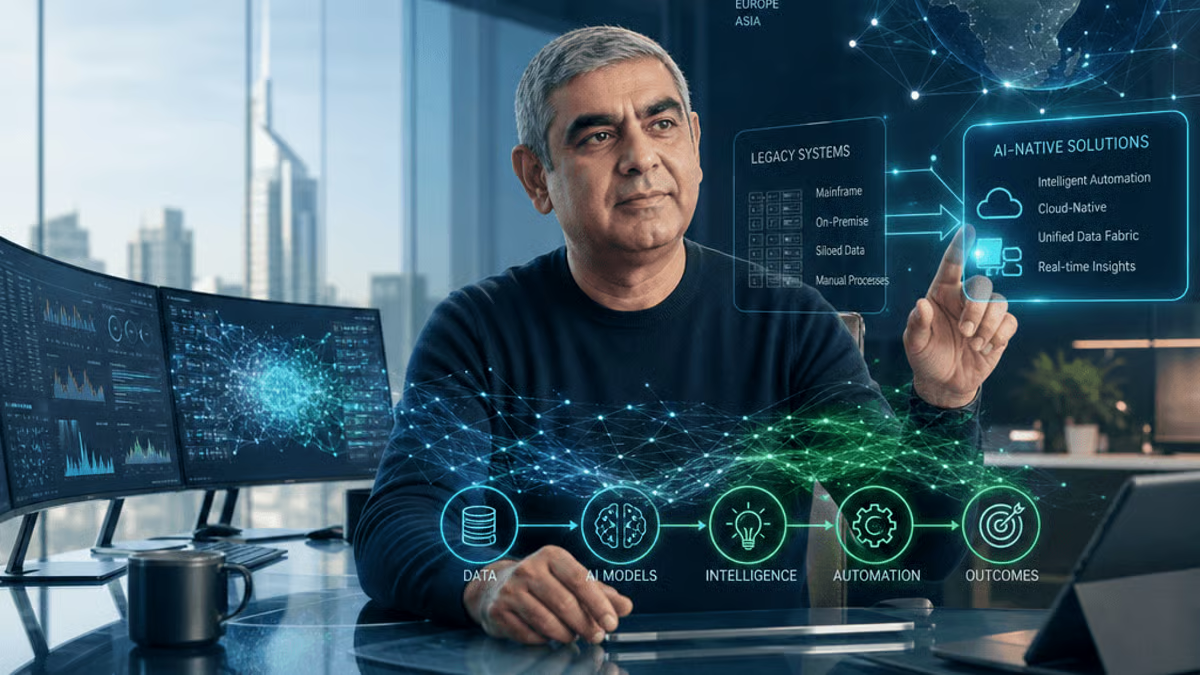
Vishal Sikka is making his comeback. The former Infosys CEO who once ran India’s second-largest IT services firm has emerged from stealth with Hang Ten Systems, a startup that’s betting AI can crack open the $1 trillion enterprise services market. Backed by Mayfield and Aramco Ventures, the venture signals a direct challenge to the consulting giants Sikka once competed against.
Vishal Sikka isn’t known for sitting still. The executive who pushed Infosys toward automation during his 2014-2017 tenure as CEO, then founded AI startup VianAI, is now taking another swing at reinventing enterprise services. His new venture, Hang Ten Systems, just surfaced with financial backing from Silicon Valley heavyweight Mayfield and Saudi Arabia’s Aramco Ventures.
The timing couldn’t be more pointed. Traditional IT services firms are scrambling as generative AI threatens to automate the very consulting work that built empires for Accenture, Wipro, and Sikka’s former employer. According to recent TechCrunch reporting, Hang Ten Systems is assembling a dream team of enterprise software veterans from SAP, Infosys, and VianAI to build what Sikka envisions as the AI-native alternative.
Sikka’s pedigree runs deep in enterprise tech. Before his controversial stint running Infosys, he spent over a decade at SAP, eventually becoming chief technology officer and helping develop the company’s HANA in-memory database platform. That technical chops combined with CEO-level operational experience makes him one of the rare founders who understands both the engineering complexity and business politics of selling into Fortune 500 companies.
The IT services industry is ripe for disruption but notoriously difficult to crack. Legacy firms like Tata Consultancy Services and Cognizant rely on labor arbitrage and offshore delivery models that AI could render obsolete. But these incumbents also have decades-long client relationships and thousands of enterprise contracts that create formidable moats. Hang Ten Systems will need to prove it can deliver not just better technology, but better outcomes at lower costs.
Mayfield, the Menlo Park venture firm that’s backed enterprise winners like Palo Alto Networks and HashiCorp, clearly sees potential in Sikka’s vision. The addition of Aramco Ventures brings strategic value beyond capital – access to Middle Eastern enterprise markets where digital transformation spending is accelerating and incumbents have less entrenched positions.
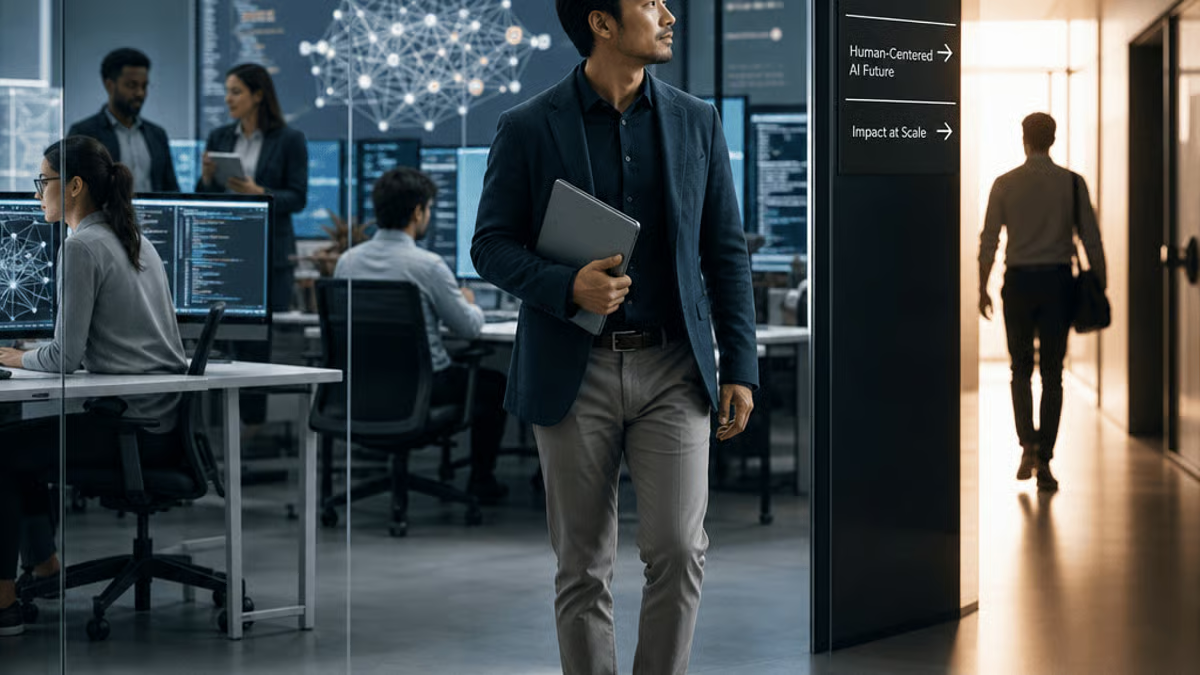
What remains unclear is exactly how Hang Ten Systems plans to differentiate. Will it focus on specific industries? Build horizontal AI agents that replace consulting teams? Partner with existing software vendors or compete head-on? Sikka’s previous venture, VianAI, focused on human-centered AI applications for enterprises, suggesting his new startup might emphasize augmenting rather than replacing human expertise.
The talent assembly matters as much as the vision. By pulling veterans from SAP and Infosys, Sikka is betting that deep enterprise domain knowledge combined with AI-first thinking can outmaneuver both traditional consultancies moving too slowly and pure-play AI startups that don’t understand corporate IT complexity. It’s a narrow path, but one that could reshape how enterprises buy and implement technology.
The market opportunity is massive. Global spending on IT services topped $1.3 trillion in 2025, with enterprises desperate for help navigating cloud migration, AI implementation, and digital transformation. But that spending is under pressure as CFOs question whether traditional time-and-materials consulting delivers ROI. If Hang Ten Systems can prove AI-powered services deliver faster, cheaper, and better, the entire industry faces an existential reckoning.
Sikka’s departure from Infosys in 2017 was messy, involving public disputes with founders over strategy and governance. But his willingness to push established companies toward uncomfortable change is exactly what a complacent industry needs. Whether Hang Ten Systems becomes the Uber of IT services or just another overhyped startup will depend on execution, but the talent, timing, and funding suggest this isn’t a side project.
Sikka’s return to the IT services battlefield with Hang Ten Systems represents more than just another startup launch – it’s a direct challenge to an industry built on legacy models that AI might make obsolete. With marquee investors, proven enterprise expertise, and timing that coincides with peak anxiety about generative AI’s impact on consulting work, the startup has credible ingredients for disruption. But transforming how Fortune 500 companies buy services requires more than good technology and pedigree. The real test comes when Hang Ten Systems tries to unseat relationships and contracts that took decades to build. If Sikka can pull it off, the traditional IT services giants may find themselves competing against the very automation playbook he championed years ago.





Leave a Reply