
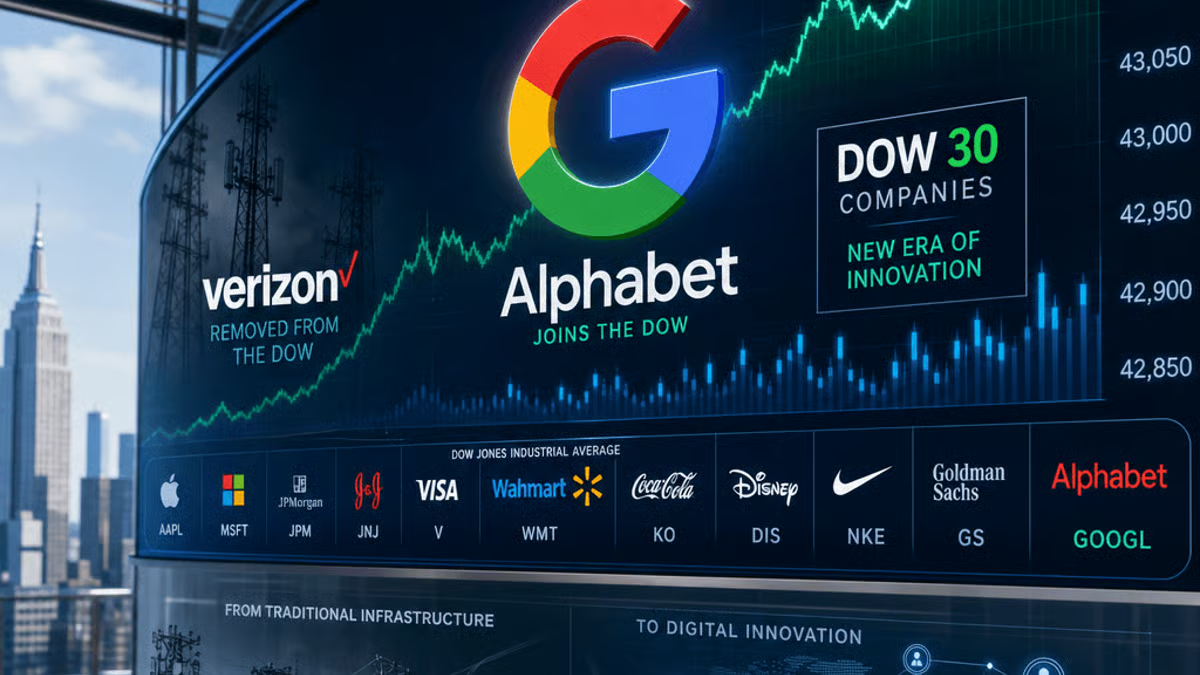
Google parent company Alphabet just scored a seat at the most exclusive table in American finance. The tech giant is replacing Verizon in the Dow Jones Industrial Average, a move that signals how thoroughly digital platforms have reshaped the economy since the index’s telegraph-era origins. The swap, announced late Tuesday, marks another nail in the coffin of traditional telecom’s market dominance while cementing Big Tech’s role as America’s corporate backbone.
The committee behind the Dow Jones Industrial Average just made it official – Alphabet is in, Verizon is out. The announcement, dropped late Tuesday, represents more than just a roster shuffle for the 30-company index. It’s a data point in the long-running story of how search, cloud computing, and digital advertising have eclipsed the telecom networks that once defined American infrastructure.
Alphabet’s inclusion means the Dow now features three of the original FAANG stocks, joining Apple and Microsoft in the blue-chip index. Amazon and Meta remain on the outside looking in, though both have market caps that dwarf several current Dow components. The index’s price-weighted methodology – a quirk dating back to its 1896 launch – means share price matters more than market value, creating odd situations where smaller companies can have outsized influence.
For Verizon, the exit caps a rough decade. The telecom giant placed massive bets on media acquisitions like Yahoo and AOL that never panned out, while its core wireless business faced brutal competition and margin compression. The company’s stock has essentially flatlined since 2015, even as tech giants posted triple-digit gains. Getting booted from the Dow is mostly symbolic – the index represents just a fraction of total market cap these days – but it stings as a public acknowledgment of diminished relevance.
The timing of Alphabet’s ascension is particularly notable given the regulatory pressure facing Big Tech. The Justice Department is actively pursuing antitrust cases against Google’s search and advertising businesses, with potential remedies ranging from behavioral constraints to outright breakups on the table. Yet the Dow committee clearly sees the company as too economically significant to ignore, regardless of legal uncertainties.
From a market mechanics perspective, the change will force billions in rebalancing. Every index fund, ETF, and derivative product tracking the Dow will need to dump Verizon shares and buy Alphabet stock. The effective date hasn’t been announced yet, but these transitions typically happen after the close on a designated day, creating concentrated volume spikes. Options traders are already gaming out the volatility implications.
The move also highlights the Dow’s ongoing identity crisis. The index was designed to represent American industry when that meant railroads, steel, and oil. Today it’s trying to balance old-economy stalwarts like Boeing and Caterpillar with the companies that actually drive GDP growth. Tech now makes up roughly 30% of the S&P 500 but has been underrepresented in the Dow due to its antiquated weighting system.
Alphabet’s businesses span search, YouTube, cloud infrastructure, autonomous vehicles through Waymo, and moonshot bets via its Other Bets division. The company generated over $300 billion in revenue last year, with search advertising still providing the lion’s share despite aggressive expansion into cloud computing. Its Google Cloud Platform now competes directly with Amazon Web Services and Microsoft Azure for enterprise workloads, posting strong growth even as the overall cloud market shows signs of maturation.
The decision comes as markets digest a complex macro picture. Tech stocks have been on a tear driven by AI enthusiasm, but concentration risk is becoming a concern, with just a handful of mega-cap names responsible for most of the market’s gains. Adding Alphabet to the Dow reinforces that concentration rather than diversifying away from it.
For Verizon shareholders, the news is just the latest disappointment in a string of strategic missteps. The company burned billions on content acquisitions meant to position it as a media player, only to write down most of that value and refocus on its network business. Now it faces the prospect of becoming a utility-like entity – necessary infrastructure, but hardly a growth story. The dividend yield remains attractive, but income investors are already well-served by other Dow components.
What happens next depends partly on how the other tech giants are performing. If Apple and Microsoft continue posting strong results, the Dow committee’s bet on Alphabet will look prescient. But if regulatory actions start crimping Big Tech’s business models, or if the AI boom turns out to be overhyped, the timing might look less inspired. Either way, the index just became significantly more exposed to the sector that’s driven markets for the past 15 years – for better or worse.
The Dow’s decision to swap Verizon for Alphabet isn’t just about one company replacing another. It’s the index committee acknowledging what the market already knows – that platforms controlling information flow and cloud infrastructure matter more to the modern economy than the telecom pipes beneath them. For investors, it means the most watched blue-chip index is finally catching up to reality, even if that reality comes with concentration risks and regulatory question marks. The change takes effect soon, and when it does, billions will flow from old telecom into new tech, a fitting metaphor for the broader economic transformation of the past two decades.











Leave a Reply