
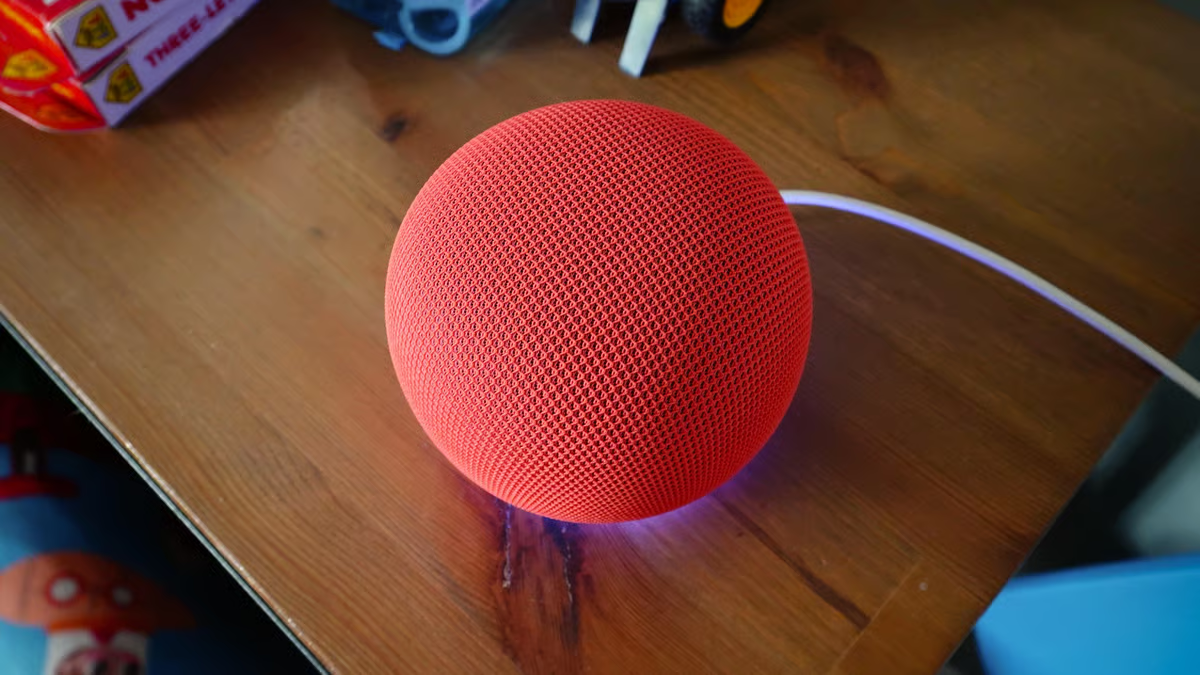
Google just launched its latest Home Speaker, and the device is proving to be a study in contrasts. According to The Verge’s hands-on review, the speaker’s three-microphone array hasn’t missed a single “Hey, Google” wake word across two days of testing – even at maximum volume with music blaring. But while the hardware shines in voice recognition, early user experiences suggest the speaker’s finicky nature might complicate Google’s push to dominate the smart home market as voice assistants become the primary interface for AI-powered home control.
Google is making a bet that flawless voice detection matters more than anything else in smart speakers, and the new Home Speaker puts that theory to the test right out of the box. The device passed what reviewer David Pierce calls “a couple of important tests” in his hands-on with The Verge – mainly, can it hear you when you need it to?
The answer appears to be a resounding yes. Over two days of real-world testing, the speaker’s three-microphone array picked up every single “Hey, Google” wake word, even with music blasting at maximum volume. The device quickly ducks audio levels to listen, a crucial feature that competing smart speakers often fumble. Google’s approach here reflects lessons learned from years of Google Assistant development, where missed wake words represent the fastest path to user frustration.
But the real test wasn’t in ideal conditions. Pierce set up the speaker in a bathroom and talked to it from the shower, an environment where Apple’s Siri notoriously struggles. The Google Home Speaker “did pretty well” against running water, outperforming the competition in one of the most challenging acoustic scenarios in home environments. The only miss? A stage-whispered command from another room while trying not to wake a baby – hardly a failure mode that matters for most users.
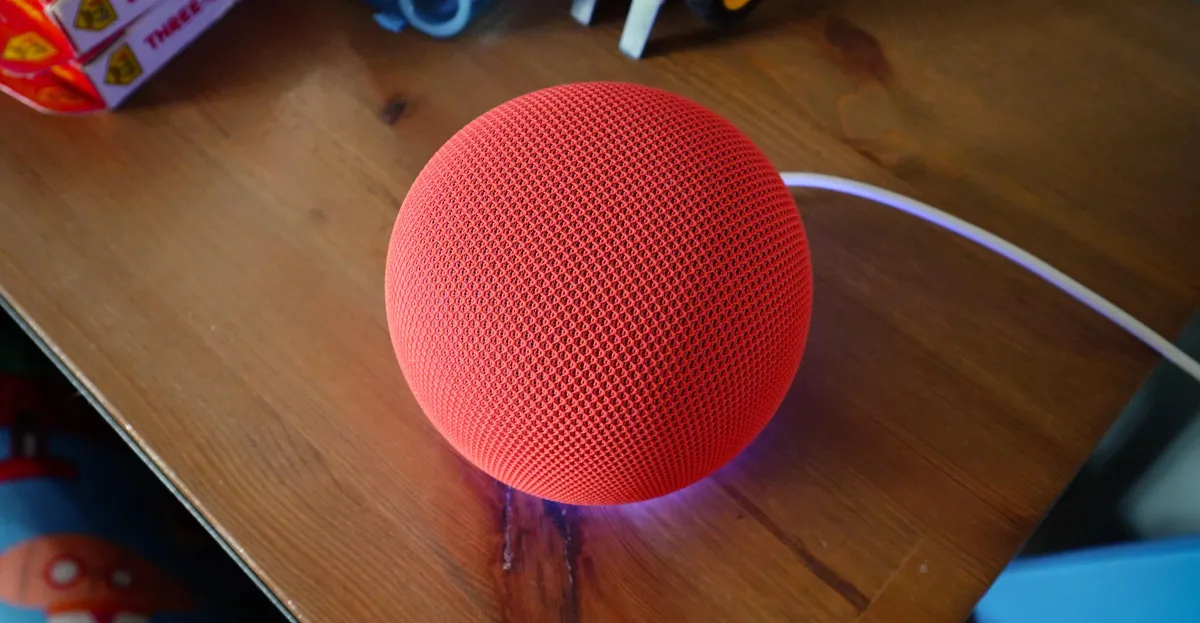
The speaker ships in four colors, though Pierce notes “red is the way” in what appears to be Google’s attempt to move beyond the generic white-and-gray aesthetic that’s dominated smart speakers since Amazon’s Echo defined the category. It’s a small detail, but one that signals Google’s awareness that these devices need to feel less like tech gadgets and more like intentional home decor choices.
Yet the headline reveals the tension at the heart of this product: “sounds good and looks great – but it’s finicky.” That last word carries weight. In a market where Amazon Alexa and Apple’s HomePod have trained users to expect relatively frictionless experiences, finicky behavior becomes a deal-breaker. The review doesn’t detail specific pain points in the available excerpt, but the characterization suggests the kind of small annoyances that accumulate into user frustration over time.
This launch arrives at a crucial moment for Google’s hardware ambitions. The company has been pushing to make Google Assistant the default interface for smart homes, competing against Amazon’s entrenched Echo ecosystem and Apple’s privacy-focused HomeKit platform. Voice recognition accuracy is table stakes, but reliability across the full experience determines whether users stick with a platform or switch.
The smart speaker market has matured considerably since the first Echo launched in 2014. Users now expect these devices to handle complex multi-step commands, integrate seamlessly with dozens of smart home platforms, and serve as hubs for everything from security systems to entertainment. Perfect microphone performance matters, but it’s just one piece of a much larger puzzle.
Google’s strength has always been in understanding natural language and surfacing relevant information. The company’s AI capabilities theoretically give it an edge over Amazon and Apple in parsing complex queries and delivering useful responses. But if the hardware experience introduces friction – if the speaker is “finicky” in ways that interrupt daily routines – those advantages evaporate quickly.
The device also represents Google’s continued effort to generate meaningful revenue from hardware sales. While the company dominates in search and advertising, its consumer hardware division has struggled to match the profitability and market penetration of Apple’s iPhone or Amazon’s Echo lineup. Smart speakers were supposed to be Google’s beachhead into homes, creating new touchpoints for its services and data collection.
What remains unclear from the early review is whether the “finicky” nature stems from hardware limitations, software bugs that could be patched, or fundamental design decisions that can’t easily be changed. That distinction matters enormously for Google’s product team and for consumers trying to decide whether to invest in the Google Home ecosystem.
The voice recognition performance does suggest Google’s hardware team is executing well on the fundamentals. Three microphones might seem modest compared to some competing devices, but the proof is in real-world performance, not specs. If the device can consistently hear wake words in challenging environments, Google solved one of the hardest problems in smart speaker design.
Google’s new Home Speaker highlights the challenge facing all smart speaker makers: excellence in one area doesn’t guarantee overall success. The device clearly nails voice detection, potentially outperforming major competitors in the most fundamental aspect of a voice-controlled speaker. But the “finicky” characterization suggests Google still has work to do before this becomes the obvious choice for consumers building out smart home ecosystems. As AI assistants become more central to how we interact with technology at home, the margin for error shrinks. Perfect microphones matter, but only if everything else works seamlessly too. For now, Google seems to have solved the hardest technical problem while introducing new friction elsewhere – a trade-off that might not win over users who have other options.








Leave a Reply