
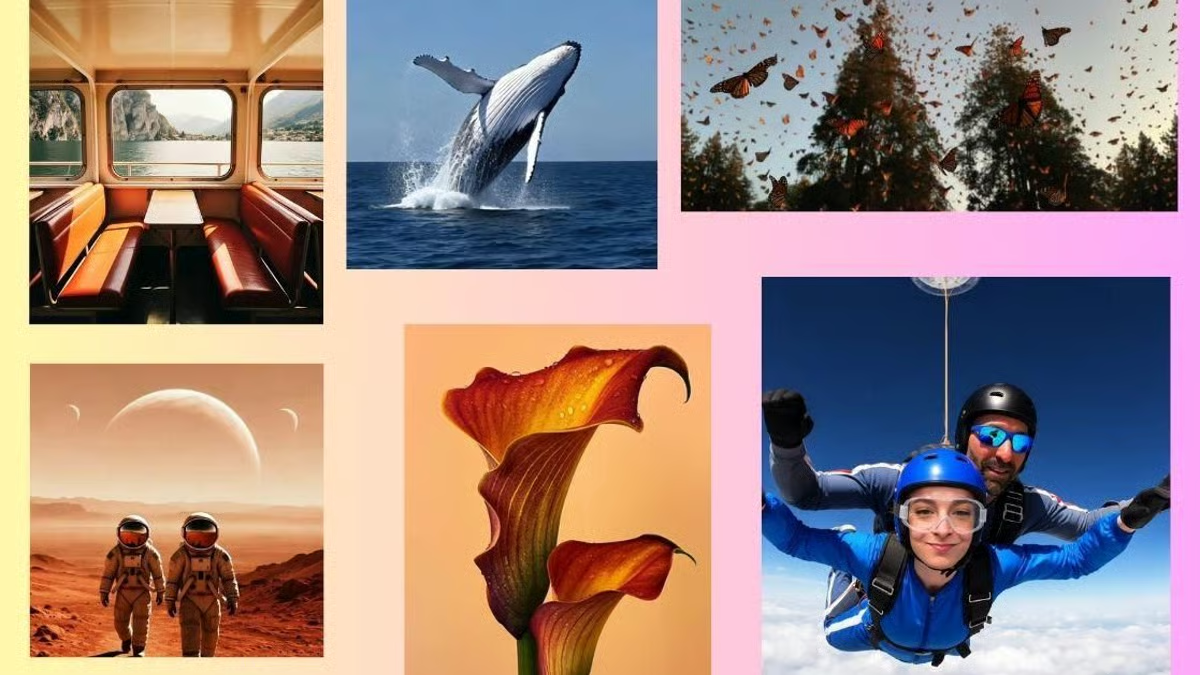
Apple just made a dramatic U-turn on photo authenticity. At WWDC 2026, the company unveiled a suite of generative AI-powered photo editing tools that let users manipulate images in ways that fundamentally alter reality – a stark shift from the philosophy Apple’s software chief Craig Federighi championed just two years ago. The new features, embedded in iOS 27’s Photos app, give users effortless powers to create what Apple still calls “photos,” even when they’re anything but. For an industry already grappling with deepfakes and misinformation, Apple’s embrace of AI image manipulation signals a pivotal moment in how Big Tech thinks about digital truth.
Apple has officially abandoned its skepticism about generative AI in photography. The company’s WWDC 2026 keynote unveiled a collection of AI-powered photo editing tools that don’t just remove unwanted objects – they let users reimagine entire scenes, add elements that were never there, and fundamentally reshape reality. Apple still calls these manipulated images “photos,” a semantic choice that’s raising eyebrows across the tech industry.
The announcement marks a complete reversal from Apple’s position in 2024. When the company launched Clean Up – a relatively modest AI object removal tool similar to Google’s Magic Eraser – software chief Craig Federighi told The Verge that maintaining photo authenticity was critical. The company positioned Clean Up as a careful, limited implementation that wouldn’t cross the line into reality distortion. That line has now been erased.
What changed? The competitive pressure from Google and other players in the AI photo editing space appears to have pushed Apple off its ethical high ground. While Google Photos has been steadily adding generative features that let users create impossible images, Apple held back. But at WWDC 2026, the company went all-in with tools that according to Apple’s newsroom announcement bring “powerful AI capabilities into everyday experiences.”
The most striking aspect of Apple’s presentation wasn’t just the technology – it was the lack of transparency. During the WWDC keynote, Apple showcased a series of images without clearly flagging which were authentic photographs and which were AI-generated fantasies. This blurring of boundaries represents a fundamental shift in how Apple thinks about the Photos app, which has traditionally been a digital shoebox for memories, not a creative studio for fabrication.
The new features go far beyond Clean Up’s simple object removal. Users can now generate entirely new elements, change lighting conditions, add people who weren’t present, and manipulate scenes in ways that would have required professional Photoshop skills just a few years ago. Apple Intelligence, the company’s AI platform powering these tools, makes sophisticated manipulation accessible to anyone with an iPhone running iOS 27.
This raises uncomfortable questions about photo authenticity in an era already struggling with misinformation and deepfakes. When a company with Apple’s market influence – over 1.5 billion active iPhones worldwide – makes reality manipulation this easy and this seamless, the implications ripple far beyond individual users. Wedding photos, journalism, legal evidence, historical documentation – all of these rely on some baseline assumption that photographs represent truth.
Apple isn’t alone in this shift. Google has been pushing similar boundaries with its Pixel phones and Photos app. But Apple’s entry into full-scale generative photo editing feels different because of the company’s previous stance. When Apple held the line on authenticity, it provided a counterweight to the industry’s rush toward AI manipulation. Now that counterweight is gone.
The company’s decision to continue calling these AI-manipulated images “photos” is particularly telling. It suggests Apple believes users won’t care about the distinction – or that the market has already moved past concerns about authenticity. Whether that calculation is correct will become clear as iOS 27 rolls out and millions of users start creating their own alternative realities.
What we’re witnessing is the normalization of photo manipulation at scale. When Clean Up launched in 2024, removing a photobomber felt like a convenient enhancement. Two years later, Apple is offering tools that can fundamentally rewrite visual history. The philosophical shift happened quietly, but its effects will be anything but subtle.
Apple’s embrace of generative AI photo editing represents more than just new features – it’s a philosophical surrender to market pressure. The company that once questioned whether reality distortion was worth the risk has decided the answer is yes. As iOS 27 rolls out later this year, hundreds of millions of users will gain tools to effortlessly manipulate what we still call photographs. The technology is impressive, but the broader implications for truth, memory, and digital authenticity remain deeply unsettling. Apple had the market position to champion photo integrity. Instead, it chose to join the AI manipulation race. Whether users celebrate this as creative freedom or mourn it as the death of photographic truth may depend on how quickly we all forget what “photo” used to mean.








Leave a Reply