
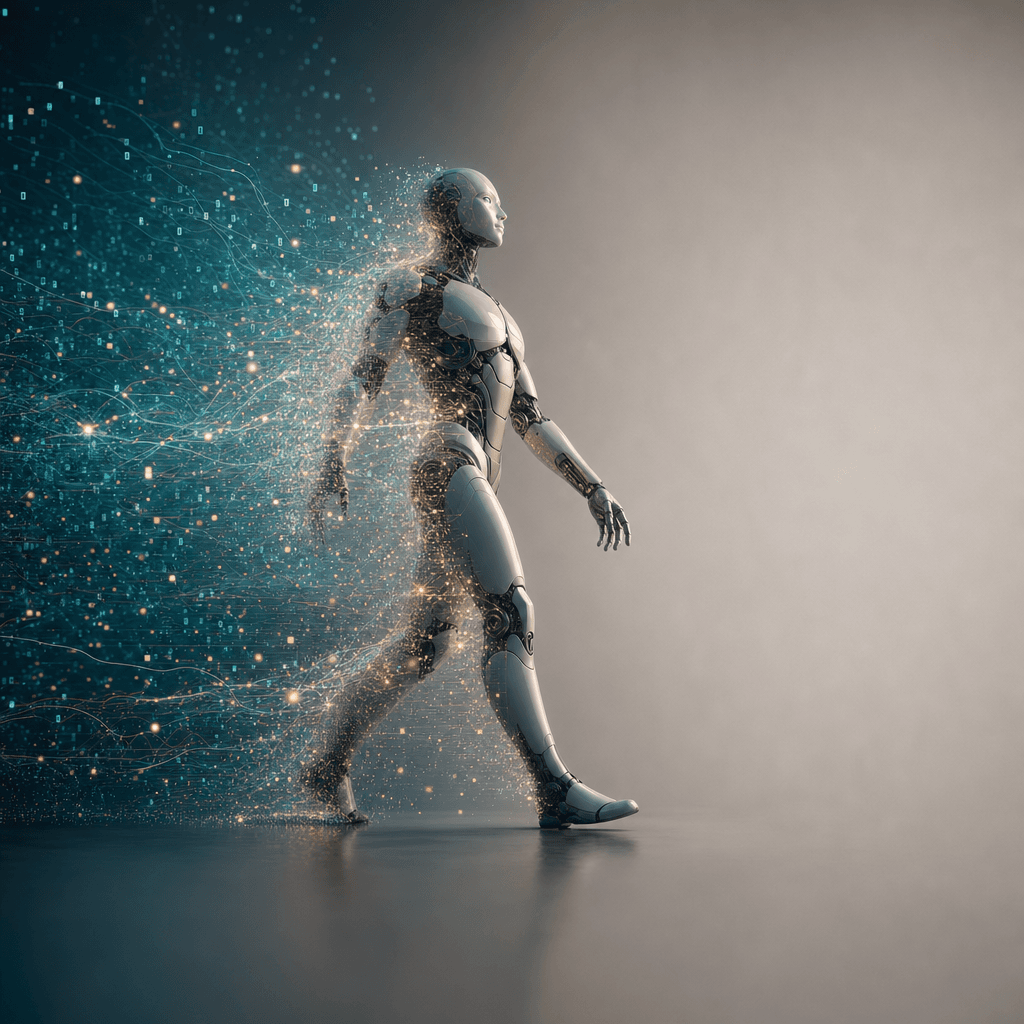
Meta just acquired Assured Robot Intelligence, a humanoid robotics startup, marking the tech giant’s boldest move yet into physical AI. The deal, announced today, aims to supercharge Meta’s AI models specifically for robotic applications as the company races to compete in the rapidly emerging humanoid robotics market. It’s a significant pivot for a company that’s spent years focused on virtual worlds and social platforms.
Meta is making a serious play for the robotics future. The social media giant confirmed it’s acquired Assured Robot Intelligence, a startup focused on humanoid robotics, to beef up its AI models for physical robots. The move puts Meta squarely in competition with Tesla‘s Optimus project, Boston Dynamics, and a wave of well-funded humanoid startups.
The company didn’t disclose financial terms, but the strategic implications are clear. Meta’s been quietly building AI capabilities that go far beyond chatbots and image generators. With Assured Robot Intelligence’s team and technology, the company gains expertise in the trickiest part of humanoid robotics – teaching AI systems to navigate and manipulate the messy, unpredictable physical world.
This acquisition makes sense when you look at Meta’s broader AI strategy. The company’s been pouring billions into AI research through its Fundamental AI Research (FAIR) team, developing everything from large language models to computer vision systems. But embodied AI – AI that controls physical robots – requires solving entirely different challenges than software that lives in data centers.
“We’re excited to welcome the Assured Robot Intelligence team to Meta,” the company said in a statement. The startup’s work focuses on making humanoid robots safe, reliable, and actually useful in real-world environments, not just controlled lab settings.
The robotics industry’s been heating up fast. Tesla CEO Elon Musk has claimed the Optimus humanoid could eventually be worth more than the car business. Figure AI recently raised $675 million at a $2.6 billion valuation with backing from Microsoft, Nvidia, and Amazon founder Jeff Bezos. Even OpenAI invested, seeing robotics as the next frontier for AI capabilities.
Meta’s timing reflects a broader shift in Silicon Valley. After years of AI development focused on digital tasks – writing code, generating images, answering questions – the industry’s racing to crack physical intelligence. The thinking goes that truly general AI needs to understand the physical world, not just pixels and text.
What sets humanoid robots apart from other robotics approaches is their versatility. A human-shaped robot can theoretically operate in any environment designed for humans, using the same tools and navigating the same spaces. That’s attracted massive investment, even though the technology remains largely unproven at scale.
Meta’s AI infrastructure gives it some unique advantages. The company operates one of the world’s largest computing systems and has been training massive AI models on vast datasets. Applying that firepower to robotics could accelerate development, though hardware challenges remain separate from software prowess.
The acquisition also signals Meta’s willingness to place long-term bets beyond its core business. The company’s spent over $40 billion on its Reality Labs division developing VR and AR hardware, with limited returns so far. Robotics represents another expensive, uncertain frontier – but one where Meta clearly sees strategic value.
Industry observers note that getting humanoid robots working reliably in real-world conditions remains extraordinarily difficult. The gap between impressive demos and deployable products has frustrated robotics companies for decades. Meta’s deep pockets and AI talent could help bridge that gap, or they could learn the same hard lessons that have humbled previous efforts.
For Assured Robot Intelligence’s team, joining Meta means access to resources that few robotics startups could dream of – cutting-edge AI models, massive compute clusters, and some of the world’s top AI researchers. Whether that translates to breakthrough products remains to be seen, but the company’s clearly making a serious commitment to physical AI.
Meta’s acquisition of Assured Robot Intelligence marks a pivotal moment in the AI wars – the battlefield’s expanding from software to hardware. While the company hasn’t revealed its specific plans for humanoid robots, the strategic intent is unmistakable. As AI models become increasingly capable in digital domains, the race is on to crack physical intelligence. With this deal, Meta’s betting that its AI expertise can translate to the real world, joining deep-pocketed rivals in what could become the next major computing platform. The question isn’t whether humanoid robots will eventually matter – it’s who’ll figure out how to make them actually work.








Leave a Reply