
- ■
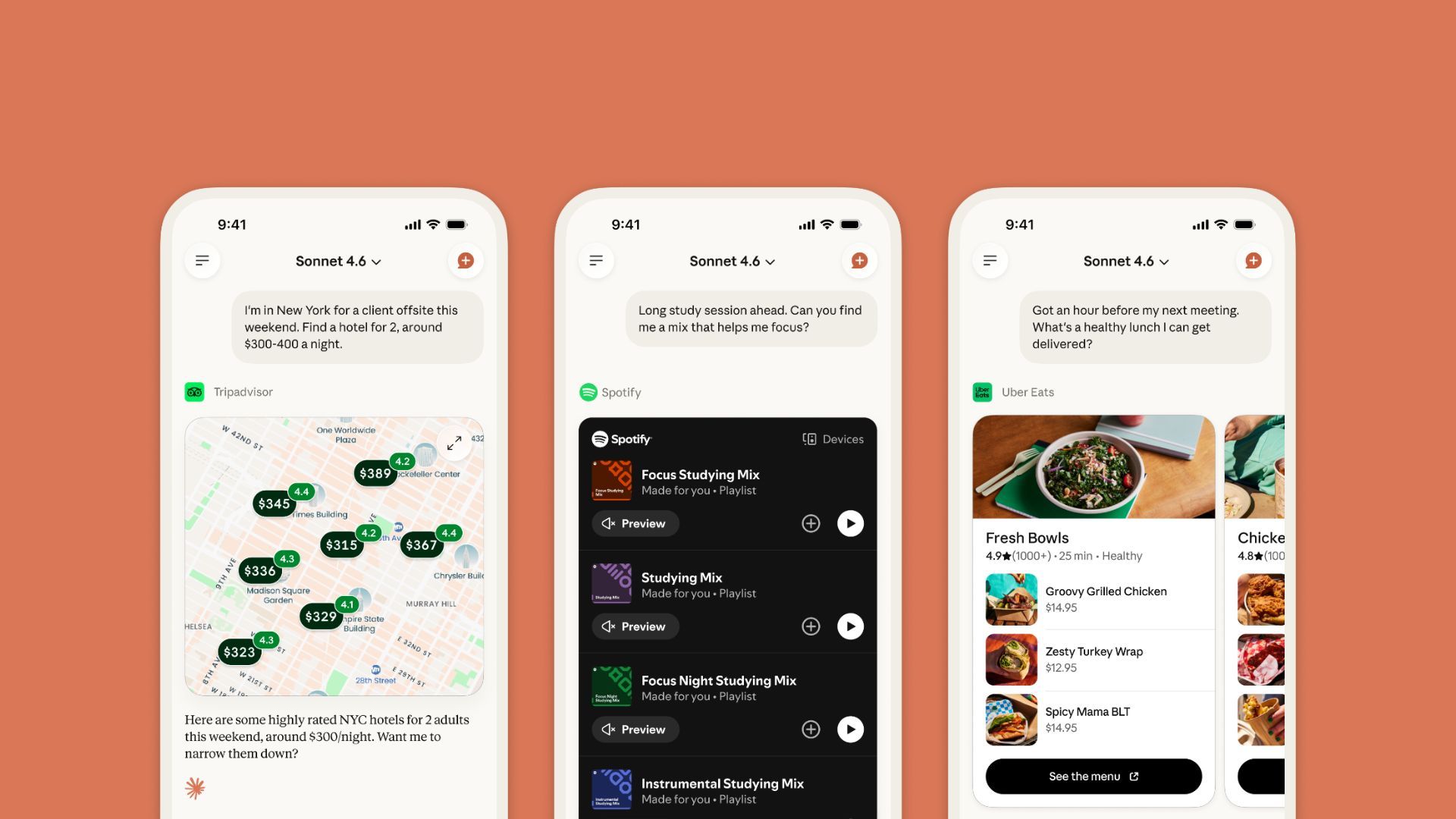
Anthropic launches personal app connectors for Claude, integrating Spotify, Uber, Audible, AllTrails, TripAdvisor, Instacart, and TurboTax according to the company’s blog post
- ■
The expansion directly challenges OpenAI’s ChatGPT, which already offers similar Spotify and consumer app integrations
- ■
Claude will now proactively suggest relevant connected apps during conversations, like recommending AllTrails when discussing hiking plans
- ■
This marks Anthropic’s pivot from enterprise-focused integrations like Microsoft 365 into consumer territory, intensifying the AI assistant ecosystem race
The AI assistant battleground just expanded into your daily life. Anthropic’s Claude rolled out connectors for Spotify, Uber, Instacart, TurboTax, and a dozen other consumer apps, marking the company’s aggressive push beyond enterprise tools into the personal productivity space where OpenAI’s ChatGPT already has a foothold. The move signals a clear strategic shift – AI assistants are no longer competing just on model performance, but on how deeply they can embed themselves into the apps you already use every day.
Anthropic just fired a shot across OpenAI’s bow. The AI startup announced it’s plugging Claude directly into the apps people actually use every day – think Spotify playlists, Uber rides, Instacart grocery runs, and yes, even TurboTax returns. It’s a direct challenge to ChatGPT’s growing app ecosystem and a sign that the AI assistant wars are moving from the enterprise to your pocket.
The new connectors, announced in Anthropic’s blog post, span everything from entertainment (Audible, Spotify) to travel planning (TripAdvisor, AllTrails) to practical life admin (TurboTax). Once you link an app, Claude doesn’t just passively wait for commands. It’ll proactively suggest relevant integrations mid-conversation – mention you’re planning a hike, and Claude might pull up AllTrails recommendations without being asked.
This isn’t entirely new territory. OpenAI already beat Anthropic to the punch with similar Spotify and consumer app connectors for ChatGPT, giving users the ability to control music playback and search real estate listings through conversational prompts. But Anthropic’s broader lineup – particularly the inclusion of services like Instacart and TurboTax – suggests the company is betting big that AI assistants will become the universal remote control for digital life.
The timing is telling. Anthropic already established Claude as a serious enterprise player with Microsoft 365 integrations that let corporate users tap into Word, Excel, and Outlook data. But enterprise contracts alone won’t win the AI platform race. Consumer stickiness will. And that means being present in the mundane moments – ordering takeout, filing taxes, queuing up a podcast for the commute.
What makes these connectors potentially powerful isn’t just convenience. It’s context. The more apps Claude connects to, the more it knows about your habits, preferences, and routines. That data becomes fuel for increasingly personalized assistance. Ask Claude to plan dinner and it might cross-reference your Spotify listening history (dinner party vibes?) with your Instacart purchase patterns (vegetarian household?) to suggest recipes and auto-fill a shopping cart.
Of course, that raises obvious privacy questions. Anthropic hasn’t detailed exactly what data flows between connected apps and Claude’s servers, or how long that information persists. The company has historically positioned itself as the more cautious, safety-focused alternative to OpenAI, but connecting to financial apps like TurboTax and transaction platforms like Uber puts real money and sensitive data in play.
The connector strategy also reveals how quickly AI companies are moving from building better models to building better ecosystems. Six months ago, the industry obsessed over benchmark scores and parameter counts. Now the conversation has shifted to API partnerships and integration depth. Google, Microsoft, and Meta all have their own plays here, but the pure-play AI startups like Anthropic and OpenAI are moving faster, unconstrained by legacy platform politics.
For app developers, this creates a new power dynamic. Getting featured as a Claude or ChatGPT connector could become as valuable as App Store placement used to be. Spotify and Uber have the brand weight to command integration priority, but smaller apps like AllTrails stand to gain disproportionate visibility if AI assistants start routing user intent their way. Expect a land rush as every app with an API starts pitching AI companies on connector deals.
The bigger question is whether users actually want one AI to rule them all. Anthropic is betting yes – that people will gladly trade app-hopping for a single conversational interface. But there’s also friction in the handoff. Asking Claude to order Uber Eats might feel clunkier than just opening the Uber Eats app, especially if you need to visually browse menus or tweak delivery details. Voice and chat interfaces excel at certain tasks but stumble on others. The connector model only works if it’s genuinely faster than the alternative.
Still, the trajectory is clear. AI assistants are evolving from chatbots to operating systems – or at least trying to. Anthropic’s personal app push is the latest proof that the end game isn’t just answering questions. It’s becoming the layer between you and every other piece of software you touch.
Anthropic’s consumer app blitz transforms Claude from an enterprise tool into an everyday companion, putting it on a collision course with ChatGPT for control of your digital routine. The real test won’t be how many apps get connected, but whether talking to an AI actually beats tapping an icon. If Anthropic gets the experience right, these connectors could redefine how we interact with software. If not, they’ll join the long list of ambitious integrations that looked great in a demo but never escaped the lab. Either way, the AI assistant wars just got a lot more personal.








Leave a Reply