
- ■
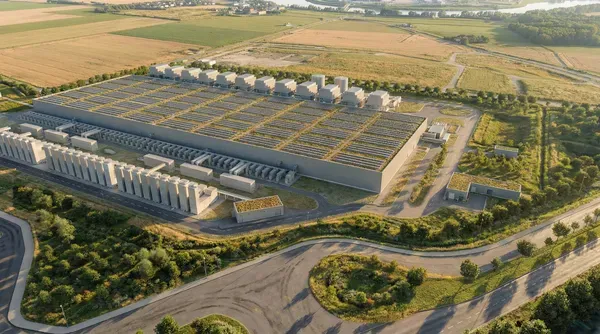
Google opens its first Austrian data center in Kronstorf, according to official company announcement
- ■
The facility generates 100 direct jobs and expands Google’s European cloud infrastructure network
- ■
Move positions Google to better serve AI workloads and enterprise clients amid rising data sovereignty requirements
- ■
Signals intensifying competition with AWS and Microsoft Azure for European enterprise cloud market share
Google just planted its flag in the Austrian Alps. The tech giant announced its first data center in Kronstorf, marking a significant expansion of its European cloud infrastructure footprint. The facility creates 100 direct jobs and signals Google’s push to meet surging AI and cloud computing demand across Central Europe. It’s a strategic play that puts Google closer to enterprise customers while addressing data sovereignty concerns that have long plagued US tech firms operating in the EU.
Google is betting big on Austria. The company’s first data center in the small town of Kronstorf represents more than just another pin on Google’s global infrastructure map – it’s a calculated move to dominate Europe’s booming cloud and AI market.
The announcement comes as European enterprises increasingly demand local data processing capabilities. Google’s been operating in Austria for years, but this physical infrastructure investment changes the game. The facility will support Google Cloud services and AI workloads, putting compute power closer to customers in Central and Eastern Europe.
Kronstorf isn’t a random choice. The location offers stable power infrastructure, favorable climate for cooling systems, and proximity to fiber optic networks connecting Vienna to the rest of Europe. Austria’s renewable energy grid also helps Google meet its sustainability commitments – a selling point when courting enterprise clients with their own carbon reduction targets.
The 100 direct jobs represent just the visible workforce. Data centers typically generate 3-5x indirect employment through construction, maintenance, and support services. Google’s investment (financial terms weren’t disclosed) will ripple through Austria’s tech ecosystem, potentially spurring satellite service providers and specialized contractors.
This expansion fits a broader pattern. Google has been aggressively building out European data center capacity, with existing facilities in Belgium, Denmark, Finland, Ireland, and the Netherlands. But Central Europe remained a gap – one that Amazon Web Services and Microsoft Azure have been filling with their own regional deployments.
The timing matters. European AI adoption is accelerating faster than infrastructure can keep up. Large language models and machine learning workloads require massive compute resources with low latency. An Austrian data center lets Google serve customers in Germany, Switzerland, and Eastern European markets without data traveling to facilities in Western Europe or crossing into non-EU jurisdictions.
Data sovereignty regulations make local infrastructure nearly mandatory for certain workloads. GDPR and emerging EU AI regulations create compliance headaches when data crosses borders. Google’s Austrian facility gives enterprise customers a clean solution – their data stays within EU borders, processed on EU soil, under EU regulatory oversight.
The competitive implications are immediate. Microsoft operates Azure regions in Austria through partnerships, while AWS serves the market from its Frankfurt and Zurich infrastructure. Google’s dedicated facility could sway enterprise buyers who’ve been platform-shopping based on geographic coverage.
Google’s sustainability pitch adds another dimension. The company claims the facility will run on renewable energy, though specific percentages weren’t detailed in the announcement. Austria generates roughly 80% of its electricity from renewables, primarily hydropower from Alpine rivers. That’s a stronger story than data centers in regions still dependent on fossil fuels.
The infrastructure play extends beyond cloud services. Google’s AI products – from Workspace intelligence features to Vertex AI platform services – all need compute capacity. As European businesses adopt AI tools, having local processing capability becomes a competitive advantage. Latency-sensitive applications like real-time translation or video analysis work better when the data center is geographically closer.
What’s not mentioned in Google’s announcement might be equally telling. No capacity specifications, no investment figures, no timeline for when the facility becomes operational. That suggests Google’s being cautious about revealing its hand to competitors while the facility ramps up.
The Austrian government likely offered incentives to land this investment – tax breaks, infrastructure support, or expedited permitting. European countries have been competing fiercely for hyperscale data center projects, viewing them as anchors for broader digital economy development.
For Google, this isn’t just about today’s cloud market. It’s about positioning for the next decade of AI infrastructure demand. As generative AI moves from hype to enterprise reality, the companies with computing capacity closest to customers will have the edge. Austria gives Google a stronghold in a market that’s been underserved by hyperscale infrastructure.
Google’s Austrian data center isn’t just about adding capacity – it’s about reshaping the competitive landscape for European cloud services. By planting infrastructure in the heart of Central Europe, Google addresses data sovereignty concerns while positioning itself for the AI infrastructure arms race. The 100 jobs are nice PR, but the real story is Google’s bet that whoever controls the physical infrastructure closest to European enterprises will capture the next wave of cloud and AI spending. As Microsoft and AWS scramble to match coverage, expect more announcements like this. The hyperscalers are redrawing the map of where the internet actually lives.










Leave a Reply