
- ■
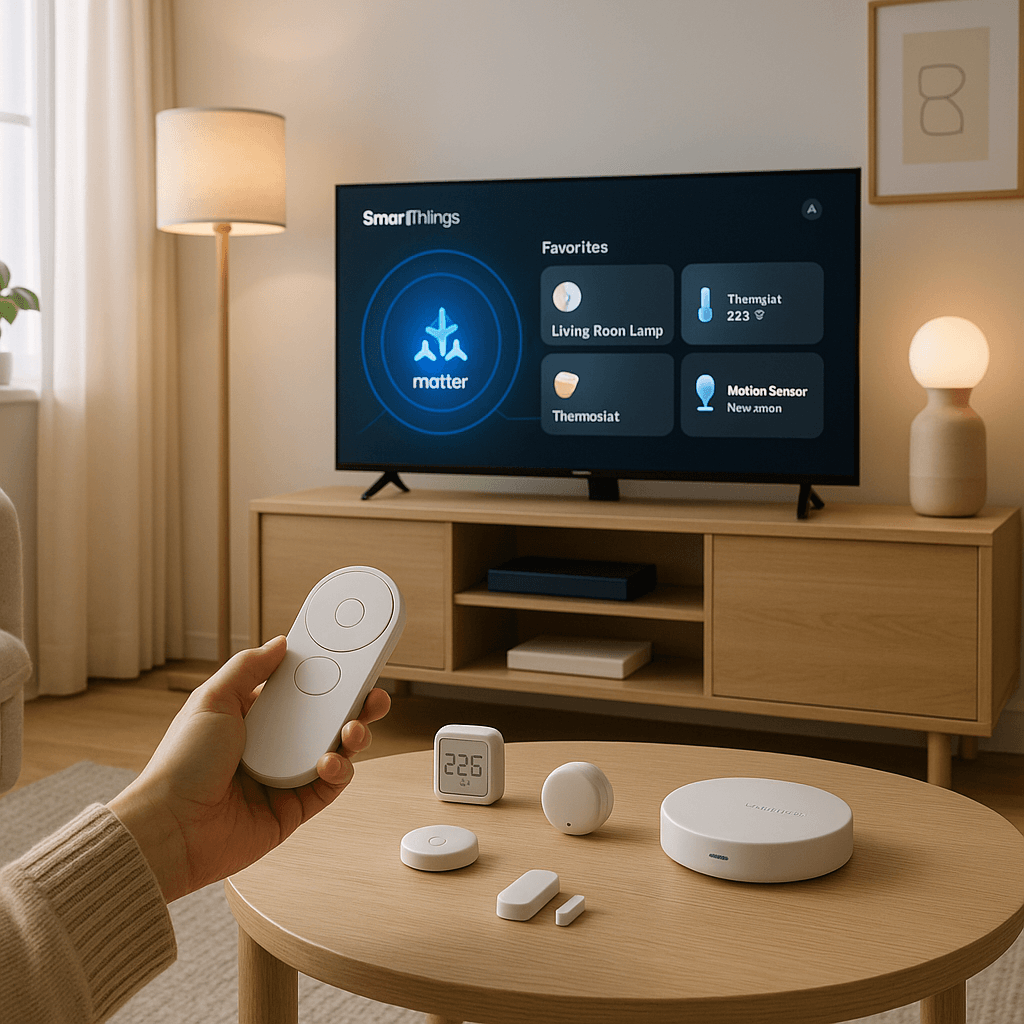
Samsung SmartThings now directly supports 25 IKEA Matter devices, eliminating the need for separate IKEA hubs
- ■
Integration includes smart bulbs, plugs, sensors, and a scroll wheel remote using Matter-over-Thread protocol
- ■
Samsung becomes first platform to adopt Thread 1.4, positioning itself as a leader in cross-brand smart home ecosystems
- ■
Partnership targets first-time smart home users with affordable IKEA hardware and simplified setup
Samsung just made setting up a smart home a whole lot simpler. The company’s SmartThings platform now supports 25 IKEA Matter-enabled devices – from smart bulbs to water leak sensors – without requiring a separate IKEA hub. The move marks a significant push toward the Matter standard, a universal protocol designed to make smart home devices work together regardless of brand. For consumers tired of juggling multiple hubs and apps, this could be the integration that finally makes sense.
Samsung is betting big on simplicity. The company announced that its SmartThings platform now seamlessly integrates 25 IKEA smart home devices using the Matter standard, cutting out the middleman hub that previously stood between consumers and a unified smart home.
The integration covers IKEA’s full range of Matter-enabled products: scroll wheel remotes, smart bulbs, plugs, temperature and humidity sensors, air quality monitors, motion sensors, door sensors, and water leak detectors. All of them now connect directly to a SmartThings hub, working alongside Samsung TVs, air conditioners, washing machines, and the growing list of third-party devices the platform supports.
Before this, getting IKEA devices to talk to SmartThings meant running two hubs – one from IKEA, one from Samsung. That’s the kind of friction that’s kept smart homes from going truly mainstream. Now, according to Samsung’s announcement, users can skip that step entirely and plug straight into the SmartThings ecosystem.
The partnership isn’t just about convenience. It’s a play for the budget-conscious consumer who wants smart home features without the premium price tag. IKEA’s products have always been about accessible design, and pairing them with Samsung’s platform opens up smart home capabilities to people who might have found other options too expensive or complicated.
One standout from the IKEA lineup is the scroll wheel remote. Instead of tapping buttons, users rotate the wheel to fine-tune brightness and color temperature on connected lights. It’s a small detail, but it speaks to the kind of tactile, intuitive control that could appeal to younger, design-focused consumers who care about how their switches look and feel. Samsung says the remote can also control blinds, though that feature won’t arrive until later in 2026.
On the practical side, the integration unlocks some genuinely useful automation. Stick an IKEA door sensor on a parent’s front door, and SmartThings Family Care can send alerts when they leave or return home – a low-friction way to keep tabs on elderly relatives without constant check-ins. Air quality and temperature sensors feed data into SmartThings’ Sleep environment report, which compares readings against optimal sleep conditions and suggests adjustments like dropping the bedroom temp to 19-21°C. Water leak sensors trigger instant alerts, while humidity spikes can automatically kick the air conditioner into dehumidification mode.
Behind the scenes, Samsung and IKEA ran multiple validation rounds to ensure stable connectivity and built a dedicated user experience inside the SmartThings app. That kind of polish matters when you’re trying to win over first-time users who expect things to just work.
Samsung’s also making a broader technical bet here. The company was the first to adopt Thread 1.4, a low-power mesh networking protocol that’s become essential infrastructure for Matter-based smart homes. Thread lets devices communicate directly with each other without relying on Wi-Fi, creating faster, more reliable networks. By adopting Thread 1.4 early, Samsung is positioning SmartThings as the connective tissue that can unite devices across brands into a single, unified system.
“By connecting IKEA devices to SmartThings, even first-time smart home users can enjoy a familiar and easy connectivity experience without financial burden,” Jaeyeon Jung, Executive Vice President of SmartThings at Samsung Electronics, said in the announcement. “SmartThings will continue to expand its ecosystem through partnerships, enabling more consumers to enjoy seamless and convenient smart home experience within the SmartThings ecosystem regardless of brand or communication protocol.”
The timing is strategic. Matter adoption has been slower than the industry hoped, partly because early implementations were clunky and device support was limited. By partnering with a brand as ubiquitous as IKEA, Samsung is banking on volume and accessibility to drive adoption. If people can walk into an IKEA, pick up a $10 smart bulb, and have it working with their Samsung TV in minutes, that’s the kind of frictionless experience that could finally tip smart homes into the mainstream.
But challenges remain. Availability and timing for the 25 IKEA devices vary by market, which means rollout won’t be instant everywhere. And while Samsung is pushing hard on Thread and Matter, competing platforms like Apple HomeKit and Google Home are doing the same thing. The race isn’t just about who supports the most devices – it’s about who makes the experience simple enough that regular people actually want to use it.
Samsung’s IKEA integration is less about flashy innovation and more about removing the friction that’s kept smart homes niche. By embracing Matter and Thread early, and partnering with a brand known for affordability, Samsung is making a clear play for the mass market. If the setup is as seamless as promised, this could be the kind of partnership that actually moves the needle on smart home adoption. The real test will be whether consumers who’ve never bothered with smart devices before find this combination simple and useful enough to dive in.










Leave a Reply