
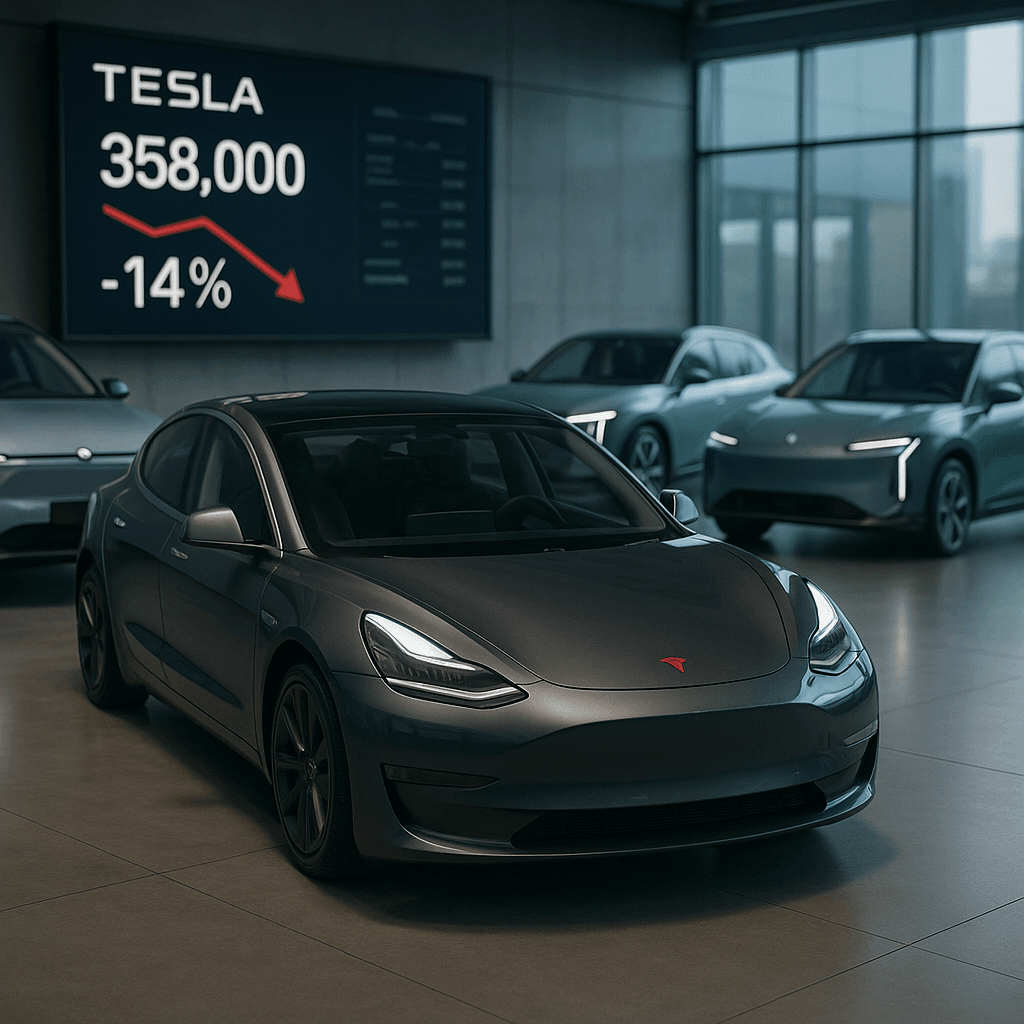
Tesla just reported 358,000 vehicle deliveries for the first quarter of 2026, down 14% from the previous quarter, according to CNBC. The numbers cap off a year of declining deliveries for the EV maker as Chinese rivals like BYD and NIO flood the market with lower-cost alternatives. Wall Street’s now watching whether Tesla’s pricing power can hold as the competitive squeeze tightens across its biggest growth markets.
Tesla just handed investors another quarter of declining deliveries, and the culprit is becoming impossible to ignore: China’s EV makers are eating its lunch. The company’s Q1 2026 delivery figure of 358,000 vehicles marks a 14% drop from the previous quarter, extending what’s now a year-long slide in the metric Wall Street watches most closely.
The numbers, reported by CNBC, underscore how dramatically the EV landscape has shifted. While Tesla spent years as the undisputed premium EV leader, Chinese manufacturers like BYD, NIO, and XPeng have flooded global markets with vehicles that match many of Tesla’s features at significantly lower price points. That value proposition is resonating, particularly in price-sensitive markets across Asia and Europe.
What makes this quarterly decline particularly notable is the timing. Q1 typically sees seasonal softness in auto sales, but a 14% sequential drop suggests something more structural is happening. Tesla’s coming off a full year of delivery declines, a sharp reversal from the hypergrowth trajectory that defined its first decade as a public company. The EV pioneer built its valuation on the promise of relentless expansion, and these numbers raise uncomfortable questions about whether that era has ended.
The China factor looms large. Companies like BYD have leveraged massive scale, vertical integration, and government support to drive costs down in ways Tesla hasn’t matched. BYD’s Seagull model, priced around $10,000 in China, has become a particular threat in emerging markets where Tesla’s cheapest Model 3 still commands a significant premium. Even in Europe, Chinese brands are gaining ground with competitive leasing deals and expanding dealer networks.










Leave a Reply