
- ■
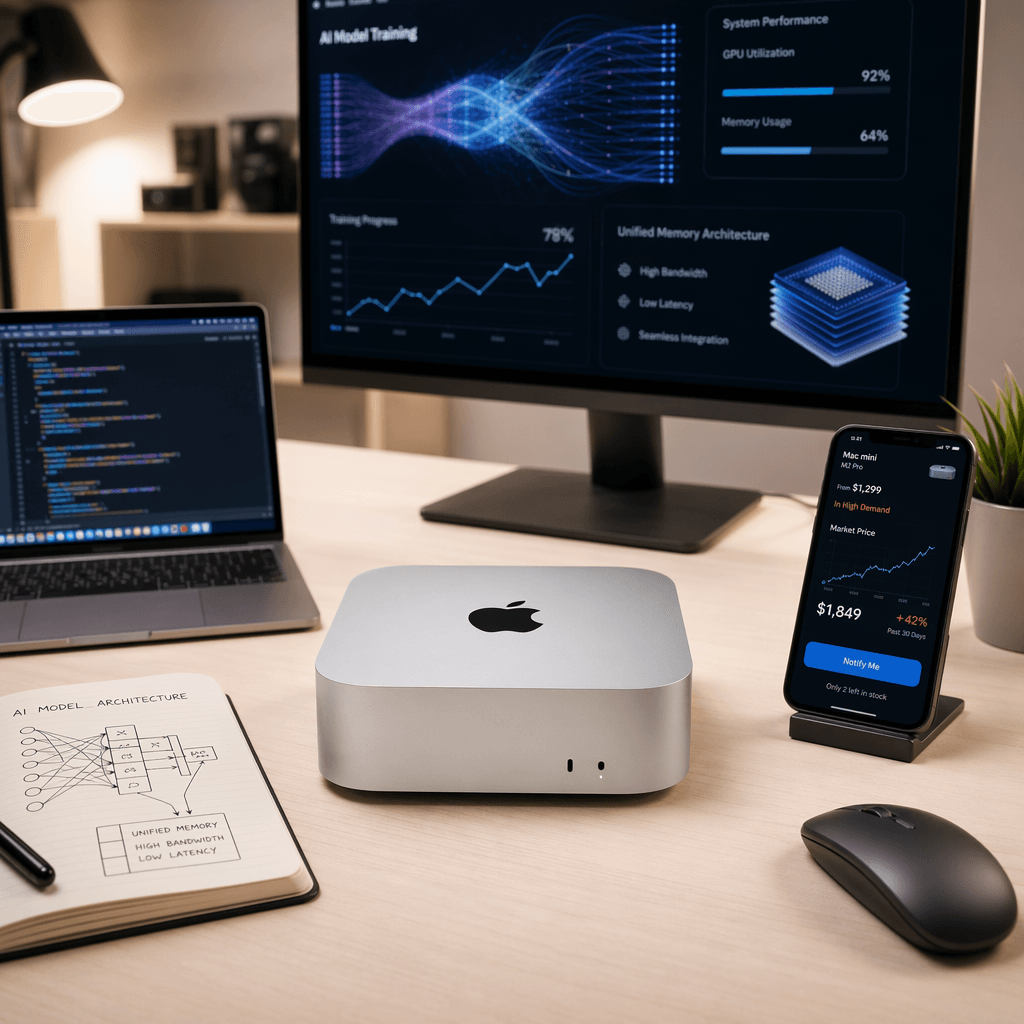
Apple’s Mac mini is sold out at major retailers as AI developers rush to buy hardware for running local AI models, per TechCrunch
- ■
Resellers on eBay are listing marked-up units, capitalizing on supply constraints driven by AI workload demands
- ■
The shortage signals a fundamental shift in consumer hardware purchasing patterns as local AI tools gain traction
- ■
Watch for Apple’s response and potential Mac mini restocking timeline amid growing AI hardware competition
Apple’s Mac mini has become the unlikely victim of an AI-driven supply crunch. The compact desktop is sold out across major retailers as developers and AI enthusiasts scramble to secure hardware capable of running local AI models, spawning a secondary market on eBay where units are selling at significant markups. According to TechCrunch, the surge reflects a broader shift toward on-device AI processing that’s reshaping consumer hardware demand in unexpected ways.
Apple’s Mac mini just became the hottest piece of AI hardware you can’t buy. The company’s compact desktop – traditionally a niche product for casual users and creative professionals – is completely sold out across major retailers, and the culprit isn’t seasonal demand or supply chain hiccups. It’s AI developers.
The rush started quietly a few weeks ago as word spread through developer communities that the Mac mini, particularly models with higher memory configurations, offered an unexpectedly powerful platform for running local AI models. Unlike cloud-based solutions that ping remote servers, these models run entirely on-device, offering faster response times and greater privacy. For developers working with tools like OpenClaw and other local AI frameworks, the Mac mini’s combination of Apple’s M-series chips and unified memory architecture hit a sweet spot between performance and affordability.
Now, according to TechCrunch, the shortage has spawned a thriving secondary market. eBay listings show Mac minis selling for hundreds of dollars above retail price, with some high-memory configurations fetching premiums of 30% or more. Sellers are capitalizing on the supply crunch, and buyers – many of them developers racing to secure hardware before prices climb further – are willing to pay.
The phenomenon reveals how quickly AI development priorities can reshape consumer hardware markets. Just months ago, the Mac mini occupied a quiet corner of Apple’s product lineup, overshadowed by flashier MacBook releases and the professional-grade Mac Studio. But the rise of local AI has flipped the script. Developers don’t need the Mac Studio’s extreme specs for many tasks – the Mac mini’s capabilities are sufficient, and its lower price point makes it attractive for anyone building or experimenting with AI tools that don’t require cloud infrastructure.
Industry watchers point to the memory bottleneck as a key factor. Running local AI models demands substantial RAM, and Apple’s unified memory architecture – which shares memory between the CPU and GPU – makes Mac minis particularly efficient for these workloads. The catch? Apple doesn’t let users upgrade memory after purchase, forcing buyers to spec out their machines upfront. That’s driven a stampede toward higher-memory configurations, which were already produced in smaller quantities than base models.
The shortage also highlights competitive pressure in the AI hardware space. While Nvidia dominates enterprise AI with its datacenter GPUs, the consumer and developer side is more fragmented. Apple’s silicon has quietly become a contender for edge AI applications, challenging traditional assumptions about where AI workloads run best. The Mac mini shortage suggests that consumer-grade hardware capable of handling local AI is becoming a strategic category – one where supply hasn’t yet caught up with demand.
Apple hasn’t publicly commented on the shortage or provided a restocking timeline. The company typically keeps inventory plans close to the vest, but the eBay markups and sold-out listings send a clear market signal. If the trend continues, expect Apple to either ramp up Mac mini production or face renewed calls to expand memory options across its lineup. Competitors like Microsoft and traditional PC makers are watching closely – the AI hardware race isn’t just about datacenter chips anymore.
What started as a niche use case – developers running local AI models on compact desktops – has cascaded into a full-blown supply crunch. The eBay markups are just the visible symptom of a deeper shift: AI workloads are moving from the cloud to the edge, and consumer hardware companies are scrambling to keep pace. For now, anyone hoping to snag a Mac mini at retail price is out of luck. The AI developers got there first.
The Mac mini shortage isn’t just about one product running out of stock – it’s a preview of what happens when AI moves from cloud servers to consumer devices. Developers have voted with their wallets, and the message is clear: hardware that can run local AI models efficiently is suddenly a hot commodity. Apple now faces a choice – treat this as a temporary blip or recognize that AI workloads are fundamentally changing what consumers need from their hardware. Either way, the eBay resellers are having a field day, and developers are learning that being early to the next computing shift sometimes means paying a premium just to get in the door.









Leave a Reply